
SK hynix Rebalances Toward DDR5 as Mainstream DRAM Margins Overtake HBM
SK hynix may be preparing to shift more production attention back toward mainstream DRAM after years of prioritizing high bandwidth memory for the artificial intelligence boom. The company is reportedly slowing part of its planned transition from HBM3E production to HBM4, giving it more flexibility to respond to severe shortages and rapidly improving profit margins across DDR5, high density server memory, and mobile DRAM.
According to a report from Chosun Biz, SK hynix is slightly delaying the conversion of selected HBM3E production lines that had been scheduled to move toward HBM4. The decision does not mean the company is retreating from artificial intelligence memory or reducing its long term commitment to NVIDIA Rubin, HBM4, or HBM4E. Instead, it appears to be a tactical production adjustment designed to capture stronger profits in a conventional DRAM market where supply remains extremely tight.
HBM has become one of the most profitable semiconductor products in the world, and SK hynix has been one of its greatest beneficiaries. The report says HBM now represents more than 40% of the company’s revenue, while recent market research continues to place SK hynix ahead of Samsung and Micron in global HBM share. This leadership gives the company room to adjust its production mix without surrendering the market position it built through HBM3, HBM3E, HBM4, and its close relationship with NVIDIA.
The surprising part is that ordinary DRAM may currently offer even stronger operating margins. Although HBM still sells for much more per gigabit, Chosun Biz reports that the operating margin of mainstream DRAM had moved more than 15 percentage points above HBM during the first quarter of 2026. Daishin Securities reportedly believes commodity DRAM margins could theoretically approach 90% before the end of the year if shortages and pricing conditions remain favorable.
"The company is reallocating resources to secure additional revenue from commodity DRAM, where the supply shortage is severe, rather than engaging in excessive capacity expansion races."
— Chosun Biz.
That reversal shows how dramatically the artificial intelligence boom has distorted the wider memory market. Samsung, SK hynix, and Micron directed increasing amounts of investment, wafer capacity, engineering resources, and advanced packaging toward HBM because AI accelerator demand offered stronger long term growth than conventional PC and mobile memory. The strategy generated record profits, but it also reduced supply growth across DDR5, DDR4, LPDDR5X, server modules, and other products used outside the most advanced AI accelerators.
We mention how the AI memory boom sent profits soaring across ADATA, Nanya, and other memory companies, with tight supply and rising contract prices turning the wider DRAM market into one of the semiconductor industry’s most profitable businesses. SK hynix now appears to be responding to the same conditions by directing more flexibility toward the products whose margins have improved most aggressively.
The most likely beneficiaries are not necessarily gaming memory kits sold directly to consumers. SK hynix has said it intends to focus on high density server modules and mobile products, where hyperscalers, data center operators, notebook manufacturers, and major device companies can commit to large volumes and long contracts. DDR5 RDIMM, high capacity enterprise memory, and LPDDR products may receive priority before additional supply reaches ordinary desktop modules.
A reported 3 year DDR5 supply agreement with Microsoft further illustrates that direction. TrendForce says SK hynix has been in the final stages of negotiating a deal valued at tens of trillions of Korean won, with discussions including committed volumes, minimum pricing protections, and possible advance payments. Similar agreements are becoming more common as Microsoft, Google, Amazon, Meta, and other cloud companies attempt to secure memory several years ahead of deployment.
These contracts give memory manufacturers more predictable revenue while reducing their exposure to the violent price cycles that historically defined DRAM. Buyers gain guaranteed supply, but the agreements can also keep a large portion of production tied to the biggest enterprise customers before smaller OEMs, system builders, and retail memory brands receive meaningful relief.
That is why SK hynix increasing its attention toward DDR5 does not automatically mean RAM prices will fall quickly. Additional production responsiveness could improve availability and reduce the risk of even more severe shortages, but current demand remains extremely strong across AI servers, cloud infrastructure, conventional data centers, mobile devices, gaming PCs, and workstations.
AMD warn that DDR5 memory prices may remain elevated for another 2 years. SK hynix producing more general purpose DRAM could slightly improve that outlook, but wafer output cannot be expanded instantly, and a large portion of the additional supply may be absorbed by server and enterprise customers before consumer pricing sees a major change.
The report also should not be interpreted as evidence that HBM demand has peaked. SK hynix recently began sampling its 48 GB HBM4E memory at speeds reaching 16 Gbps per pin, while its multiyear agreement with NVIDIA covers HBM4, LPDDR, NAND, AI factory development, and future computing platforms. The company remains deeply connected to NVIDIA Vera Rubin and is expected to continue supplying a major share of the memory required by the platform.
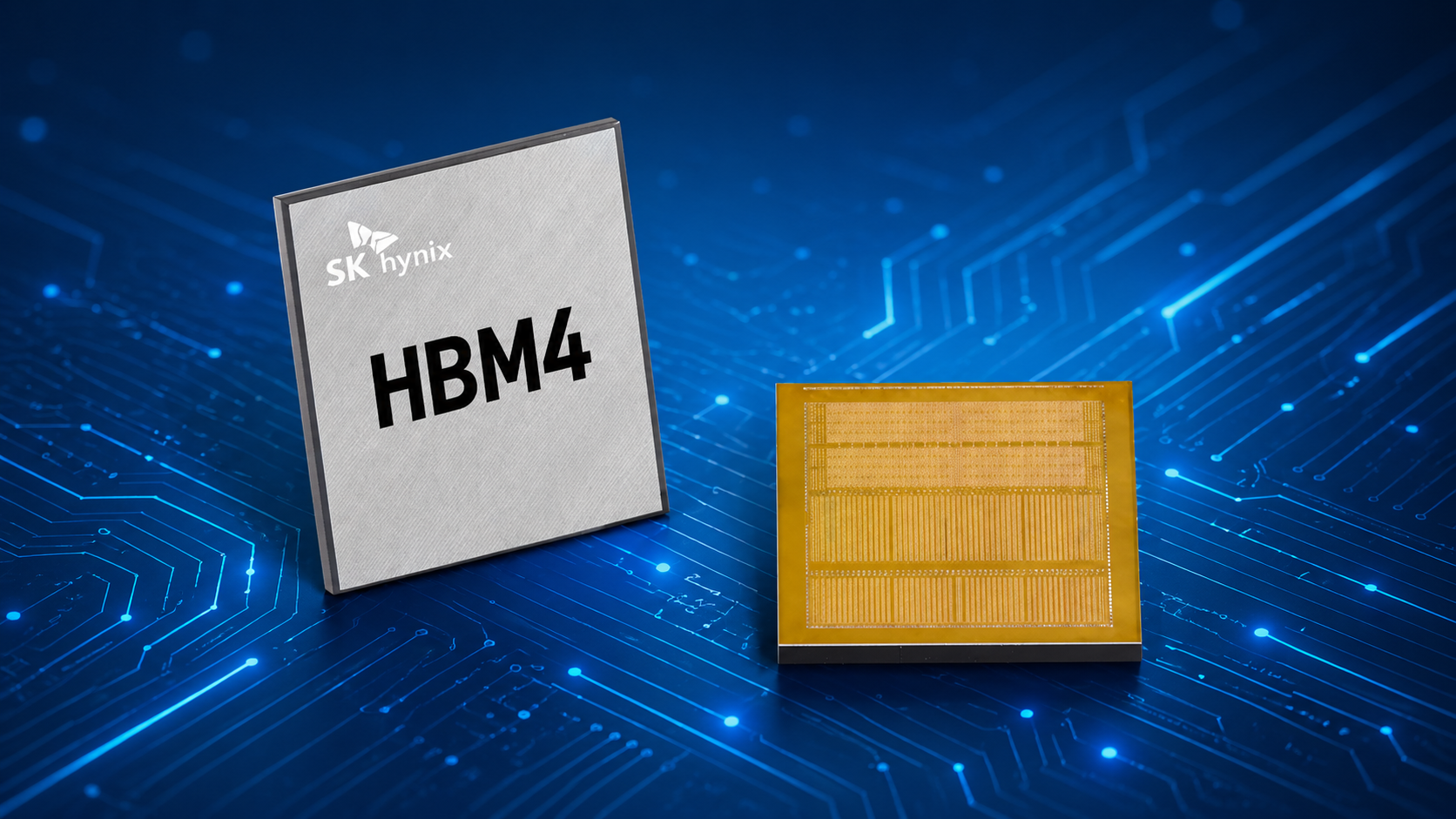
Also NVIDIA and SK hynix formed a multiyear technology partnership for future AI memory. That relationship gives SK hynix stronger visibility into future demand, making it easier to judge how quickly HBM3E lines must transition to HBM4 and how much capacity can remain available for conventional DRAM.
The decision may create an opening for Samsung. If SK hynix expands HBM4 capacity more carefully, Samsung could gain market share by accelerating qualification and production for NVIDIA and other customers. Samsung has already shipped HBM4E samples and continues investing heavily in next generation HBM, advanced base dies, and thermal technologies. SK hynix may be accepting a slightly smaller share of a rapidly growing market in exchange for stronger profits across the entire DRAM portfolio.
That trade could still be extremely favorable. Remaining above 50% of the HBM market while capturing higher margins in mainstream DRAM would allow SK hynix to benefit from both sides of the memory shortage. HBM would continue driving strategic growth and AI leadership, while DDR5, LPDDR, and server memory would deliver additional revenue from customers struggling to secure ordinary capacity.
The company is not reducing its broader expansion plans either. SK Group Chairman Chey Tae won said during Computex 2026 that SK hynix intends to double its total wafer capacity over the next 5 years, while warning that memory bottlenecks could continue through 2030. That expansion will support both HBM and conventional DRAM, but new fabrication capacity requires years of construction, equipment installation, process development, yield improvement, and customer qualification.
The most important part of this report is how quickly the economics of memory have changed. Only recently, HBM was viewed as the obvious destination for every available wafer because its pricing and AI demand were far stronger than conventional DRAM. Now, shortages have pushed DDR5 and other mainstream products to margins that may rival or exceed HBM, giving manufacturers another highly profitable market to pursue.
This does not create immediate relief for PC builders, gamers, workstation users, or system integrators. SK hynix will allocate production where contracts, margins, and strategic value are highest, which means enterprise and server customers may receive additional capacity first. However, a stronger focus on general purpose DRAM is still better for the wider market than allowing conventional supply to become even tighter.
SK hynix has already won a leading position in HBM. Its next move is not to walk away from that success, but to use the strength of its AI memory business to capture another profitable shortage. If production increases reach server and consumer markets in meaningful volume, availability could gradually improve. If demand continues rising faster than supply, the result may simply be record profits across both HBM and DDR5.
Do you think SK hynix increasing its focus on DDR5 will eventually lower consumer memory prices, or will server and AI customers absorb most of the additional supply?
