
NVIDIA and SK hynix Sign Multi Year Technology Partnership to Develop Next Generation Memory for AI Factories
NVIDIA has announced a major multi year technology partnership with SK hynix, strengthening one of the most important hardware alliances behind the global AI infrastructure boom. The agreement focuses on co developing next generation memory technologies aligned with NVIDIA’s expanding AI roadmap, including AI factories, personal AI systems, physical AI platforms, and future supercomputing architectures.
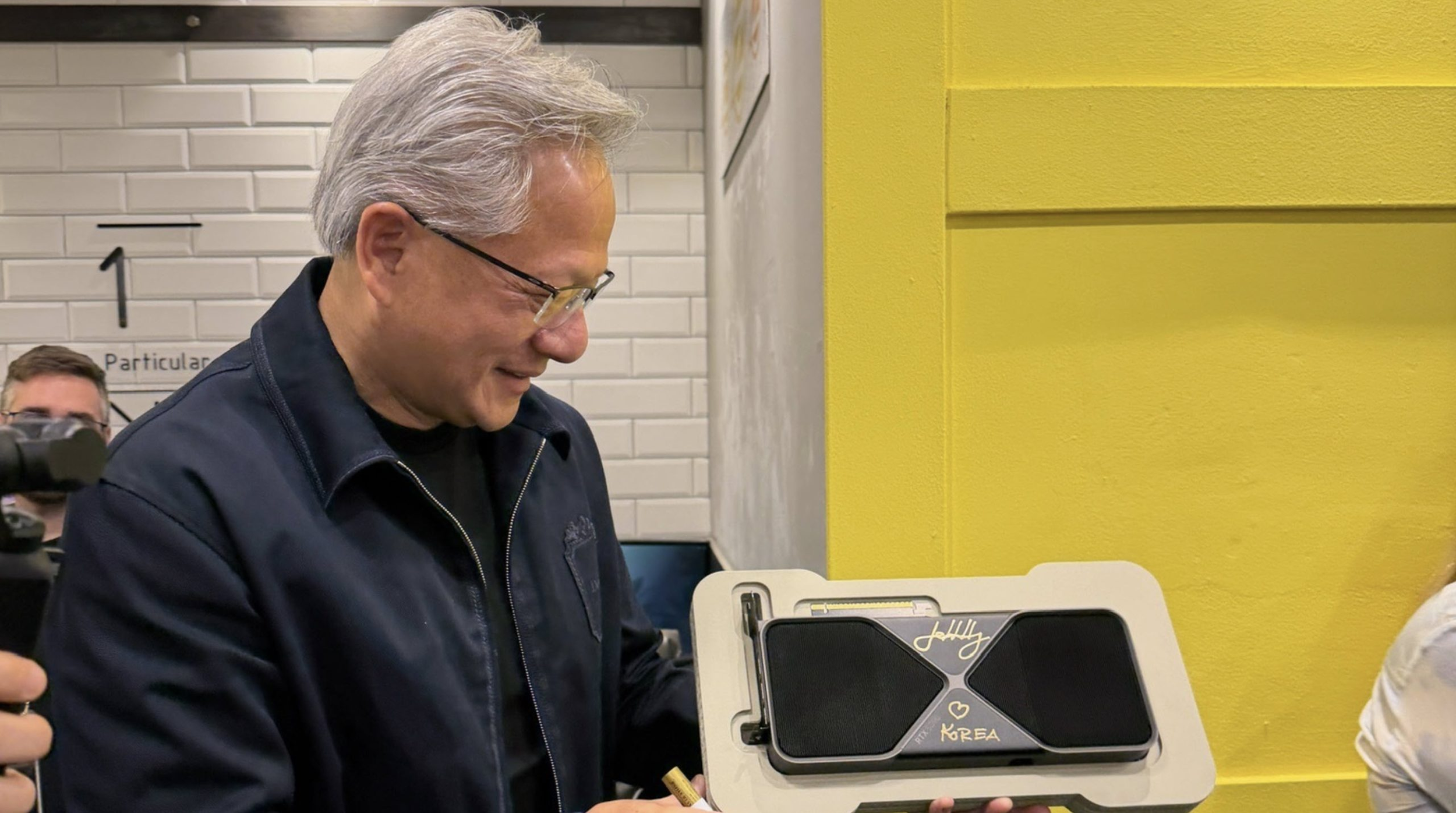
The partnership was confirmed through an official NVIDIA announcement, following NVIDIA CEO Jensen Huang’s high profile visit to Korea after his packed Computex appearance in Taipei, Taiwan. Jensen once again drew massive attention during Computex, where major partners welcomed him across the show floor as NVIDIA continued to dominate the conversation around AI computing, accelerated infrastructure, and future PC platforms. After leaving Taipei, Jensen visited Korea to meet SK hynix, one of NVIDIA’s most critical memory ecosystem partners. A related Taipei visit post also captured the continued industry attention surrounding Jensen’s regional tour.
Jensen Huang appeared in one of the most famous TV shows in Korea. And a trailer for it was released. 🇰🇷
— Tsla Chan (@Tslachan) June 8, 2026
Jensen asked him to call him 'Jensen' and told the behind story of his business in Yongsan Electronics Market in Korea 30 years ago.
And Jensen spoke of his affection for… pic.twitter.com/2Cstei4C07
The relationship between NVIDIA and SK hynix is already deeply connected to the AI hardware supply chain. SK hynix has been one of the key suppliers behind NVIDIA’s advanced memory requirements, especially as AI accelerators demand higher bandwidth, greater efficiency, and faster memory innovation. With AI factories now becoming the foundation of large scale AI deployment, advanced memory is no longer a supporting component. It is one of the core technologies that determines performance, scalability, and system efficiency.
Under the newly announced agreement, NVIDIA and SK hynix will work together on next generation memory designed for NVIDIA’s AI infrastructure roadmap. The partnership also supports advanced memory supply planning, which is increasingly important due to long development cycles, advanced fabrication requirements, and major capital investment needed to keep pace with global AI factory expansion.
The agreement will also help SK hynix expand into new markets that NVIDIA is actively building. These include AI infrastructure, personal AI, and physical AI. The companies will co develop memory technologies for Vera Rubin AI supercomputers, Vera CPUs, RTX Spark powered PCs, and Jetson Thor robotic computing platforms.
This makes the partnership broader than traditional GPU memory supply. NVIDIA is positioning SK hynix as a key memory development partner across multiple computing categories, from data center AI training systems to personal AI computers and robotics platforms.
A major part of the collaboration will also focus on using AI to improve semiconductor chip design and manufacturing. SK hynix will use NVIDIA CUDA X libraries and NVIDIA PhysicsNeMo to accelerate semiconductor simulations, TCAD workflows, and in house engineering codes. This could help reduce development time, improve modeling accuracy, and support more efficient chip design processes.
SK hynix will also advance factory digital twins by combining NVIDIA Omniverse, OpenUSD scene optimization, and cuOpt. The goal is to support fully autonomous fab operations, where digital simulation, optimization, and AI driven factory management can improve production efficiency and decision making.
Jensen Huang emphasized the importance of advanced memory in the AI infrastructure era.
"AI factories are the engines of the next industrial revolution, and advanced memory is essential to their performance. SK hynix has been an extraordinary partner to NVIDIA, playing a central role in delivering advanced memory technologies for NVIDIA AI computing platforms. Together, we will codevelop the next generation of memory for AI factories and support the accelerating global expansion of AI infrastructure, from frontier model training to agentic and physical AI."
— Jensen Huang
The timing of this partnership is important. Agentic AI, large scale model training, and physical AI systems are placing enormous pressure on the global memory supply chain. High bandwidth memory, advanced DRAM, and specialized memory technologies are becoming critical to every part of the AI stack. As NVIDIA continues expanding its AI platforms, it needs memory supply and innovation to scale at the same pace.
For SK hynix, the partnership strengthens its position as one of the most important memory suppliers in the AI era. The company is already supplying NVIDIA with advanced HBM4 and SOCAMM2 technologies for Vera Rubin, while also working toward HBM4E for Rubin Ultra. These platforms are expected to drive the next wave of AI infrastructure performance, making memory bandwidth, packaging, and power efficiency even more important.
The collaboration also shows how NVIDIA is extending its influence beyond GPUs. By bringing CUDA X, PhysicsNeMo, Omniverse, OpenUSD, and cuOpt into semiconductor design and fab operations, NVIDIA is positioning its software ecosystem as part of the manufacturing process itself. This could make AI powered chip design and autonomous fabs a growing part of the next semiconductor production cycle.
For the broader market, this partnership reflects the reality that AI infrastructure is no longer only about accelerators. GPUs, CPUs, networking, memory, storage, robotics platforms, and factory automation now need to evolve together. NVIDIA and SK hynix are treating memory as a strategic foundation for AI factories, rather than a commodity component.
As AI demand continues to rise, memory suppliers will play a larger role in determining how fast the industry can scale. This multi year agreement gives NVIDIA stronger alignment with one of its most important partners, while giving SK hynix a clearer path into NVIDIA’s next generation platforms across data centers, PCs, and robotics.
The result is one of the most significant AI hardware partnerships announced this year, and a strong signal that next generation memory will be central to the future of AI factories.
Do you think advanced memory will become the biggest bottleneck for AI factories, or will GPU supply remain the main challenge?
