
NVIDIA and SK Group Seal $500 Billion AI Pact Before Jensen Huang Asks for One More Beer
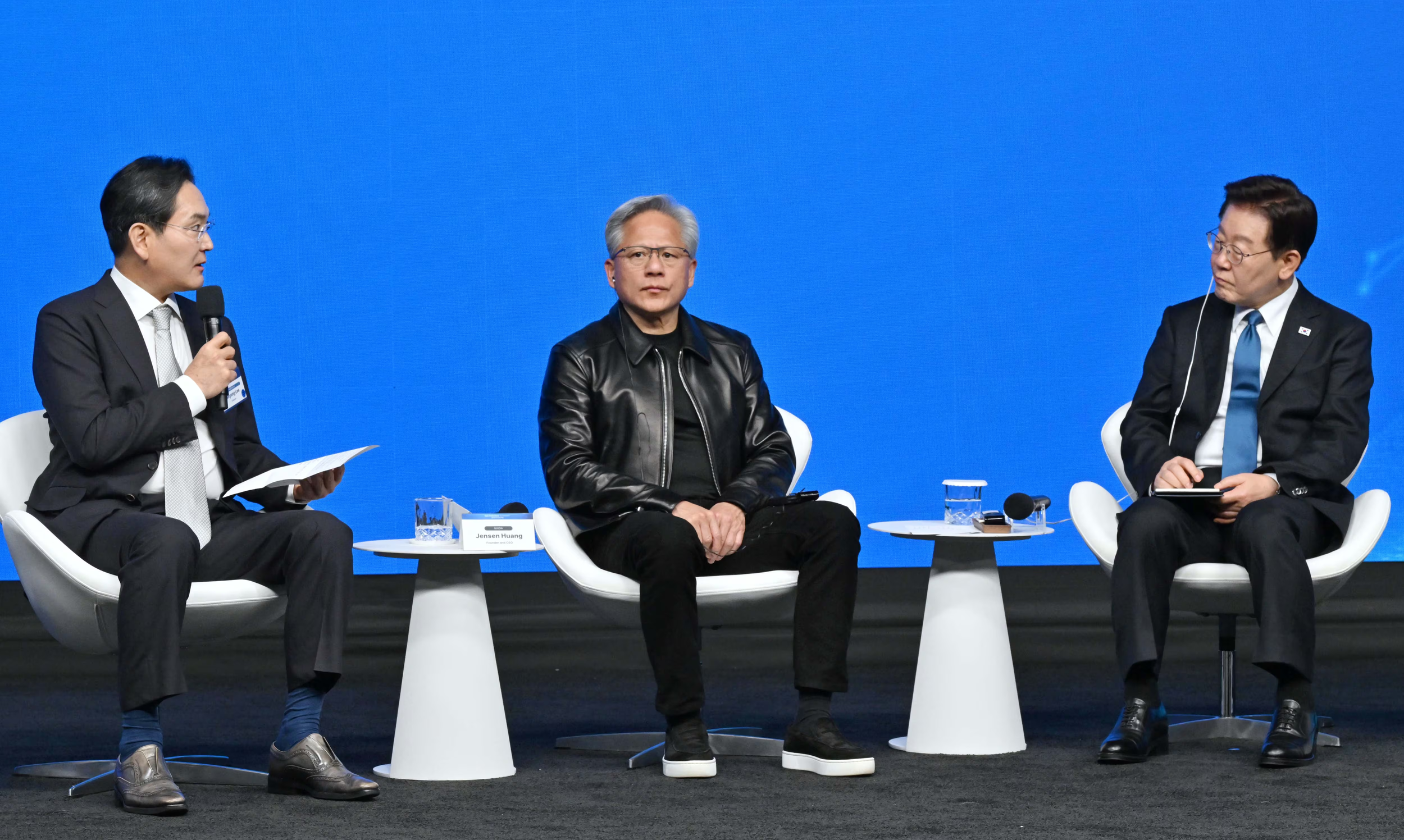
South Korea’s AI Summit in San Francisco became a major dealmaking event for the global semiconductor industry, producing agreements valued at more than $700 billion across artificial intelligence infrastructure, advanced memory, foundry manufacturing, and data centers. The largest announcement was a comprehensive partnership between NVIDIA and SK Group valued at more than $500 billion.
The agreement extends beyond a conventional memory supply contract. SK Telecom plans to construct an NVIDIA powered AI factory reaching up to 2 gigawatts, using Vera Rubin infrastructure supported by SK hynix HBM4 memory. The first AI factory is scheduled to become operational in 2027, with the broader infrastructure intended to serve growing compute demand across South Korea and the wider Asia Pacific region.
NVIDIA and SK hynix also entered a long term AI memory partnership designed to secure stable supplies of next generation memory while allowing both companies to jointly develop and optimize future HBM solutions. This expands the existing NVIDIA and SK hynix technology partnership, which already covers memory development for AI infrastructure, personal computing, physical AI, and future accelerated platforms.
The arrangement gives NVIDIA earlier access to SK hynix memory roadmaps and additional influence over how future HBM products are designed for its accelerators. For SK hynix, the agreement provides stronger demand visibility and a deeper position inside the Vera Rubin ecosystem at a time when advanced memory has become one of the most important constraints affecting global AI infrastructure deployment.
The partnership arrives as SK hynix warns that customer demand could remain above its available production capacity beyond 2030. News coverage of the projected memory shortage, long term supply agreements are becoming essential for companies preparing AI systems that require enormous volumes of HBM, server DRAM, and enterprise storage.
NVIDIA also announced a planned $1 billion investment in NAVER. Together with Brookfield, the companies intend to expand NAVER’s AI factory at its GAK Sejong data center from 55 megawatts to 200 megawatts by 2028. Brookfield has entered a nonbinding agreement to provide as much as $9 billion in financing, while NAVER intends to continue expanding toward 1 gigawatt of sovereign AI infrastructure.
Samsung and Broadcom delivered another major agreement at the summit, signing a memorandum of understanding covering more than $200 billion in expected collaboration through 2030. The companies plan to work together across HBM supply, Samsung’s 2nm and smaller foundry processes, and advanced 2.3D and 2.5D packaging for future AI accelerators, networking silicon, and high speed communications products.
Following the formal announcements, South Korean President Lee Jae myung joined senior executives from NVIDIA, OpenAI, Broadcom, Microsoft, Samsung, SK Group, Hyundai Motor, and NAVER for a dinner presented as a meeting between members of the same AI industry family. During the gathering, Huang reportedly requested another drink before President Lee joked that the government official responsible for paying the bill might not approve the additional order.
The $500 billion figure may capture the headlines, but the most important part of the NVIDIA and SK partnership is the combination of infrastructure and memory. NVIDIA is not only reserving future HBM capacity. It is helping create the data centers that will consume that memory through Vera Rubin systems.
This creates a tightly connected supply chain where NVIDIA provides the accelerated computing platform, SK hynix supplies the critical HBM, and SK Telecom operates the infrastructure. Samsung and Broadcom are pursuing a similar integrated strategy across foundry production, memory, and packaging.
The summit shows that the AI race is moving beyond individual GPUs. Future leadership will depend on securing electricity, data center capacity, advanced packaging, networking, and memory years before the hardware enters production. Jensen Huang asking for another beer provided the lighter moment, but the agreements signed around the table represent a serious consolidation of the global AI supply chain.
Will these enormous long term AI agreements prevent future supply shortages, or concentrate too much infrastructure under a small group of companies?
