
Intel Diamond Rapids Xeon 7 Reportedly Targets 256 P Cores to Match AMD EPYC Venice
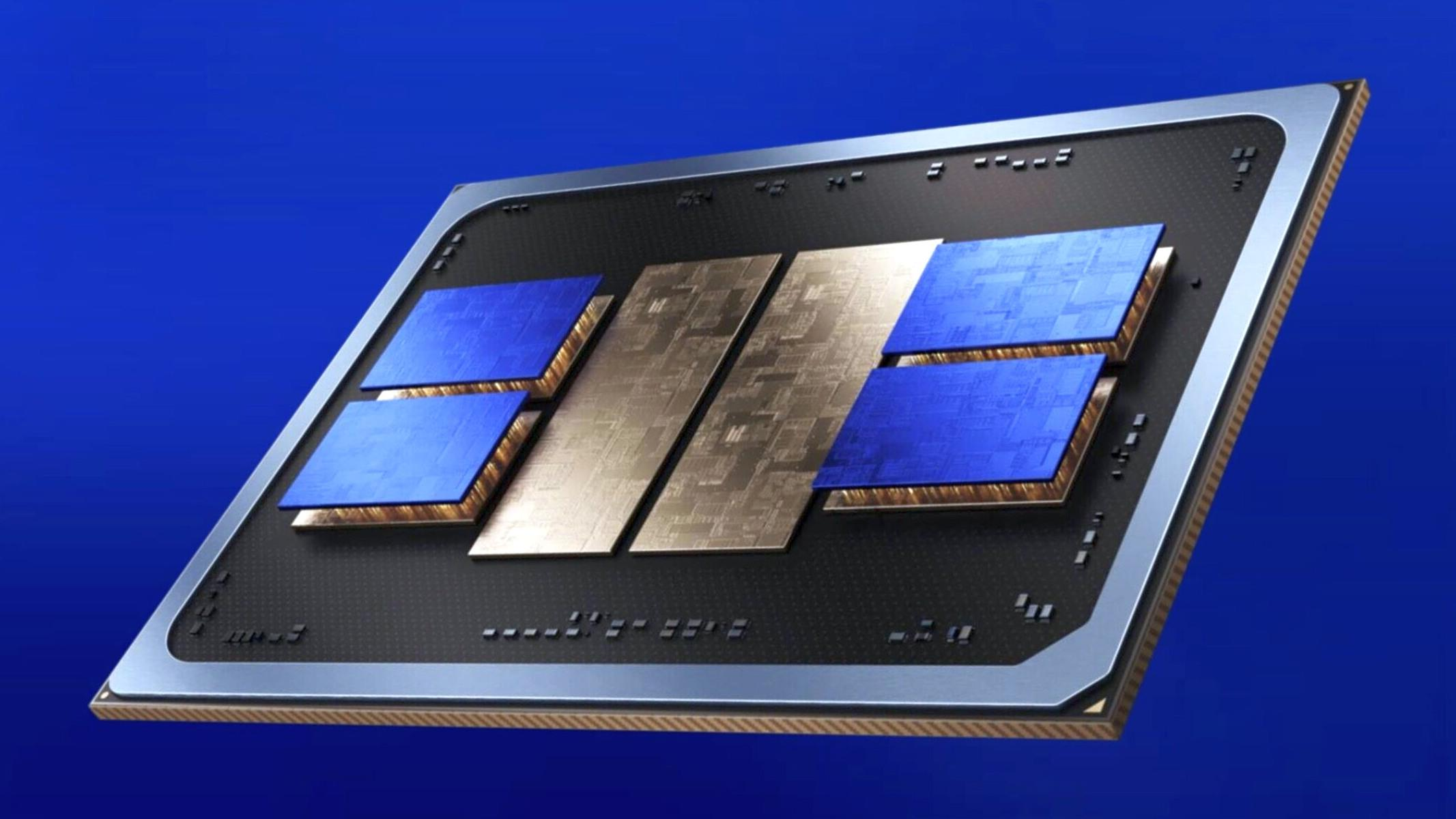
Intel could be preparing a significantly larger flagship for its next generation Diamond Rapids Xeon 7 family than previously expected, with new information suggesting the platform may scale to as many as 256 P cores. Hardware leaker Jaykihn states that the top Diamond Rapids configuration contains 256 performance cores, potentially allowing Intel to match AMD at the highest end of the server CPU market when measured purely by physical core count. The specification remains unconfirmed by Intel, so the 256 core configuration should still be treated as preliminary until the company reveals the complete Xeon 7 product stack.
The top-end variant of Diamond Rapids has 256 P cores.
— Jaykihn (@jaykihn0) August 8, 2026
The new information changes the picture around Diamond Rapids considerably. Intel has officially positioned Xeon 7 for 2027, with the architecture expected to deliver approximately 50% more cores than the current P core Xeon generation, twice the memory bandwidth, PCIe 6.0 connectivity, and a 16 channel memory subsystem. Based on the 128 cores available with the Xeon 6980P, that 50% increase initially pointed toward approximately 192 cores. A 256 core flagship would push Intel substantially beyond that calculation and suggests that selected Diamond Rapids configurations could use a more aggressive compute arrangement than previously anticipated.
The development follows the recent appearance of an early Diamond Rapids Xeon 7 engineering sample, which was detected on Intel's Johnson City reference platform with 32 cores, 64 MB of L2 cache, 240 MB of L3 cache, and a frequency of only 1.1 GHz. That chip was clearly early validation silicon rather than a representation of the final product stack, but its appearance showed that Diamond Rapids hardware is already operational on Intel's Oakstream platform as development continues toward the planned 2027 launch.
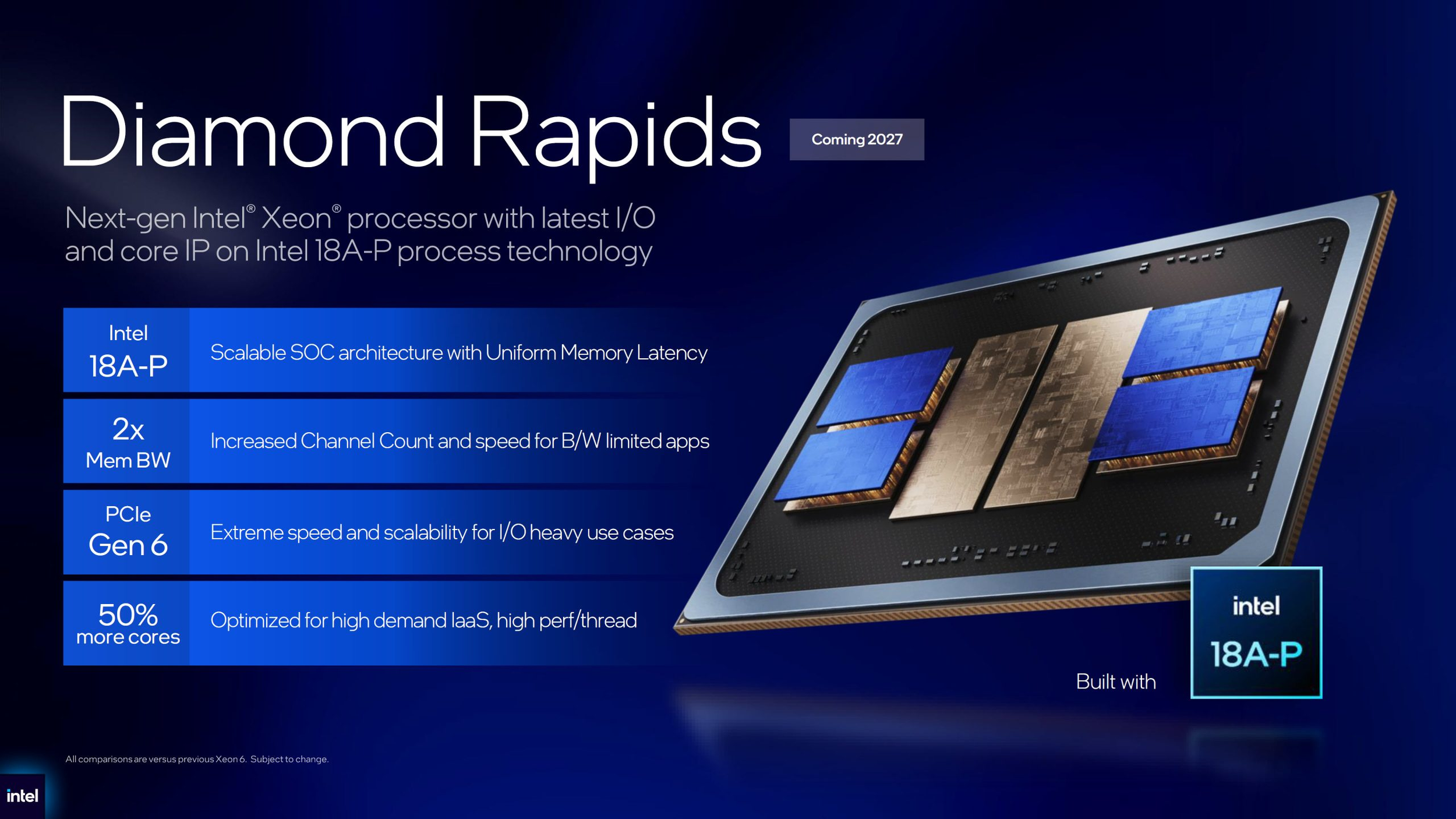
Diamond Rapids is also expected to become one of Intel's major products based on the enhanced Intel 18A P process. Intel says 18A P can provide more than 9% higher performance at the same power or more than 18% lower power at equivalent performance compared with standard 18A. The process continues using RibbonFET gate all around transistors and PowerVia backside power delivery, making Xeon 7 an important test not only for Intel's server roadmap but also for its broader manufacturing strategy.
The challenge for Intel is that AMD has already reached the 256 core target. The AMD EPYC 9006 Venice family is based on Zen 6 and Zen 6c architectures, with the flagship EPYC 9996 delivering 256 cores and 512 threads. AMD also supports up to 16 memory channels with MRDIMM speeds reaching 12.8 GT/s and PCIe 6.0 connectivity. The company officially states that the EPYC 9996 currently provides the highest publicly disclosed core count for a single socket CPU.
AMD also has a substantial timing advantage. Venice entered production ramp using TSMC's 2 nm process earlier in 2026 and has since moved into the commercial EPYC 9006 generation, while Diamond Rapids is positioned for 2027. Our previous look at EPYC Venice and its 256 core design showed an architecture using 8 compute dies surrounding 2 large I O dies, illustrating the enormous chiplet scale required to deliver this level of CPU density.
A 256 P core Diamond Rapids processor would give Intel an important headline specification against AMD, but core count alone will not determine the winner. Modern data center platforms are increasingly constrained by memory bandwidth, power consumption, rack density, I O performance, software optimization, and total deployment cost. AMD already has 256 core Zen 6 silicon in the market, so Intel's larger challenge is delivering comparable or stronger performance per watt when Diamond Rapids arrives in 2027.
Diamond Rapids could still become one of Intel's most important Xeon generations in years. Combining as many as 256 performance cores with 16 memory channels, PCIe 6.0, substantially higher memory bandwidth, and Intel 18A P would represent a major architectural jump. The key question is whether Intel can turn those specifications into competitive production silicon quickly enough to reduce AMD's current lead.
If Intel launches Diamond Rapids with 256 P cores, do you think Xeon can regain ground against AMD EPYC, or does Venice already give AMD too much of a head start?
