
Intel Diamond Rapids Xeon 7 Sample Appears With 32 Cores and 240 MB L3 Cache
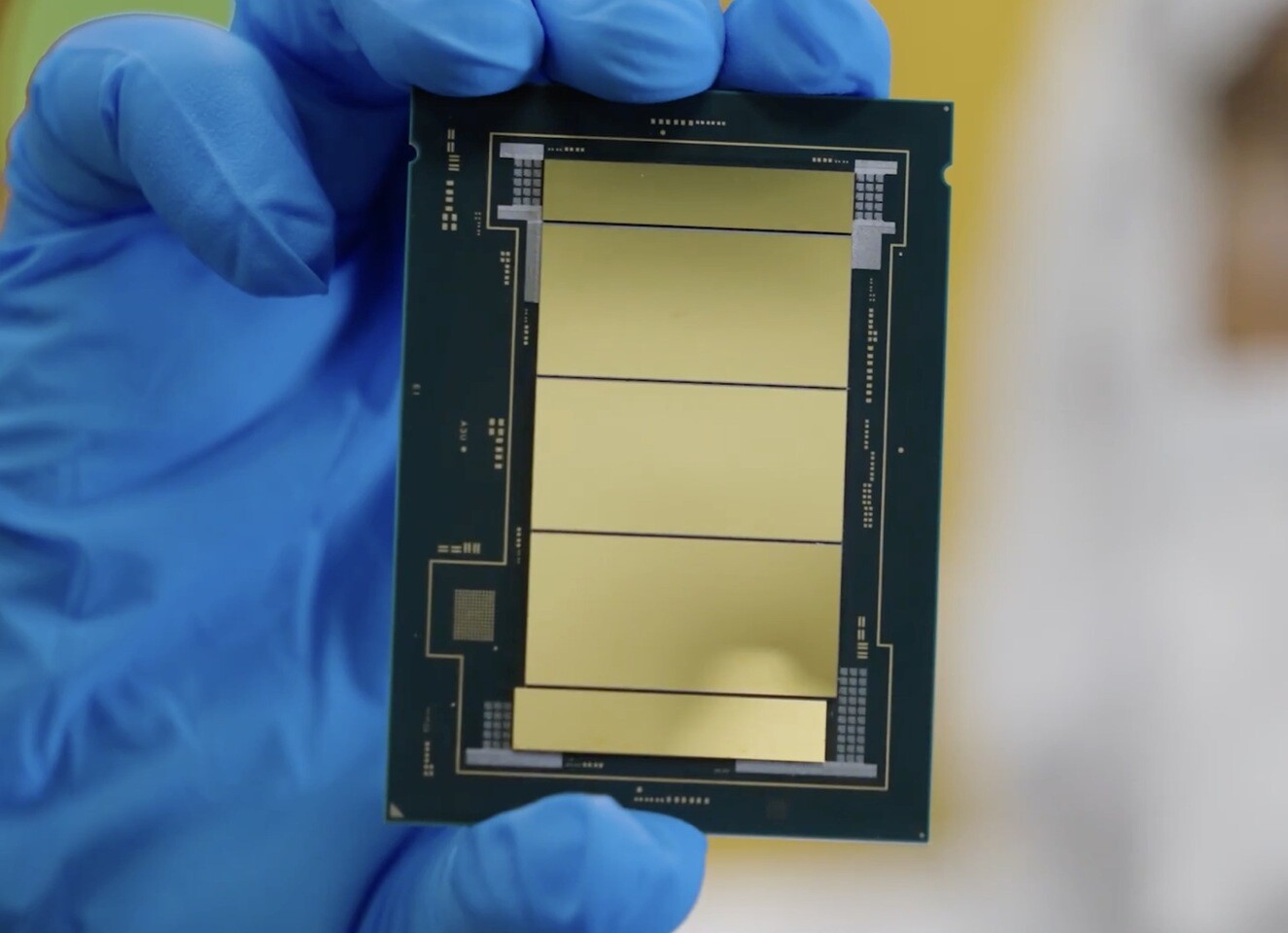
An early Intel Diamond Rapids Xeon 7 engineering sample has surfaced through the SiSoftware benchmark database, providing one of the first public looks at working silicon from Intel’s next major data center CPU generation. The processor was detected on Intel’s Johnson City reference platform with 32 cores, 64 MB of L2 cache, 240 MB of L3 cache, and a clock speed of only 1.1 GHz, strongly indicating that the chip remains an early engineering sample rather than anything representative of final performance.
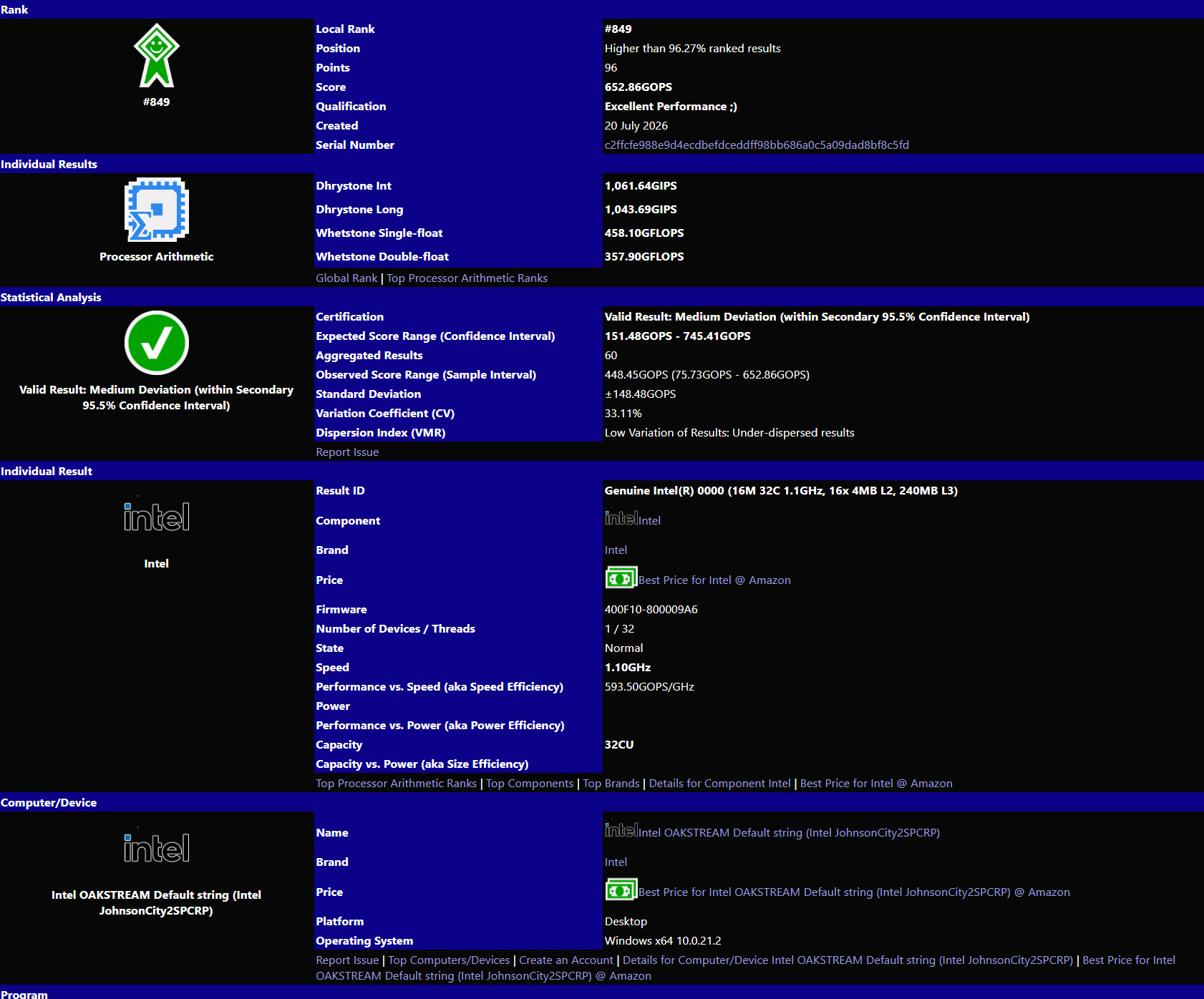
The report identifies the processor as a Diamond Rapids P sample running on Intel’s Oakstream platform. The benchmark itself lists the system as Intel OAKSTREAM JohnsonCity2SPCRP and records 32 cores operating at 1.1 GHz, alongside 16 individual 4 MB L2 cache blocks and the unusually large 240 MB shared L3 cache. The result was created on July 20, 2026.
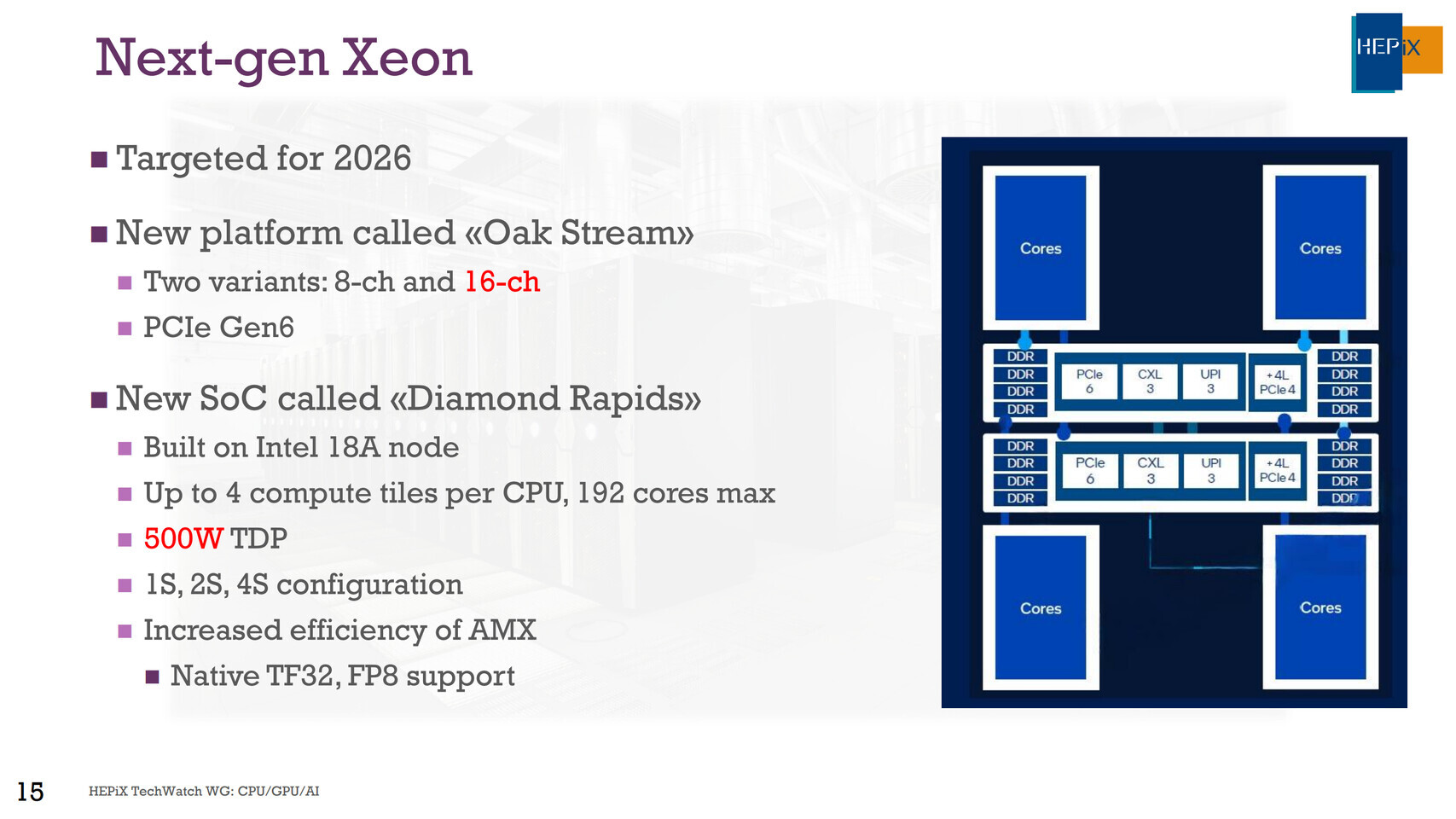
The 32 core configuration should not be interpreted as the maximum specification for Diamond Rapids. Intel has already confirmed that Xeon 7 will arrive in 2027 with around 50% more cores than its current P core Xeon generation, twice the memory bandwidth, PCIe 6 connectivity, and a 16 channel memory architecture. Current reports point toward configurations reaching as high as 192 P cores, placing Diamond Rapids directly against AMD’s Zen 6 based EPYC Venice family.
The large cache configuration is also notable, although it is not unprecedented in the server market. Intel already offers Granite Rapids processors with considerably larger cache capacities, including the Xeon 6730P with 288 MB, while AMD offers 32 core EPYC 9005 configurations with up to 256 MB of L3 cache. The 240 MB figure on this early sample therefore provides more insight into how Intel may configure selected Diamond Rapids products than a direct indication of where the final flagship will land.
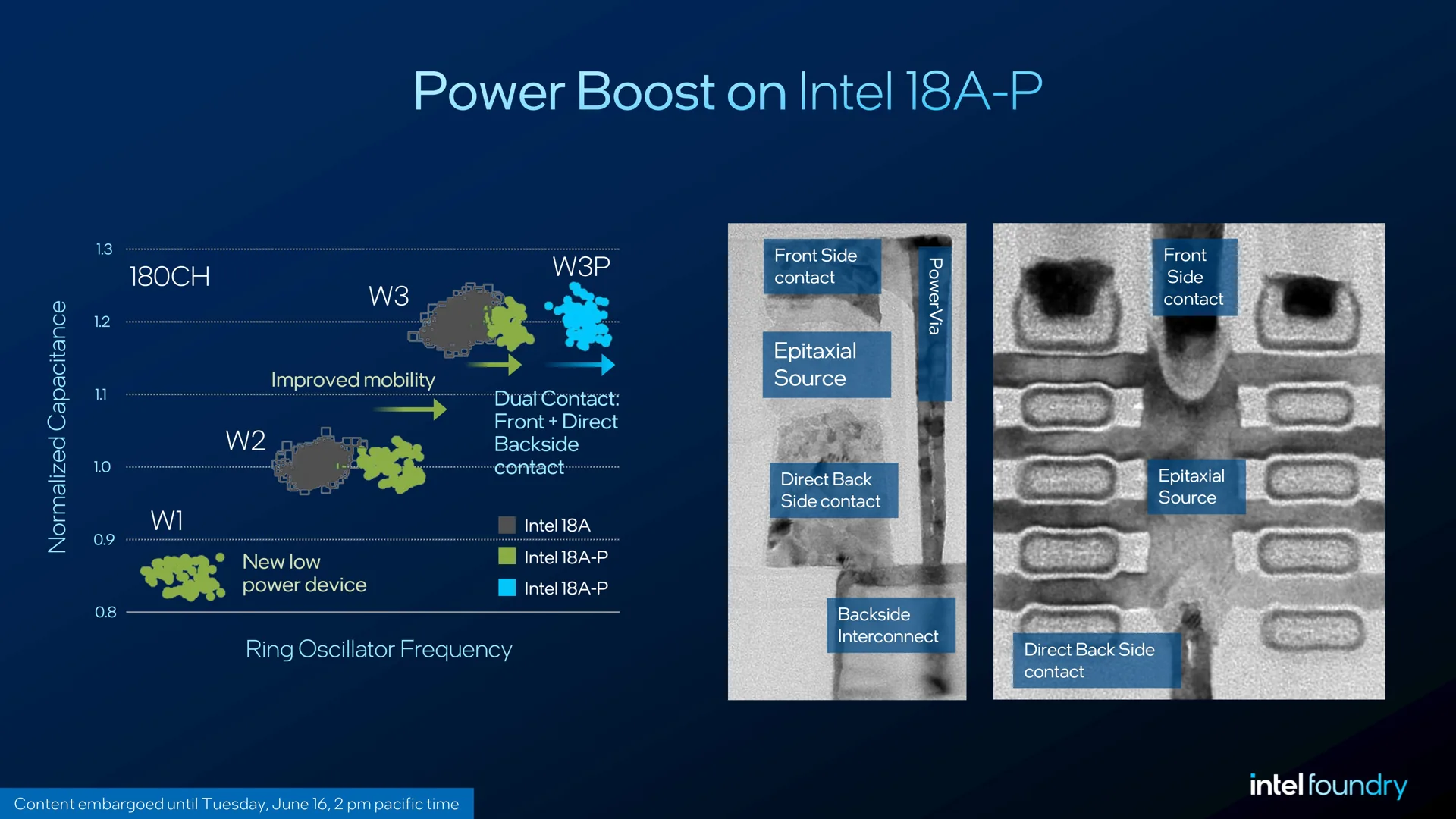
Diamond Rapids is particularly important because it will become one of Intel’s first major products manufactured using the enhanced Intel 18A P process. Intel says 18A P can provide more than 9% higher performance at the same power or more than 18% lower power at equivalent performance compared with standard 18A. The process continues using RibbonFET transistors and PowerVia backside power delivery while introducing additional transistor, interconnect, resistance, and thermal improvements.
The appearance of functioning Diamond Rapids silicon also follows Intel 18A P entering risk production, providing another indication that Intel is progressing toward its 2027 Xeon launch. The company will need Diamond Rapids to demonstrate not only stronger server performance, but also that its advanced manufacturing roadmap can deliver large and complex commercial products on schedule.
Intel’s Oakstream platform is expected to support extremely high power configurations, with Johnson City reference hardware previously appearing with support for processors reaching as high as 650W. Diamond Rapids is also associated with the massive LGA 9324 socket, reflecting the scale required for additional memory channels, connectivity, compute tiles, and power delivery inside next generation enterprise systems.
The most interesting part of this leak is not the 32 core count or the 1.1 GHz frequency. Engineering samples this early are designed for validation, and those numbers tell us very little about final performance. What matters is that Diamond Rapids silicon is already appearing on Intel’s Oakstream reference platform with a substantial cache configuration while 18A P moves deeper into development.
Intel now has to convert that progress into competitive commercial silicon. AMD is applying pressure with Zen 6 EPYC, while cloud providers increasingly evaluate processors around memory bandwidth, efficiency, platform density, and AI infrastructure requirements rather than core count alone.
Diamond Rapids could become one of the most important validations of Intel’s server and foundry strategy. If 18A P delivers the expected efficiency improvements while Oakstream doubles memory bandwidth, Intel will have a considerably stronger platform for competing in the 2027 data center market.
Can Diamond Rapids and Intel 18A P put Xeon back into a stronger position against AMD EPYC?
