
BetterVR Turns Zelda Breath of the Wild Into Full VR After Thousands of Hours of Reverse Engineering
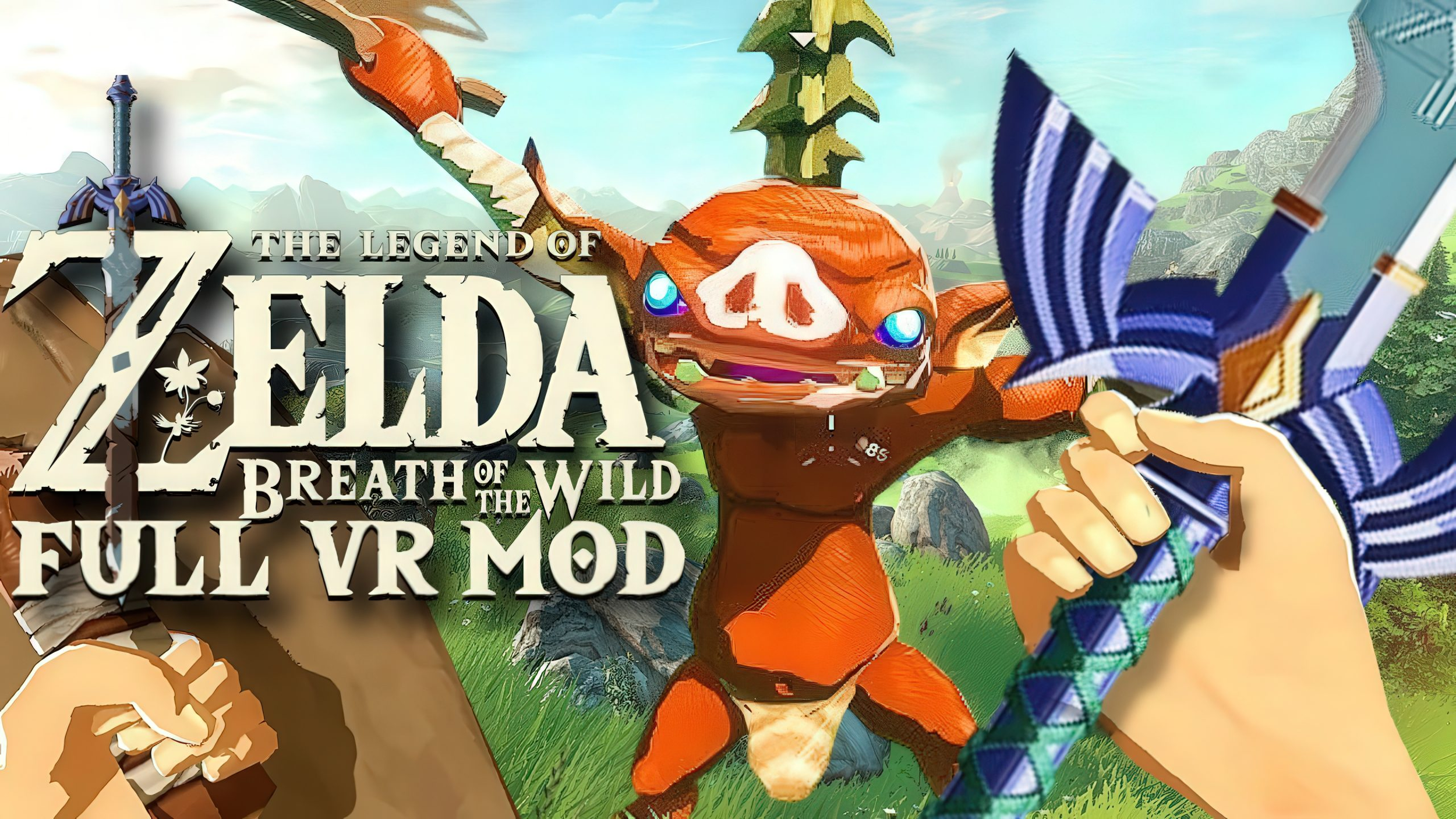
The Legend of Zelda: Breath of the Wild has been transformed into a significantly more complete PC VR experience through the latest version of BetterVR, a community project developed by Crementif that runs the Wii U version of the game through the CEMU emulator. BetterVR has received around 20 updates since its first release approximately 7 months ago, introducing major improvements to rendering, interaction, compatibility, and overall VR presentation. The latest version provides full stereoscopic rendering with 6DOF tracking and roomscale support, while also rendering Link's hands and arms directly within the VR environment. Players can physically wield weapons, torches, and other objects, use gestures to equip or throw weapons, perform motion based attacks, interact with puzzles, and use motion controls for environmental actions such as starting fires. An optional third person mode is also available. Because BetterVR primarily modifies game code rather than replacing game data, the developer says it maintains compatibility with many existing Breath of the Wild mods.
BetterVR uses OpenXR for headset compatibility, allowing it to work with devices including Meta Quest, Valve Index, HTC Vive, Oculus Rift, and Windows Mixed Reality hardware, although integrated controller bindings currently focus primarily on Oculus Touch. The project requires a legally obtained Wii U copy of Breath of the Wild, Windows, a gaming PC with strong CPU performance, and a properly configured recent version of CEMU capable of running the game at 60 FPS or higher. This is particularly interesting considering previous experimentation with CEMU and Zelda emulation, which has already demonstrated how extensively Nintendo titles can be transformed when moved beyond their original hardware environment. For Meta Quest players, the developer currently recommends ALVR, Virtual Desktop, or Steam Link rather than Meta Quest Link because of interpolation issues that can negatively affect image quality and perceived performance. Full installation details and development information are available through the official BetterVR project.
The most impressive part of BetterVR is what happens underneath the headset. The project uses a Vulkan layer positioned between CEMU and the graphics hardware to intercept the Vulkan commands generated by the emulator and obtain the final rendered image. Because OpenXR is not designed to operate directly within this type of Vulkan interception layer, BetterVR uses Vulkan and D3D12 interoperability to move the captured image into a D3D12 application that can communicate correctly with the VR runtime. Simply displaying the original image inside a headset would still produce a flat virtual screen, however, so Crementif also had to modify the original game code. PowerPC assembly patches alter how Breath of the Wild renders frames, allowing the game to generate separate perspectives for each eye while additional modifications continuously adjust the camera, player positioning, Link's hands, attacks, and other elements required for convincing stereoscopic VR. BetterVR even includes swing and stab detection designed to make physical combat behave more naturally rather than allowing players to exploit weapon collision boxes.
Reverse engineering Breath of the Wild itself was reportedly the most demanding part of development. The game uses a custom C++ engine with limited public documentation, forcing Crementif to identify and understand relevant sections of the executable before they could be modified for VR. An incomplete community decompilation project provided some assistance, but the developer estimates that this reverse engineering process required thousands of hours. Development is also continuing, with planned additions including multiplayer support, a major stereo rendering performance update, Linux support, and dual wielding. Crementif has additionally indicated that Mario Kart 8 VR support is being explored, potentially expanding BetterVR beyond Zelda into a broader framework for transforming Wii U games into immersive PC VR experiences.
BetterVR is more technically interesting than a conventional VR injector because it demonstrates how reverse engineering, emulation, graphics API interception, and direct game code modification can work together to fundamentally change how an existing title is played. Breath of the Wild was never designed around stereoscopic rendering, tracked hands, roomscale movement, or physical combat, yet community developers have effectively created an additional interaction layer around Nintendo's original game. With Nintendo itself continuing to revisit Zelda through projects such as the upcoming Ocarina of Time remake for Nintendo Switch 2, BetterVR highlights a very different approach to preserving and evolving older games, driven not by remasters or new hardware, but by technically ambitious community engineering.
Would you play Breath of the Wild entirely in VR, and which other Nintendo game would you want to see receive the same treatment?
