
Intel Nova Lake 16 Core Desktop CPU Reportedly Reaches 154W PL2 as 12 Xe3P iGPU Gets 40W
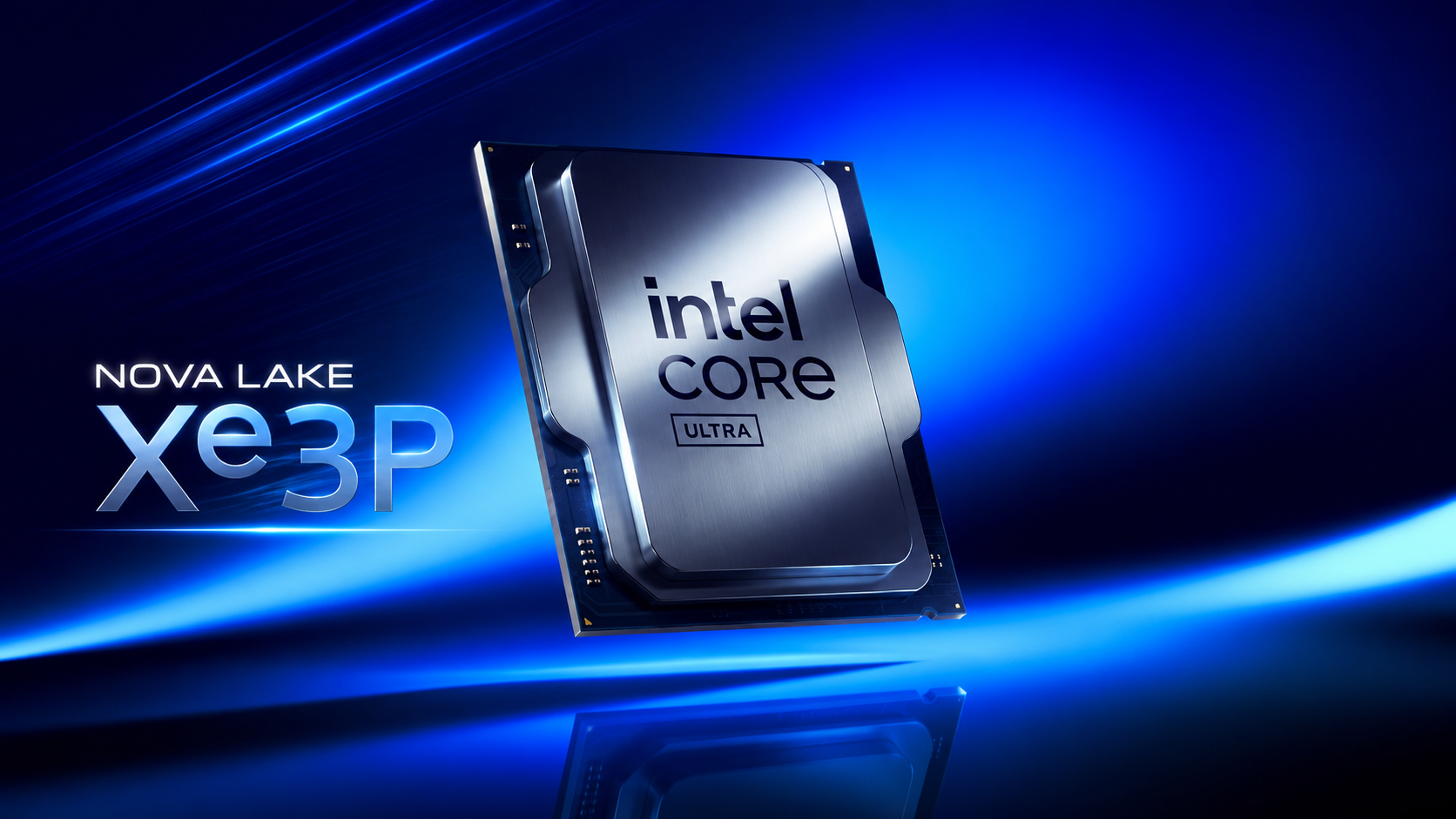
Intel appears to be preparing a significantly more powerful integrated graphics option for its next generation Nova Lake desktop processors, with new information pointing to a 16 core SKU featuring 12 Xe3P graphics cores and a chip wide PL2 power limit of 154W. According to hardware leaker Jaykihn, the integrated GPU itself is currently configured with a 40W PL2 limit, highlighting how seriously Intel may be targeting desktop systems capable of meaningful gaming performance without a discrete graphics card.
The reported Nova Lake S configuration combines 4 Performance cores, 8 Efficient cores, and 4 Low Power Efficient cores for a total of 16 CPU cores, alongside 12 Xe3P graphics cores. Earlier information from Jaykihn identified the configuration as preliminary and revealed that the processor requires 2 dedicated VCCGT power phases for its integrated graphics. This is considerably more substantial than the basic display focused iGPUs traditionally included with mainstream Intel desktop processors.
"The iGPU specific PL2 is currently 40W. The chip wide PL2 is currently 154W."
— Quote by: Jaykihn.
Another important detail concerns motherboard power delivery. The 12 Xe3P model reportedly requires a specific 65W level power delivery segment to achieve its full graphics performance and is currently the only Nova Lake segment requiring 2 VCCGT phases. This should not necessarily be interpreted as confirmation that the processor itself has a 65W base power specification. Instead, the information specifically refers to the power delivery configuration required to support the integrated graphics design.
The graphics architecture is also receiving more cache. The 12 Xe3P configuration reportedly carries 20MB of L2 cache, compared with 16MB on Intel's current 12 Xe3 Panther Lake graphics configuration, representing a 25% increase. Intel has already demonstrated that its Xe3 architecture can provide a major integrated graphics performance increase through Panther Lake. The company officially states that its Core Ultra Series 3 processors can include up to 12 Xe cores and deliver more than 50% higher graphics performance compared with the previous generation.
Nova Lake would push that strategy further with Xe3P, which is expected to serve as the next step in Intel's graphics architecture. As previously covered in our Intel Xe graphics roadmap, Xe3P is expected to appear across several integrated graphics configurations and represents an important part of Intel's effort to strengthen graphics performance beyond traditional entry level integrated solutions.
The desktop configuration could also create more direct competition with AMD's Ryzen G series. AMD's current Ryzen 7 8700G combines an 8 core CPU with Radeon 780M integrated graphics inside a 65W TDP, while Intel's rumored Nova Lake configuration would offer twice the CPU core count alongside a substantially larger Xe3P graphics block. Direct performance comparisons are not yet possible because Intel has not officially announced this Nova Lake SKU or published final clocks, memory support, power specifications, or gaming benchmarks.
Memory performance will also be critical. Integrated graphics depend on system memory rather than dedicated VRAM, meaning DDR5 bandwidth and platform memory tuning can have a significant impact on gaming performance. If Intel intends the 12 Xe3P configuration to compete seriously with desktop APUs, strong memory support will be just as important as the additional GPU cores and 40W graphics power budget.
The Nova Lake family is expected to introduce a much broader range of configurations than Intel's current desktop lineup, while early software support is already beginning to appear. AIDA64 8.30 recently added early support for Nova Lake processors, another sign that software developers are preparing ahead of the platform's expected arrival.
Intel has not officially confirmed the 16 core Nova Lake S configuration, the 154W PL2 limit, the 40W graphics allocation, or the final Xe3P specifications, so all of these details should remain classified as preliminary until the company provides its own platform information.
The most interesting part of this leak is not the 154W peak power figure by itself. It is the fact that Intel appears willing to dedicate as much as 40W specifically to integrated graphics on a mainstream desktop processor. That would move the iGPU far beyond basic display duties and position Nova Lake as a legitimate alternative for compact gaming systems, entry level desktops, and users who want useful graphics performance without immediately purchasing a discrete GPU.
The 20MB L2 cache and dedicated motherboard power requirements also suggest Intel is treating the 12 Xe3P configuration as a serious graphics product rather than simply increasing the number of Xe cores on paper. If Xe3P can build meaningfully on Panther Lake while receiving enough memory bandwidth, this could become one of Intel's strongest challenges yet to AMD's desktop APU strategy.
The obvious tradeoff is power. A 154W chip wide PL2 is substantial for a 16 core processor aimed at integrated graphics, even if that figure represents short term maximum power rather than continuous consumption. Efficiency, real gaming performance, DDR5 scaling, and motherboard requirements will ultimately determine whether this approach makes sense once final hardware arrives.
Would you consider building a gaming PC around a 12 Xe3P Nova Lake processor if its integrated graphics could replace an entry level discrete GPU?
