
Intel Xe GPU Roadmap Points to Xe3P in 2026, Xe4 in 2027, and Xe Next in 2028
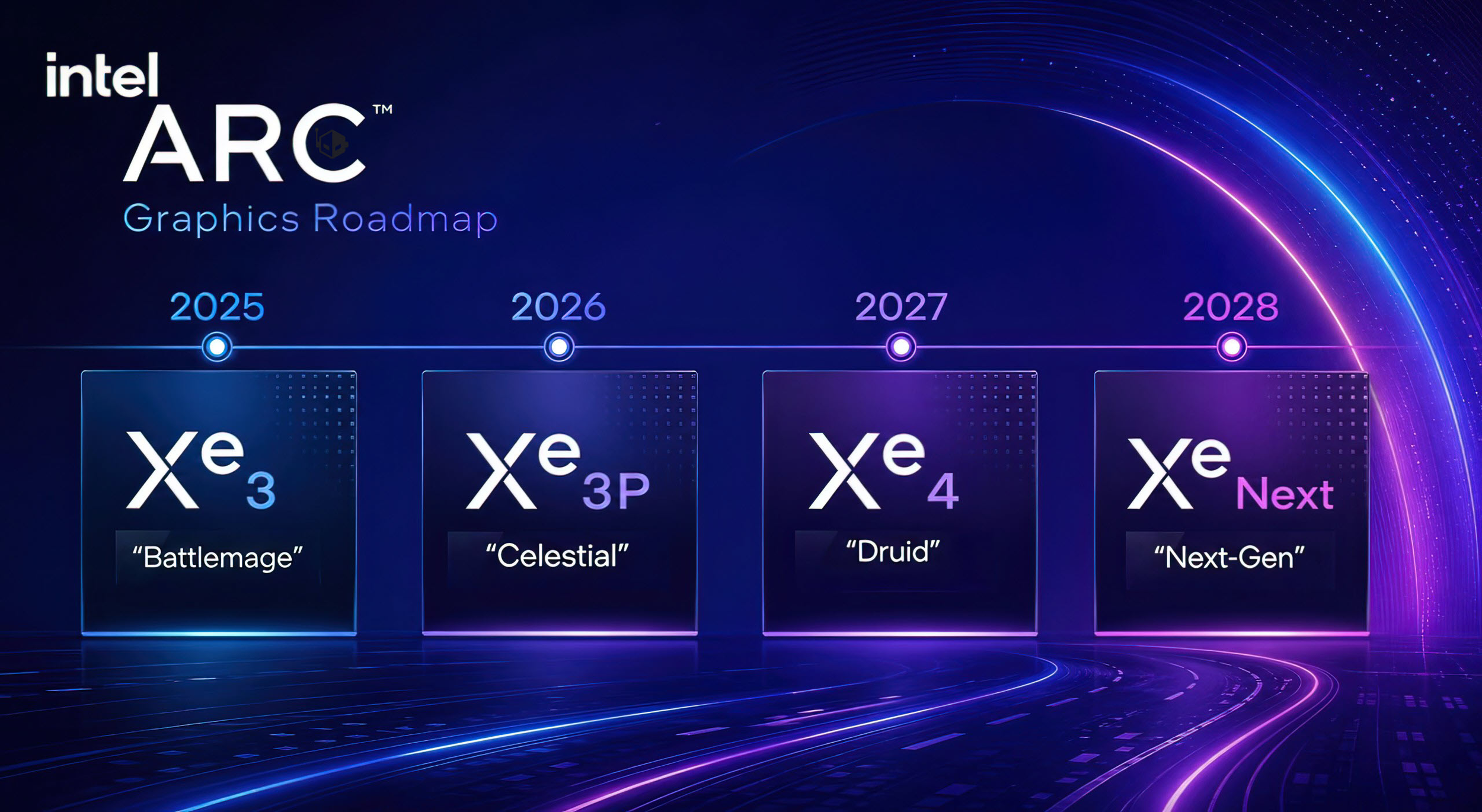
Intel’s future GPU roadmap is starting to take shape, and the latest information suggests the company is preparing at least 3 major Xe graphics architectures across 2026, 2027, and 2028. However, while the roadmap appears active across integrated graphics, workstation graphics, and AI accelerators, the future of Intel’s discrete gaming GPU lineup remains far less certain.
According to information shared by Jaykihn on X, Intel’s next wave of Xe GPU development will include Xe3P, Xe4, and a later Xe successor that is currently not officially named Xe5. These architectures are expected to support multiple product categories, including integrated GPUs for future Intel processors, discrete AI products, workstation solutions, and rack scale accelerators.
Xe4 successor mid-to-late 2028.
— Jaykihn (@jaykihn0) April 24, 2026
Crescent Island successor mid-to-late 2028.
Jaguar Shores successor late 2028, introduces rack-scale segment.
The first major step is Xe3P, which is expected to arrive in 2026. Xe3P is described as the direct follow up to Xe3 and will form the foundation of Intel’s Celestial series. This architecture is expected to appear in both integrated and discrete GPU designs, although not necessarily in the way gaming fans might want.
Xe3P will reportedly play an important role in Intel’s next generation Nova Lake family. On mobile platforms, Nova Lake is expected to include configurations with up to 12 Xe cores, giving Intel stronger integrated graphics options for future laptops. A desktop SKU with the same 12 Xe core configuration is also reportedly planned, which could allow Intel to better compete with AMD’s Ryzen APUs in desktop systems where integrated graphics performance is becoming more relevant.

This matters because integrated graphics are no longer only a basic display solution. For thin laptops, small form factor PCs, handheld style systems, and entry level desktops, a stronger iGPU can meaningfully improve casual gaming, media acceleration, creative work, and AI assisted workloads. If Intel can deliver stronger Xe3P graphics inside Nova Lake, it could help the company compete more directly against AMD’s integrated Radeon graphics.
Xe3P is also expected to appear in Intel’s Crescent Island and Crescent Island Workstation products. These will reportedly use discrete GPUs, but they are not being positioned as gaming cards. Instead, they appear focused on AI and workstation markets. According to another update from Jaykihn on X, these products are expected to support LPDDR5X memory rather than HBM, likely as a way to reduce cost while still offering efficient AI performance.
No gaming GPUs.
— Jaykihn (@jaykihn0) April 24, 2026
That direction is important. Intel appears to be prioritizing lower cost AI acceleration and workstation use cases rather than chasing the gaming discrete GPU market with Xe3P. This follows the direction seen with Big Battlemage and the Arc Pro B Series, including products such as the Arc Pro B70. For professional and AI workloads, that strategy may make sense. For gamers waiting for a stronger Arc gaming lineup, it may feel disappointing.
The absence of clear Xe3P gaming graphics cards is one of the biggest questions in Intel’s roadmap. Intel entered the discrete gaming GPU market with Arc Alchemist and continued with Battlemage related products, but its future gaming direction has become harder to read. If Xe3P is mainly focused on integrated graphics, AI, and workstation products, then Intel may be taking a more selective approach rather than pushing aggressively into gaming GPUs every generation.
Looking ahead to 2027, Intel is reportedly preparing Xe4, which is expected to power future processor families such as Titan Lake and possibly Hammer Lake. Xe4 is also expected to be part of the Druid series, which appears to preserve one of Intel’s earlier GPU roadmap codenames.
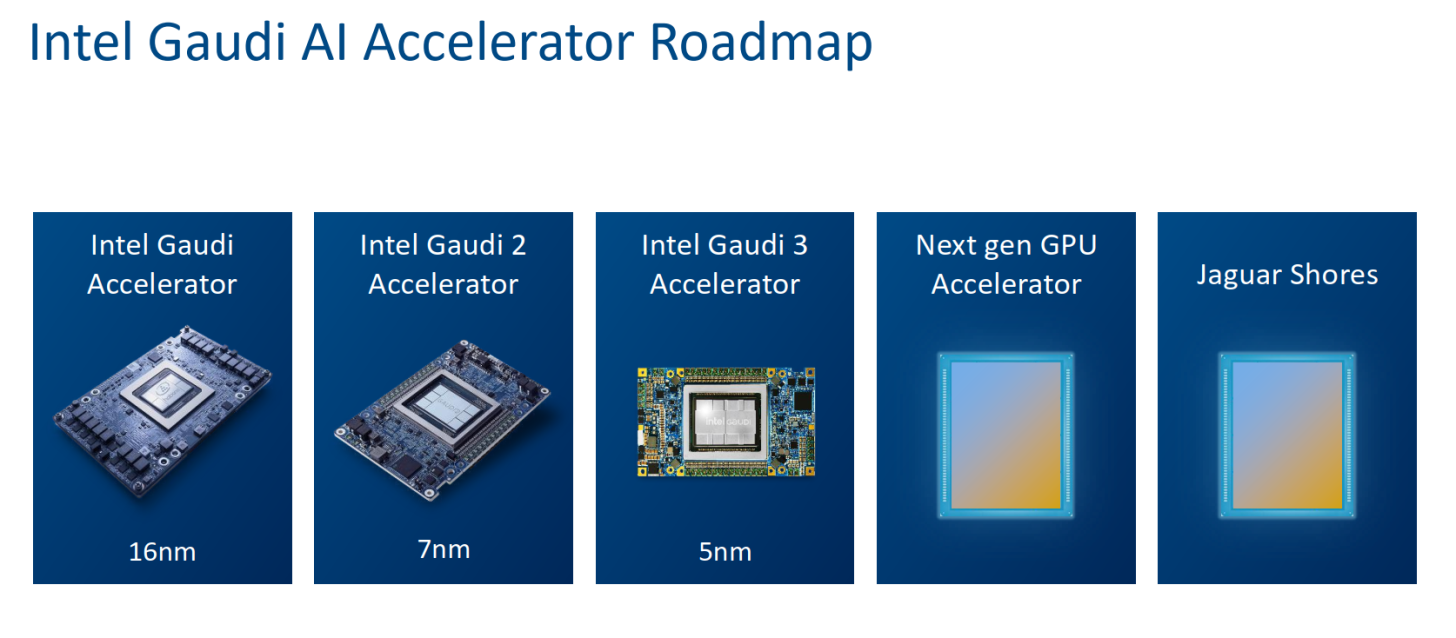
More importantly, Xe4 is expected to play a central role in Intel’s next generation Jaguar Shores rack scale AI solution. Jaguar Shores is one of Intel’s most important upcoming AI products, especially after the company changed direction from its earlier Falcon Shores strategy. The accelerator is expected to use advanced process technology, possibly Intel 18A, and feature HBM4 memory. According to Jaykihn on X, Xe4 based gaming GPUs may still be possible, but their status remains uncertain.
Arc is fine, but the Xe3p installment was cancelled.
— Jaykihn (@jaykihn0) April 24, 2026
This snapshot only spans a year or two. A drop in the bucket for product lines.
Jaguar Shores could become a key test for Intel’s AI ambitions. NVIDIA currently dominates the AI accelerator market, while AMD is pushing aggressively with its Instinct lineup. Intel needs a stronger and more coherent AI accelerator strategy if it wants to compete in data center workloads, and Xe4 may become part of that effort. With HBM4 and rack scale design, Jaguar Shores is clearly aimed at a much higher performance segment than Crescent Island.
The roadmap then moves to 2028, where Intel is reportedly planning the successor to Xe4. However, this architecture is not currently called Xe5. The final naming has not been decided, and more information is not expected until closer to launch, which may not happen until mid or late 2028. This future architecture may correspond to the next major step after Druid, although Intel’s naming and codename structure has changed several times over the past few years.
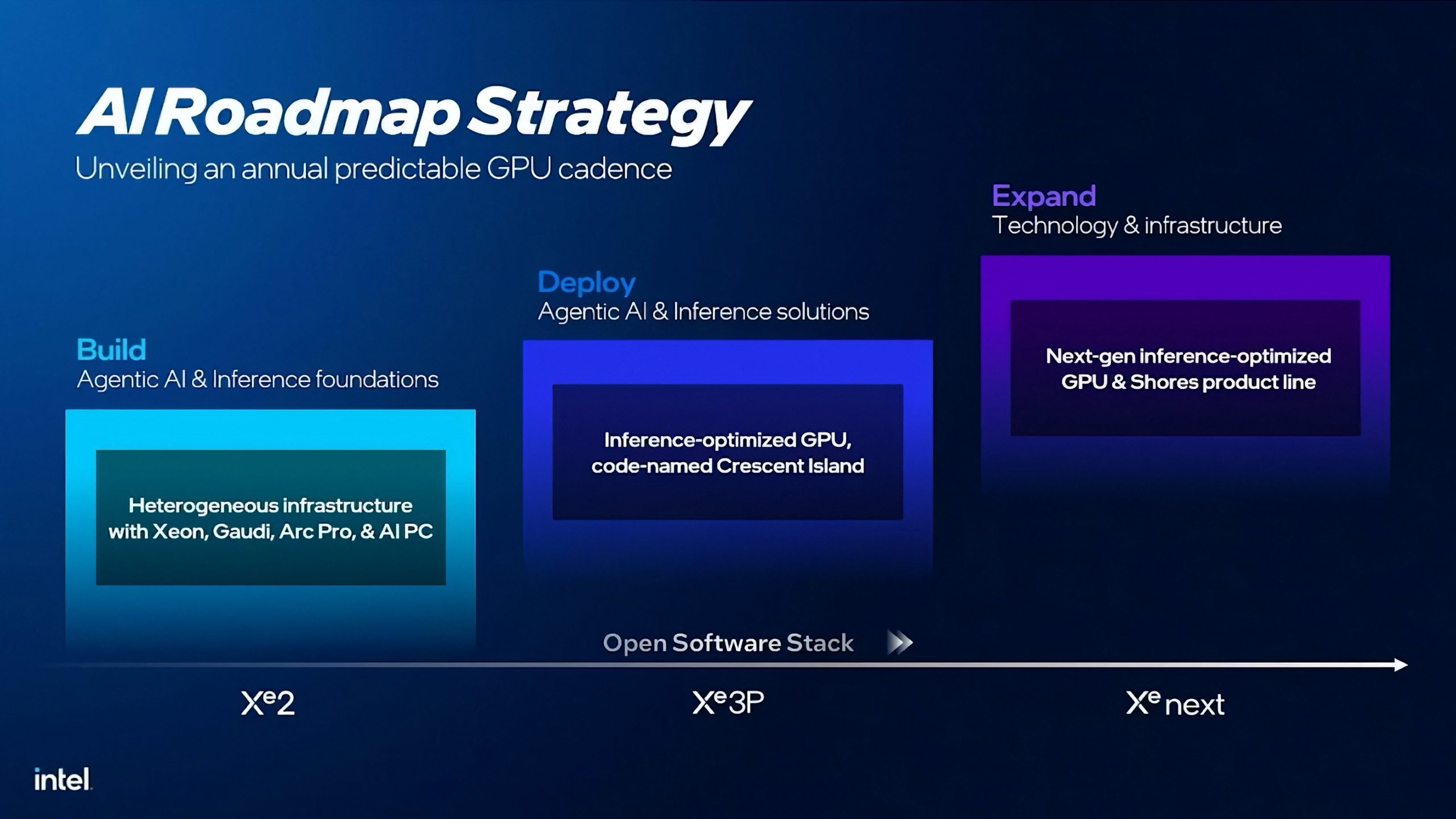
That confusion is part of the story. Intel’s GPU roadmap was once easier to follow: Xe1 was Alchemist, Xe2 was Battlemage, Xe3 was Celestial, and Xe4 was Druid. A later architecture was also associated with the Elasti codename. However, the roadmap has since shifted. Battlemage reportedly covered more than just Xe2, Xe3 became part of that broader change, and Xe3P is now being associated with Celestial rather than Xe4. According to Jaykihn on X, the only codenames that appear to have remained closer to the original roadmap are Xe1 Alchemist and the upcoming Xe4 Druid.
Xe3P = Celestial.
— Jaykihn (@jaykihn0) April 24, 2026
Followed by Xe4 down the line.
Xe4 successor may or may not be Xe5.
Intel’s graphical architecture naming is not as straightforward as integer iterations; Xe4 itself has had multiple names, and multiple architectures have been referred to as Xe4, over time.
For Intel, this roadmap shows that GPU development is still very much alive, but the priorities have changed. The company appears to be focusing more heavily on AI, workstation, integrated graphics, and rack scale accelerator markets. That makes sense from a business perspective because AI infrastructure is currently one of the fastest growing areas in semiconductors. However, it also leaves Intel’s Arc gaming community with more uncertainty.
Gaming GPUs are difficult. They require strong hardware, mature drivers, developer support, reliable game compatibility, strong pricing, marketing, and long term consumer confidence. Intel made real progress with Arc drivers, but competing against NVIDIA and AMD in discrete gaming graphics is still a major challenge. If Intel decides to reduce its gaming GPU focus while pushing AI and workstation products, that would be understandable, but it would also weaken consumer choice in the GPU market.
At the same time, integrated graphics could become a more important gaming battleground. If Xe3P in Nova Lake delivers strong performance, Intel may still improve gaming experiences for millions of users through laptop and desktop iGPUs. That would not satisfy enthusiasts waiting for high end Arc graphics cards, but it could still be meaningful for mainstream gaming and compact systems.
The bigger picture is that Intel is trying to position Xe as a flexible architecture family rather than only a gaming GPU brand. Xe3P may serve integrated graphics, AI, and workstation roles. Xe4 may power future client graphics and major AI accelerators like Jaguar Shores. The 2028 successor may push that strategy even further. This is a broader compute roadmap, not just a graphics card roadmap.
Still, Intel will need clearer messaging. The company has already gone through several GPU roadmap adjustments, and uncertainty can hurt confidence among developers, partners, gamers, and enterprise customers. If Intel wants Xe to be taken seriously across gaming, AI, and workstation markets, it needs a clearer explanation of which architectures serve which products and where Arc gaming fits into the long term plan.
For now, the reported roadmap suggests that Intel’s GPU future is active but changing. Xe3P should arrive in 2026 with Nova Lake integrated graphics and AI focused discrete products. Xe4 is expected in 2027 with Druid, Titan Lake, and Jaguar Shores. A later Xe successor may follow in 2028, though its final name and role remain unclear.
The biggest unanswered question remains simple: will Intel continue pushing Arc discrete gaming GPUs, or will Xe’s future be defined mostly by AI, workstations, and integrated graphics?
What do you think Intel should prioritize next: stronger Arc gaming graphics cards or AI focused Xe accelerators?
