
Intel Diamond Rapids 16 Channel Xeon Reportedly Slips Into 2027 With Up to 512 Cores
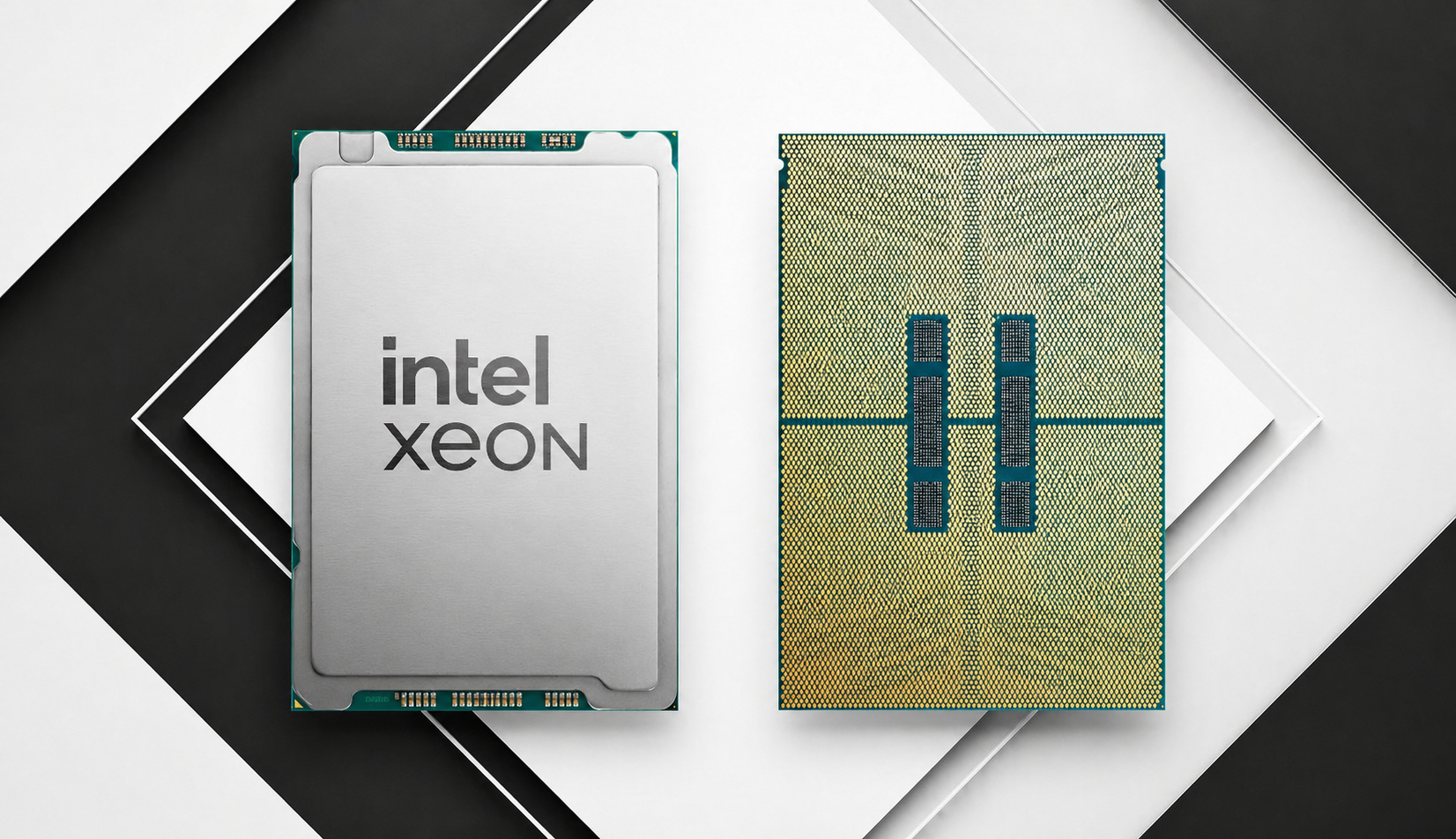
Intel’s Diamond Rapids Xeon roadmap appears to have shifted, with the next major data center CPU family now reportedly moving into 2027 instead of launching this year. According to information shared by Jaykihn, Intel’s current mid 2027 plans include a volume launch for Diamond Rapids on a 16 channel memory platform, with the lineup scaling to extremely high core counts across both performance core and efficiency core configurations.
Snapshot, subject to change.
— Jaykihn (@jaykihn0) April 24, 2026
Clearwater Forest 1H 2026.
Diamond Rapids mid 2027, 16CH.
Coral Rapids mid 2028, starting with 8CH.
As mentioned in Q1 call, may be accelerated.
Crescent Island and Crescent Island Workstation late 2026, Xe3p.
Jaguar Shores late 2027, Xe4.
The delay is notable because Diamond Rapids has been one of Intel’s most important upcoming Xeon families. It is expected to follow Granite Rapids and Clearwater Forest as Intel continues rebuilding its data center roadmap around higher core counts, advanced packaging, stronger memory bandwidth, and better platform scalability. The shift into 2027 may be tied to multiple factors, including yield targets, platform readiness, and the reported cancellation of the 8 channel Diamond Rapids line.
Under the latest reported plan, Diamond Rapids will initially scale up to 256 P cores, with a higher density version reaching up to 512 E cores a few months after the 16 channel platform launch. This would give Intel a much broader portfolio for different data center workloads, from high performance general purpose compute to massively parallel cloud, virtualization, and AI support tasks.
One of the most interesting details is that Diamond Rapids is expected to be the last Xeon family using a Non SMT architecture. After Diamond Rapids, Intel is reportedly planning to bring SMT support back with Coral Rapids. This matters because SMT can improve thread level throughput in certain workloads, especially in server environments where utilization efficiency is critical. Diamond Rapids may therefore represent a transitional generation before Intel makes another major architectural shift.
Diamond Rapids is also expected to use Panther Cove X as its P core architecture. This should bring meaningful improvements in instruction throughput, efficiency, and server optimized performance compared with previous Xeon cores. For Intel, the key goal will be delivering stronger per core performance while also scaling to extremely high socket level core counts.
According to another update from Jaykihn, both the standard 16 channel Diamond Rapids CPUs and the higher core count 512 core Diamond Rapids CPUs are expected to be compatible with the same platform. This is an important advantage for data centers, as it means customers may not need a different socket or platform to support Intel’s highest core count SKUs. Platform consistency can reduce validation complexity, simplify infrastructure planning, and make upgrades easier for cloud and enterprise customers.
Yes, 512C, follows DMR 16CH by a quarter or two.
— Jaykihn (@jaykihn0) April 24, 2026
Diamond Rapids is also expected to introduce new tile designs. One of the major additions is the CBB, or Core Building Block, which acts as the compute tile. Unlike Granite Rapids, where the integrated memory controller was placed on the same tile, Diamond Rapids reportedly separates the memory controller from the compute tile. That design choice may give Intel more flexibility in scaling core counts, memory channels, and platform configurations.
Early platform details point to support for up to 650W TDPs on the LGA 9324 platform, with multi socket capabilities. That level of power target shows how aggressively Intel is scaling Diamond Rapids for high end server environments. Modern data center CPUs are being pushed harder than ever, not only for traditional server workloads, but also for AI infrastructure, agentic AI control planes, data processing, storage orchestration, and high throughput enterprise compute.
The timing of Diamond Rapids is also closely tied to the rise of agentic AI. As AI infrastructure evolves beyond training large models, CPUs are becoming more strategically important. Agentic workloads require orchestration, scheduling, memory management, tool calling, data flow control, and service coordination. Those tasks do not always require the largest GPU clusters, but they do require strong CPU platforms with high memory bandwidth, reliable I O, and scalable multi socket support.
This is where Intel’s Xeon roadmap could regain momentum. GPUs still dominate the AI training discussion, but CPUs are becoming increasingly important for inference infrastructure and agentic systems. If Diamond Rapids arrives with a 16 channel memory platform, very high core counts, and strong platform scalability, it could become a critical CPU option for cloud providers and hyperscalers building next generation AI systems.
After Diamond Rapids, Intel is expected to introduce Coral Rapids. Based on the latest roadmap discussion, Coral Rapids may launch around mid 2028 with 8 channel platforms and the return of P cores with SMT support. However, given recent comments from Intel CEO Lip Bu Tan about rising CPU demand in agentic AI workloads, there is speculation that Intel may try to accelerate Coral Rapids if market conditions demand it.
The broader Xeon story is also becoming more competitive. Intel is reportedly working on a custom x86 SKU with NVLINK support for NVIDIA, as the AI giant looks to diversify its CPU ecosystem across both x86 and Arm offerings. If that project moves forward, it could mark a major validation point for Intel’s data center CPU strategy, especially as NVIDIA continues expanding beyond GPUs into complete AI infrastructure platforms.
For Intel, the challenge is execution. Diamond Rapids slipping into 2027 may disappoint customers expecting a faster launch, but a stronger and more mature platform could be better than an early release with limited availability or inconsistent yields. Data center customers prioritize reliability, performance consistency, platform longevity, and predictable supply. If Intel can deliver Diamond Rapids at volume with strong yields and competitive performance, the delay may be easier to justify.
The 16 channel memory platform will also be a key selling point. Memory bandwidth is becoming one of the biggest limiting factors in server performance, especially for AI support workloads, analytics, scientific computing, and large scale virtualization. By pushing Diamond Rapids toward a high bandwidth platform, Intel appears to be positioning the lineup for workloads where memory access is just as important as raw core count.
At the same time, competition will be intense. AMD’s EPYC roadmap continues to pressure Intel in high core count server CPUs, while Arm based server chips from companies like Amazon, NVIDIA, and others are gaining more attention in cloud and AI infrastructure. Intel needs Diamond Rapids to show that Xeon can still lead in platform capability, memory bandwidth, ecosystem support, and enterprise readiness.
For now, Diamond Rapids looks like a major 2027 play. A 16 channel platform, up to 256 P cores, a future 512 E core configuration, LGA 9324 support, up to 650W TDPs, and shared platform compatibility for standard and high density SKUs would make it one of Intel’s most ambitious Xeon launches in years.
If Intel can execute properly, Diamond Rapids could become a critical part of the company’s data center comeback. If delays continue or competitors move faster, the pressure on Xeon will only increase.
Will Diamond Rapids give Intel the server CPU momentum it needs for the agentic AI era, or will AMD and Arm based competitors continue to gain ground in the data center?
