
ZEISS Says China May Be 15 Years Behind EUV as Sanctions Risk Accelerating Its Catch Up
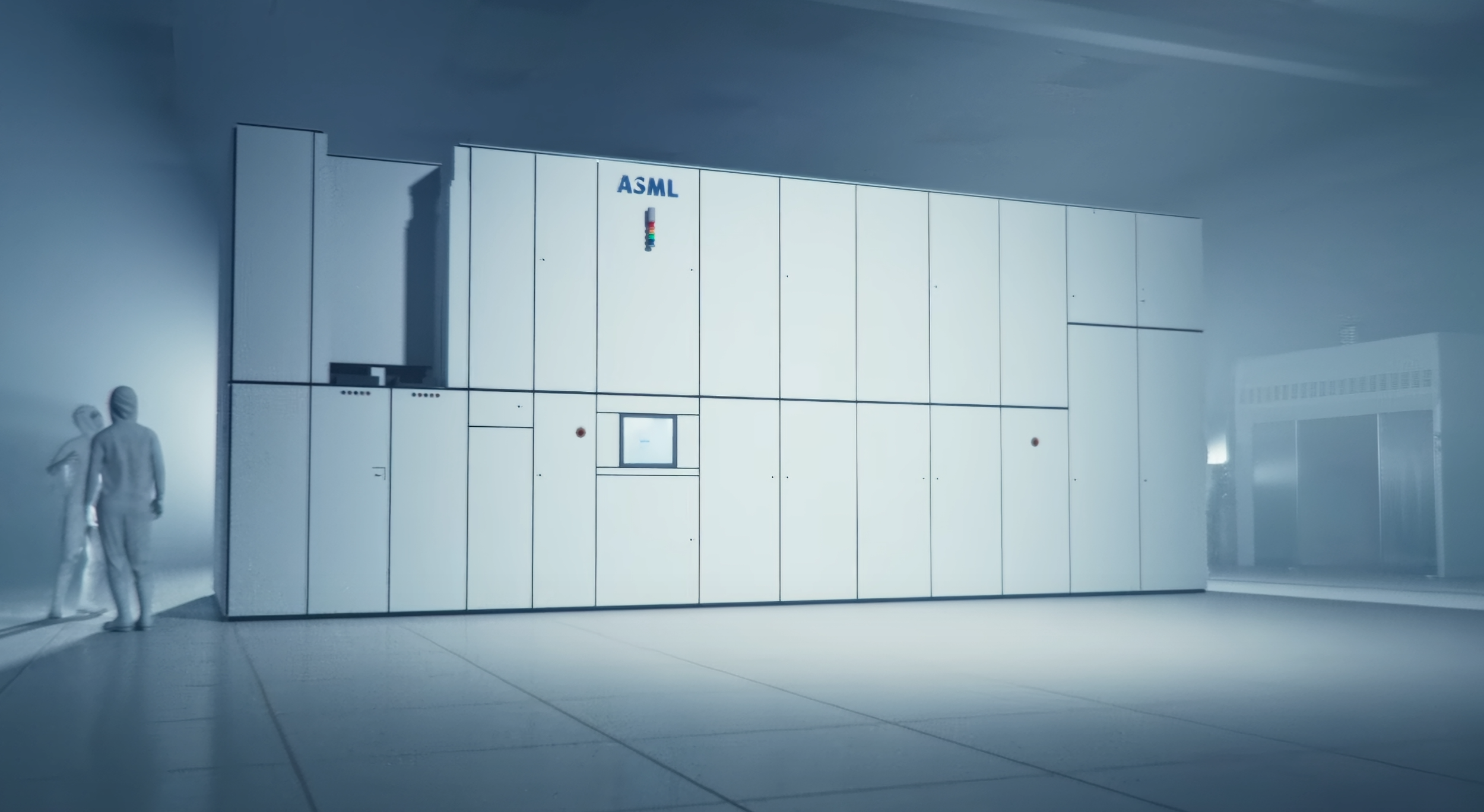
China may be around 15 years behind today's leading EUV lithography technology, according to Frank Rohmund, CEO of ZEISS Semiconductor Manufacturing Technology, but that gap may not remain comfortable for long. Rohmund warned that tighter export restrictions could accelerate China's push to replace Western semiconductor equipment, turning sanctions into a catalyst for domestic innovation rather than a permanent barrier.
The estimate specifically refers to advanced EUV capability, particularly the highly mature technology developed through the ASML and ZEISS ecosystem, and should not be interpreted as China being 15 years behind across the semiconductor industry as a whole. Rohmund described the figure as a "reasonable assumption" during a Bloomberg TV interview at SEMICON Taiwan 2026, while emphasizing that China's actual progress remains difficult to measure.
That technological distance does not mean China's semiconductor equipment program is standing still. The country has already started producing domestically developed immersion DUV lithography systems through state backed Shanghai Aishengna Electronic Technology Group. Around 5 systems are expected during 2026 and approximately 20 in 2027, with SMIC, Hua Hong Semiconductor, and CXMT reportedly among the first intended recipients. As we previously look at Shanghai Aishengna's domestic immersion DUV program, producing the machines is only the beginning. Throughput, overlay accuracy, reliability, yield, maintenance, and long term factory operation will determine whether they become credible alternatives to mature ASML platforms.
Rohmund made a similar distinction. He said reports of Chinese progress in DUV are not surprising because the country has invested in lithography development for decades, but the real question is how the machines perform under commercial manufacturing conditions. ZEISS believes Western equipment remains far ahead in performance, productivity, usability, and service capability. That gap is particularly important because an advanced lithography machine is not judged simply by whether it can expose a wafer. Semiconductor manufacturers need thousands of wafers to move through production consistently while maintaining extremely tight tolerances and economically viable yields.
EUV raises that challenge dramatically. Its optical system relies on highly specialized reflective mirrors rather than conventional lenses, while the light source, vacuum environment, positioning systems, metrology, mask infrastructure, and overall supply chain must operate together with extraordinary precision. The West is also continuing to move forward rather than waiting for China to catch up. ASML High NA EUV has already entered selected Intel 18A volume production, while ASML is working toward a 1000 W EUV light source that could increase system output by as much as 50% by 2030.
China is nevertheless pursuing its own EUV development. A prototype system assembled in Shenzhen has reportedly generated EUV light and is undergoing testing, although it has not yet produced working chips. Chinese planners have reportedly targeted 2028 for initial chip production, while engineers familiar with the project have suggested 2030 could be more realistic. Those timelines should not be interpreted as contradicting Rohmund's 15 year estimate. Producing an experimental EUV exposed chip would represent an important technical milestone, but it is very different from matching today's ASML and ZEISS systems in throughput, precision, uptime, cost, serviceability, and sustained high volume manufacturing.
The more provocative part of Rohmund's comments concerns export controls themselves. The United States and its allies have restricted China's access to EUV equipment and selected advanced DUV systems in an effort to slow its ability to manufacture leading semiconductor nodes. Rohmund argues that expanding those controls may create the opposite long term incentive by forcing Chinese companies to invest more aggressively in domestic alternatives.
"We don't believe in the positive impact of these export restrictions because it accelerates the innovation in China."
— Quote by: Frank Rohmund
That dynamic is already visible across China's semiconductor industry. Domestic AI accelerators, memory, manufacturing equipment, and packaging technologies are receiving increased investment as access to foreign hardware becomes less predictable. China's domestic AI accelerators are now expected to capture a substantially larger share of their home market, while CXMT has advanced rapidly in DRAM and recently reached early production of high bandwidth memory. Export restrictions can slow access to leading technology in the short term, but they also create an enormous guaranteed domestic market for Chinese alternatives that might otherwise struggle against established international suppliers.
The immediate commercial threat to ASML and ZEISS remains limited. China's first immersion DUV systems are entering production in very small numbers, while ASML shipped 131 comparable systems during 2025 alone. EUV remains an even larger challenge, and there is currently no evidence that China has developed a commercially competitive alternative. The strategic question is therefore not whether China has already caught up, but whether restrictions are shortening the amount of time it would otherwise take to build an independent semiconductor equipment ecosystem.
The 15 year figure should not be treated as a countdown clock for China's entire semiconductor industry. It is better understood as an estimate of the distance between China's current domestic EUV capabilities and the highly mature EUV technology available today through ASML and ZEISS. Semiconductor lithography is too complex for progress to follow a predictable linear schedule, and China could solve some technical barriers faster while remaining stuck on others for years.
The more important part of Rohmund's warning is the incentive structure created by sanctions. Restricting EUV gives China no immediate substitute for ASML, which clearly preserves a major technological advantage today. At the same time, restricting DUV, servicing, components, and additional equipment gives Chinese manufacturers fewer reasons to remain dependent on Western suppliers.
That is the strategic paradox. Export controls can widen the gap in the short term while simultaneously increasing the money, political urgency, engineering talent, and guaranteed demand behind China's effort to close it. ASML and ZEISS still hold a formidable technological lead, but maintaining that lead may eventually depend as much on continuing to innovate faster as it does on preventing China from buying the equipment.
Do export controls genuinely protect the West's semiconductor technology advantage, or are they accelerating China's push to build a fully independent chip manufacturing ecosystem?
