
Samsung Targets Late 2027 For 1d DRAM Mass Production As HBM5 AI Memory Race Accelerates
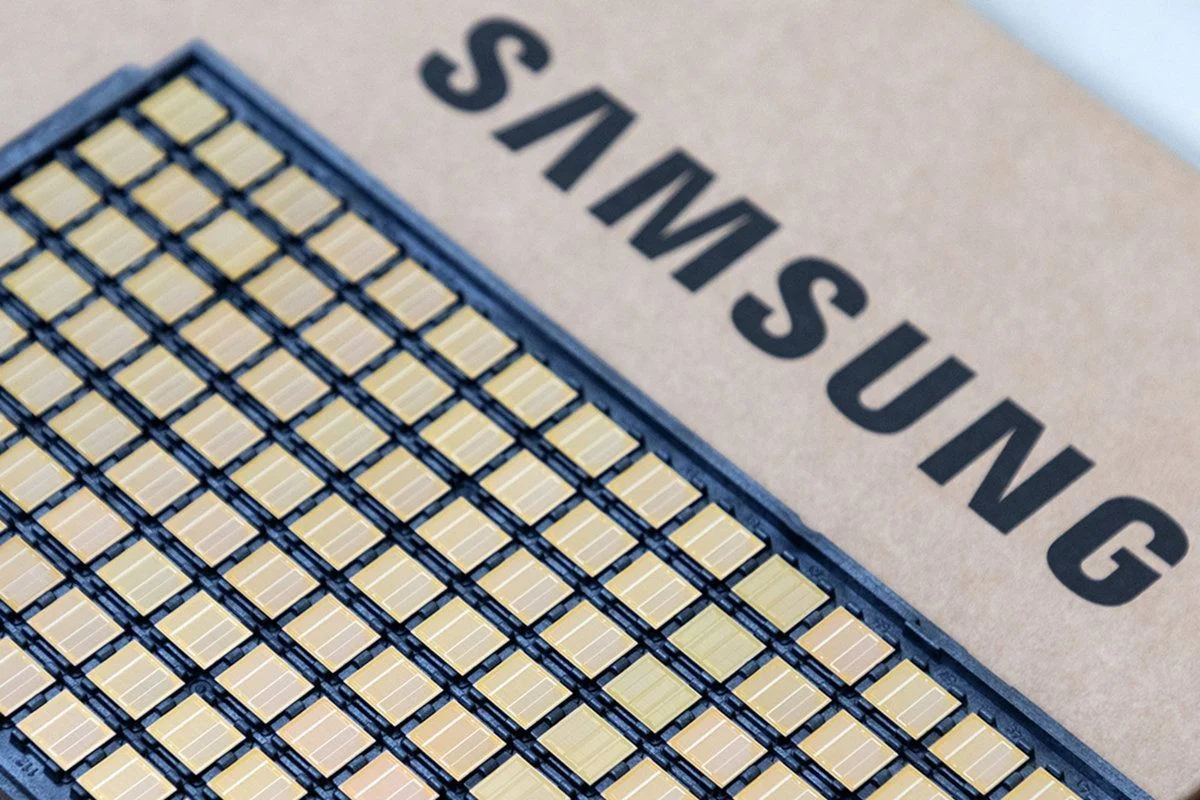
Samsung is reportedly preparing its next major DRAM manufacturing jump, with the company targeting late 2027 for mass production of 1d DRAM as the memory industry races toward next generation HBM5 and HBM5E products for AI accelerators. According to ZDNet Korea, cited by Wccftech, Samsung is already discussing equipment plans with manufacturing partners and evaluating how quickly it can bring the new process into production after installing tools as early as Q2 2027.
The report suggests that Samsung could begin producing advanced 1d DRAM chips in the second half of 2027 if the company meets its internal timeline, with more concrete mass production plans expected by the end of 2026. This would be an aggressive move because 1d DRAM represents a more complex transition than a normal node shrink. Samsung’s current cutting edge memory products rely on 1c DRAM, which is already used inside the company’s HBM4 roadmap alongside a 4 nm foundry logic base die. Moving to 1d would give Samsung a path toward higher density, better efficiency, and stronger HBM positioning as AI customers demand more bandwidth and capacity per stack.
The technical shift is important because 1d DRAM is expected to change how memory cells are structured. Instead of continuing only with a horizontal memory cell layout, 1d DRAM is described as the first Samsung DRAM generation to adopt vertical capacitor stacking. That makes the process harder, but it also gives Samsung a route to continue scaling when traditional planar approaches become less efficient. The added complexity reportedly includes separating peripheral circuitry onto another wafer and integrating it with the wafer carrying the memory cell circuits, which makes equipment readiness, yield learning, and process control critical before volume production can begin.
The AI memory angle is the real reason this matters. HBM is built by stacking DRAM dies and connecting them through advanced packaging, and the leading memory vendors are now under pressure to deliver faster, denser, and more efficient HBM generations for NVIDIA, AMD, Google, and other AI chip customers. Reuters recently reported that Samsung began shipping 12 layer HBM4E samples to global customers, using its 1c DRAM process and 4 nm logic base die, while analysts noted that Samsung is trying to regain ground against SK hynix and Micron in the HBM market. The same report cited Counterpoint Research data showing SK hynix leading global HBM share in Q4 2025 with 57%, followed by Samsung at 22% and Micron at 21%.
Samsung’s 1d DRAM roadmap could become even more important for HBM5E. TrendForce previously reported that Samsung is expected to use 1d DRAM as the core stacked memory for HBM5E, while HBM5 is reportedly being planned around a 2 nm foundry base die instead of the 4 nm base dies used for HBM4 and HBM4E. That would make the next HBM cycle a deeper integration challenge across Samsung’s memory, foundry, and packaging businesses, not just a simple DRAM upgrade.
This is where Samsung’s vertical structure becomes strategically interesting. If the company can commercialize 1d DRAM on time, it could improve its competitive position in the AI memory race at the exact moment HBM becomes even harder to manufacture and qualify. Advanced AI accelerators are increasingly limited by memory bandwidth, power efficiency, package density, and thermal performance. Faster compute silicon does not help if data cannot move quickly enough. That makes HBM one of the most valuable parts of the AI server supply chain, and it is why memory makers are now planning capacity, equipment, and customer qualification cycles years ahead.
The pressure also connects directly with the wider memory shortage as AI memory demand is pushing profits higher for ADATA and other memory makers, while Samsung, SK hynix, and Micron continue prioritizing HBM because it delivers stronger margins and strategic value than conventional DRAM. Also that China’s DRAM expansion could help ease DDR5 pricing pressure by 2027, but HBM remains a different battlefield because it depends on leading edge DRAM, advanced packaging, customer qualification, and strong supply chain control.
For Samsung, the challenge is timing. The company has the scale, memory expertise, and foundry integration to compete aggressively, but HBM momentum has recently favored SK hynix and Micron in several key qualification cycles. If Samsung can stabilize HBM4E sampling, ramp HBM4 output, and keep 1d DRAM on track for late 2027, it could enter the HBM5E generation with a stronger technology story. If delays continue, the company risks giving rivals more time to lock in customer relationships for next generation AI platforms.
Samsung’s 1d DRAM timeline shows how the memory industry is being reshaped by AI at every level. This is no longer only about faster RAM for PCs or phones. DRAM roadmaps are now being pulled forward by AI accelerators, HBM stacks, advanced logic base dies, and data center customers reserving supply years in advance. Samsung’s late 2027 target is ambitious, but the direction is clear. The next AI hardware race will not be won by GPUs alone. It will also be won by the companies that can deliver the memory stack behind them.
Do you think Samsung can catch SK hynix and Micron in the HBM race with 1d DRAM, or will customer qualification remain the bigger challenge than technology?
