
Samsung HBM4 Output Could at Least Double in 2027 as AI Demand Accelerates
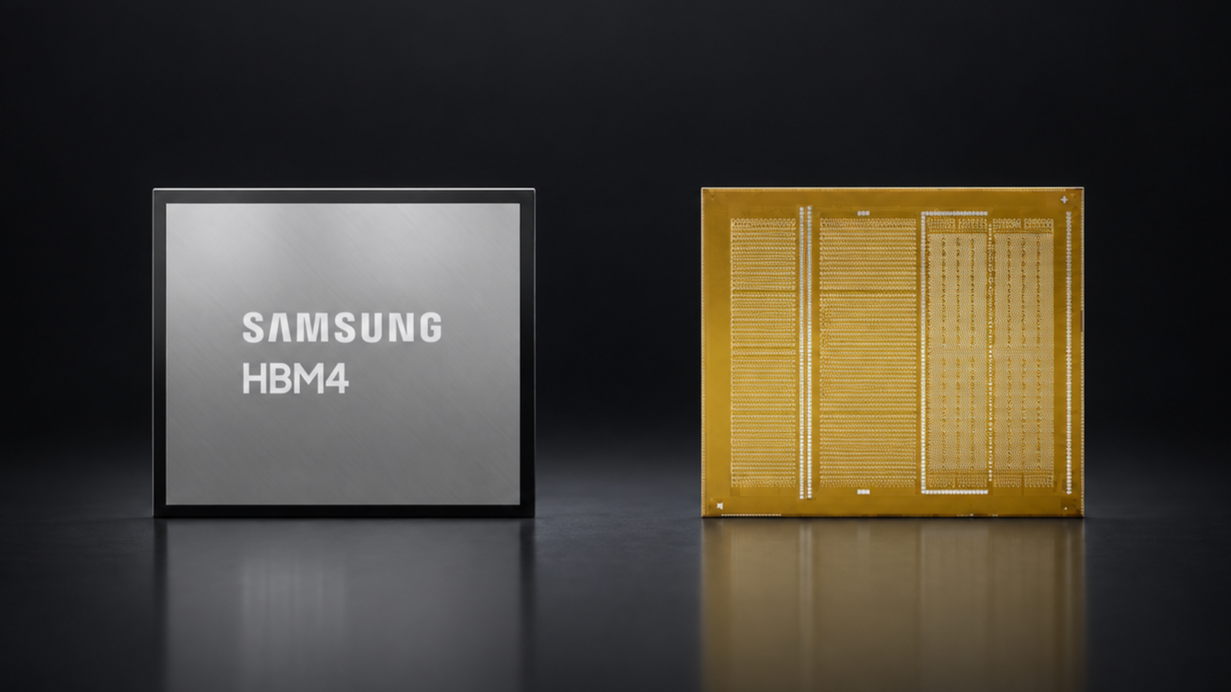
Samsung Electronics is reportedly preparing a substantial expansion of HBM4 and HBM4E production in 2027 as demand for AI accelerator memory continues to absorb advanced DRAM capacity. The headline 2.5 times increase being reported does not refer directly to HBM4 chip output, however. It comes from Samsung's expected increase in outsourced glass carrier cleaning volume, which is projected to rise from around 20,000 units per month in 2026 to 50,000 in 2027. Industry sources believe that increase points toward HBM4 family production at least doubling next year, rather than confirming a precise 2.5 times increase in finished memory output.
Glass carriers are temporary supports attached to DRAM wafers while they are thinned for HBM stacking, helping prevent warping or cracking as manufacturers move toward increasingly dense 12 layer and 16 layer configurations. They are cleaned and reused, which means carrier volume cannot be converted directly into finished HBM output on a one to one basis. Still, the reported increase from 10,000 carrier cleaning operations per month in 2025 to 20,000 in 2026 and 50,000 planned for 2027 provides a useful indication of how aggressively Samsung is preparing to scale advanced HBM manufacturing.
The broader production forecast is also significant. Industry estimates place Samsung's total HBM wafer input at around 180,000 wafers per month in 2026, potentially increasing nearly 40% to approximately 250,000 in 2027. At the same time, HBM4 and HBM4E are expected to account for nearly 80% of Samsung's HBM shipments next year, compared with roughly 40% in 2026. Those figures remain industry estimates rather than official Samsung production guidance, but they suggest the company's expansion is increasingly concentrated around its newest and higher value memory generations.
Samsung officially began HBM4 mass production in February 2026 using sixth generation 10 nm class 1c DRAM combined with a 4 nm logic base die. The company later began shipping HBM4E samples to customers and plans to begin volume production according to customer qualification and deployment schedules. The same expansion is already placing pressure on Samsung's logic manufacturing resources, with HBM4 base dies reportedly consuming between 50% and 60% of available 4 nm capacity as those production lines approach full utilization.
Improving yields are helping Samsung extract more usable memory from that capacity. HBM4 production yields have reportedly approached 80%, a major improvement from levels below 60% when mass production began earlier this year. Higher yields become increasingly important as AI customers demand larger quantities of HBM while the broader memory industry is already operating with extremely limited inventory. Samsung and SK hynix have reportedly seen memory inventories fall below 10 days, illustrating how quickly AI infrastructure demand is consuming available supply.
The expansion also shows why the current memory shortage cannot be viewed only through conventional DDR5 production. HBM4 requires multiple DRAM dies, advanced base logic, thinning, stacking, and packaging resources, so increasing AI memory output consumes manufacturing capacity across several parts of the semiconductor chain. Samsung's ability to produce both the DRAM and the logic base die internally gives it unusual control over that process, but scaling HBM4 still competes with consumer and server products for manufacturing investment.
The 2.5 times figure needs context. Samsung is not confirmed to be producing exactly 2.5 times more HBM4 chips in 2027. What is reportedly increasing by that amount is glass carrier cleaning volume, which industry sources are using as an indicator that HBM4 and HBM4E production could at least double.
The more important numbers are the projected 40% increase in total HBM wafer input and the expected shift toward HBM4 family products representing nearly 80% of shipments. If those estimates hold, Samsung is not simply adding HBM capacity. It is rapidly redirecting its memory mix toward the products carrying the highest demand from AI infrastructure, which could keep pressure on conventional DRAM supply even as Samsung expands overall production.
Do you think Samsung's aggressive HBM4 expansion will help ease AI memory shortages in 2027, or will demand continue growing faster than manufacturers can add capacity?
