
4 GB and 6 GB GDDR7 Chips Could Arrive in 2027 or 2028
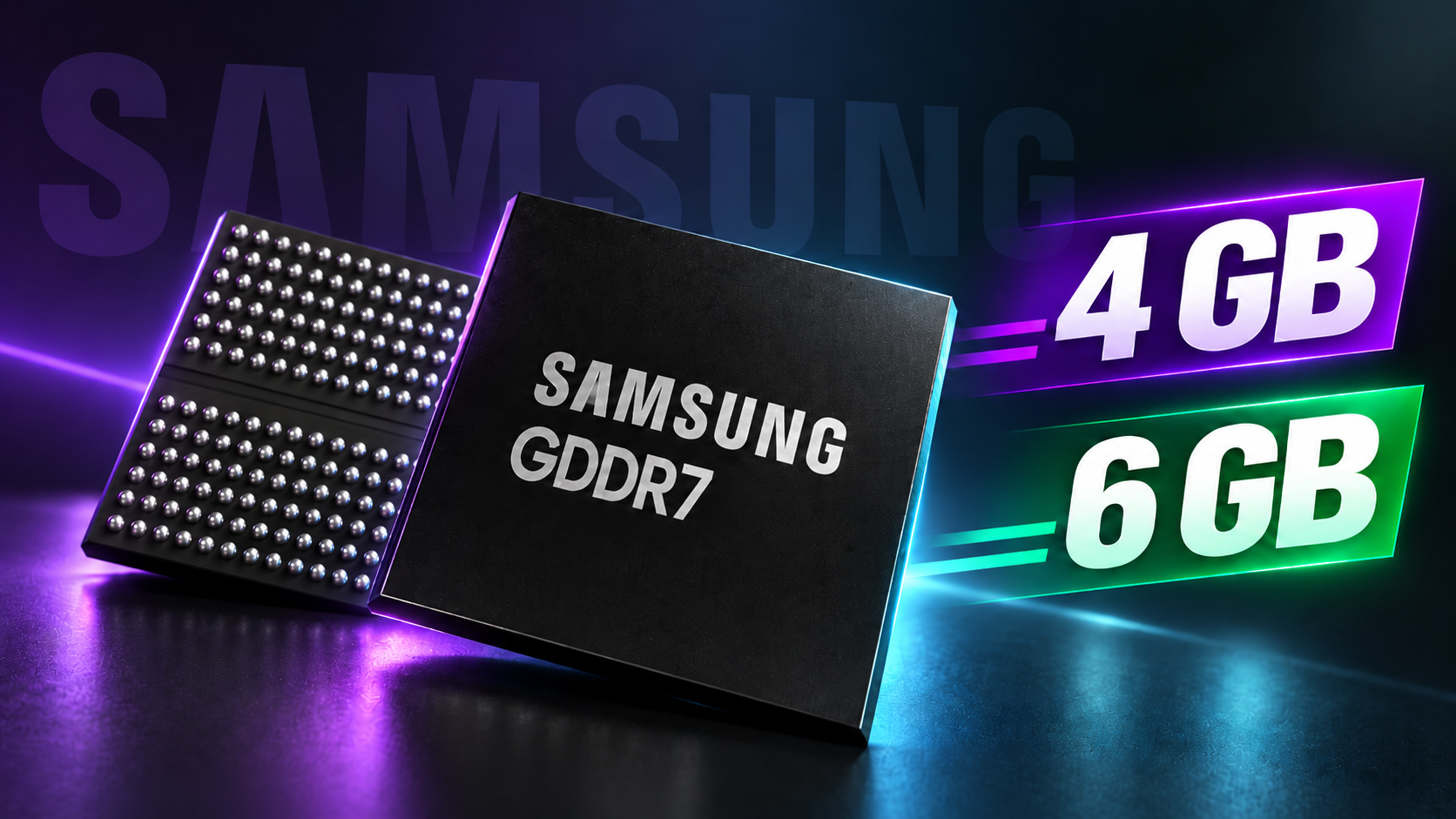
Future graphics cards could gain substantially more VRAM without requiring wider memory interfaces, with a new report claiming that 32 Gb and 48 Gb GDDR7 memory chips are being prepared for introduction between 2027 and 2028. Those densities translate to 4 GB and 6 GB per individual memory package, considerably above the 2 GB and 3 GB GDDR7 devices currently available. The information originates from hardware leaker Golden Pig Upgrade and has not been confirmed by Samsung, SK hynix, Micron, NVIDIA, AMD, or another memory supplier, so the proposed schedule should currently be treated as an early roadmap claim rather than a finalized product announcement.

The increase in density could significantly change how GPU manufacturers configure VRAM. Assuming the conventional arrangement of 32 bit GDDR7 devices, a graphics card using a 128 bit memory interface requires 4 packages, meaning 4 GB chips could provide 16 GB while 6 GB chips could raise capacity to 24 GB without widening the bus. A 192 bit design using 6 packages could reach 24 GB or 36 GB, while a 256 bit card could carry 32 GB or 48 GB using 8 packages. These examples illustrate what the higher density devices could technically enable rather than representing confirmed specifications for future GeForce or Radeon products.
The industry is already moving in this direction. Samsung officially advertises GDDR7 densities up to 24 Gb, equal to 3 GB per chip, after developing its higher density design with speeds reaching beyond 40 Gbps. Micron currently lists 16 Gb GDDR7 products while confirming that it is developing a broader portfolio with increased capacity and performance. we previously see Samsung moving 24 Gb GDDR7 into mass production, a step that already allows GPU manufacturers to increase capacity by 50% compared with 2 GB packages while retaining the same number of memory devices.
Higher density GDDR7 could become particularly useful for future mainstream GPUs, where narrow memory buses have increasingly restricted practical VRAM configurations. It could also eliminate the need for more complex memory layouts in some high capacity products. However, additional capacity does not automatically provide additional bandwidth. Bus width, memory speed, GPU architecture, cache design, and the memory controller will still determine how quickly that VRAM can be accessed. Cost is another major variable, particularly while GDDR7 remains under significant pricing pressure. Higher priced 3 GB chips have already been linked to uncertainty surrounding future GeForce refresh products.
The most important consequence of 4 GB and 6 GB GDDR7 would be flexibility rather than simply putting enormous VRAM numbers on flagship cards. A future 128 bit GPU could realistically carry 16 GB or even 24 GB without adding more memory packages, addressing one of the most persistent criticisms of recent mainstream graphics cards.
The 6 GB option would be particularly significant, but it is also the least certain. No major memory manufacturer has publicly announced a 48 Gb GDDR7 product or confirmed the reported 2027 to 2028 schedule. Until that happens, the roadmap is best viewed as an indication of where graphics memory density may be heading rather than confirmation of the specifications behind future NVIDIA or AMD GPUs.
Would you rather see future mainstream GPUs use higher density GDDR7 for significantly more VRAM, or would you prefer manufacturers prioritize wider memory buses and additional bandwidth?
