
NVIDIA RTX 50 SUPER Cards Reportedly Reach Board Partners but GDDR7 Costs Keep Launch on Hold
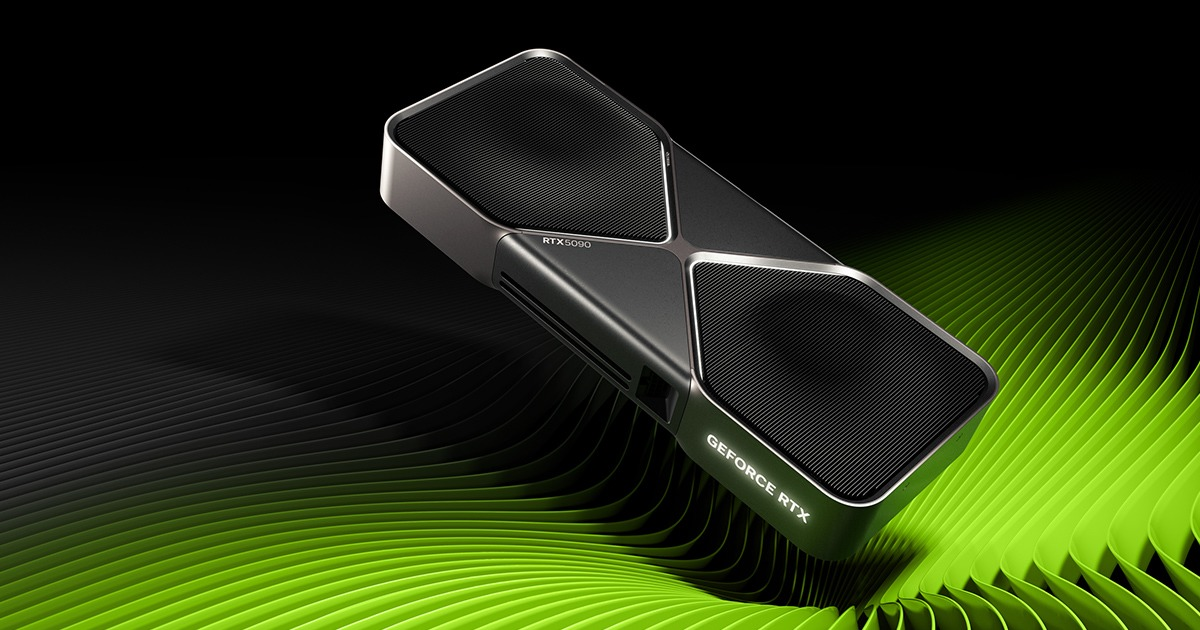
NVIDIA’s GeForce RTX 50 SUPER refresh may already be much further into development than previously believed, with at least 1 board partner reportedly holding completed graphics cards. However, the products cannot be released because NVIDIA has placed the lineup on hold as the cost of higher capacity GDDR7 memory continues to rise.
According to VideoCardz, its source confirmed that RTX 50 SUPER cards are physically available at an unnamed board partner. This suggests development has progressed beyond internal specifications and early engineering samples, although NVIDIA has not officially announced the series or provided partners with a revised launch schedule. The reported obstacle is the price of the new 3 GB GDDR7 memory components expected across the refresh. These higher density chips would provide 50% more capacity than the 2 GB components used by existing RTX 50 graphics cards, allowing NVIDIA to increase VRAM without changing the number of memory packages or widening the memory interface.
VideoCardz claims that each 3 GB GDDR7 chip currently costs between $60 and $70, compared with approximately $20 for a 2 GB chip. A graphics card using 6 or 8 memory packages could therefore face several hundred dollars in additional component costs before accounting for the GPU, circuit board, power delivery, cooling system, assembly, shipping, and retail margins. These prices come from an unnamed industry source and have not been independently confirmed by NVIDIA or a memory manufacturer.
The rumored lineup currently includes the RTX 5080 SUPER with 24 GB of GDDR7 across a 256 bit interface, the RTX 5070 Ti SUPER with 24 GB across 256 bits, and the RTX 5070 SUPER with 18 GB across 192 bits. The RTX 5050 9 GB is also reportedly affected because it would require 3 of the expensive 3 GB memory components. Previous reports have mentioned an RTX 5060 with 12 GB, but that configuration was not included among the products confirmed by the latest source.
This represents a major change from the original RTX 50 SUPER launch rumors, which suggested that the refresh could arrive during late 2025. More recent industry discussions moved the possible launch toward 2027, but no release window has been confirmed. The existence of completed hardware also aligns with the recent appearance of an RTX 5080 SUPER configuration inside a Seasonic power supply calculator. That listing referenced a 415 W power target, although database appearances can be based on preliminary partner information and do not guarantee that a product will reach retail unchanged.
Memory availability is creating a difficult commercial decision for NVIDIA. Launching the cards under current conditions could force significantly higher retail prices, making the SUPER refresh difficult to position against existing RTX 50 models. Maintaining the intended prices could instead reduce board partner margins or make certain models commercially impractical.
Samsung has already started mass production of 24 Gb GDDR7 memory, which corresponds to 3 GB per chip, but production readiness does not automatically guarantee affordable supply. Demand, yields, allocation agreements, package testing, and competition from other graphics and artificial intelligence products will determine how quickly pricing becomes manageable.
The memory crisis has already pushed graphics card companies toward unusual solutions. Palit recently introduced a new GeForce RTX 3060 Infinity 2 OC with 12 GB of GDDR6, bringing the 2021 Ampere graphics card back into the budget market. Gigabyte and Manli have also listed renewed RTX 3060 models in selected regions. The older GPU cannot match the gaming performance, efficiency, ray tracing capabilities, or DLSS features of Blackwell, but its mature manufacturing process and 12 GB GDDR6 configuration may be easier to produce during the current shortage.
The RTX 5050 9 GB should currently be considered delayed rather than cancelled. NVIDIA may still release it if 3 GB GDDR7 pricing improves, although the company could also revise the memory configuration, reposition the product, or abandon the model if manufacturing costs remain too high.
The reported arrival of completed RTX 50 SUPER cards at a board partner suggests that NVIDIA’s main challenge may no longer be engineering. It is economics.
Larger VRAM capacities would address one of the biggest criticisms surrounding the current RTX 50 lineup, particularly as modern games consume more memory through higher resolution textures, ray tracing, frame generation, and increasingly complex environments. However, charging hundreds of dollars more for additional memory would undermine the value proposition that normally defines a SUPER refresh.
NVIDIA can delay the cards, accept lower margins, raise prices, or redesign the lineup. None of those options is ideal. For gamers, the most concerning possibility is that the RTX 50 SUPER series launches with the memory capacity buyers requested but at prices that place those upgrades outside the mainstream market.
Would you pay significantly more for an RTX 50 SUPER graphics card with 50% additional VRAM, or should NVIDIA delay the lineup until GDDR7 prices become more reasonable?
