
NVIDIA GeForce RTX 5080 SUPER Listed With 415 W Power Target in Seasonic Calculator
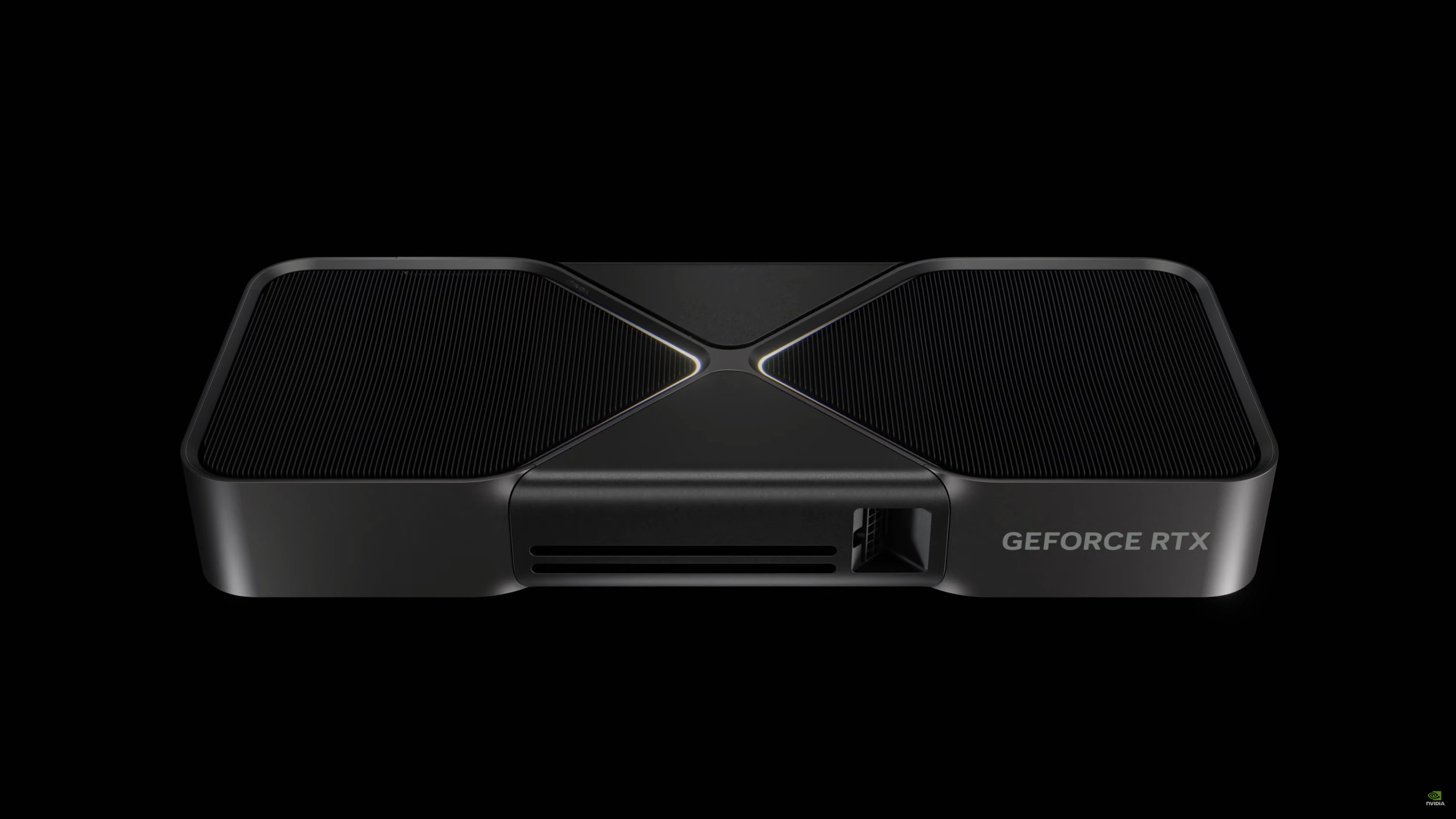
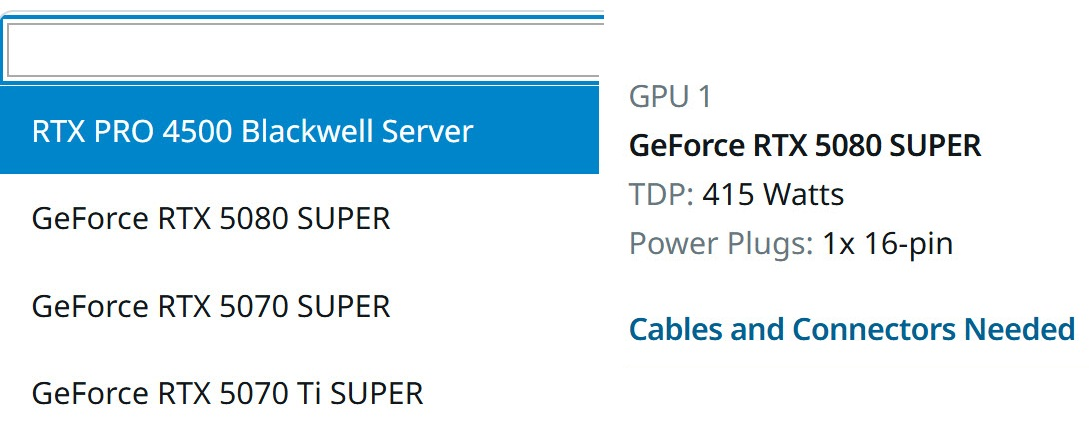
NVIDIA’s rumored GeForce RTX 50 SUPER refresh may not be dead after all. After months of uncertainty, new signals are pointing toward the lineup returning to the conversation, with the GeForce RTX 5080 SUPER now appearing inside the official Seasonic PSU wattage calculator. The listing was first spotted by VideoCardz, following earlier appearances of the RTX 5070 Ti SUPER and RTX 5070 SUPER in the same tool.
According the Seasonic calculator lists the GeForce RTX 5080 SUPER with a 415 W power rating. That would place it roughly 15% above the standard GeForce RTX 5080, which NVIDIA officially lists at 360 W Total Graphics Power on its GeForce RTX 5080 product page. Seasonic’s listing also points to a 1 x 16 pin power connector, which would be expected for a higher power Blackwell refresh card.
The key point is that NVIDIA has not officially announced the RTX 5080 SUPER, and a PSU calculator entry should not be treated as a product confirmation. VideoCardz also notes that PSU calculators have historically surfaced unreleased GPU names early because power supply vendors prepare databases ahead of product launches, but those listings are not always fully accurate. Still, the timing is notable because the RTX 50 SUPER lineup has been surrounded by conflicting reports, including claims that the refresh had been paused, delayed, or possibly cancelled due to AI GPU prioritization, DRAM shortages, and rising component costs.
The rumored RTX 5080 SUPER is expected to keep the same 256 bit memory bus as the regular RTX 5080, but with a larger 24 GB GDDR7 configuration instead of 16 GB. Reports suggest this could be achieved through 3 GB GDDR7 memory modules, allowing NVIDIA to increase capacity without changing the number of memory chips. The card is also rumored to use 32 Gbps GDDR7 memory, compared with 30 Gbps on the standard RTX 5080, potentially pushing bandwidth to around 1 TB per second. If accurate, the biggest upgrade may not be raw CUDA core count, but memory capacity and bandwidth.
That strategy would make sense in the current GPU market. Modern games are becoming heavier on texture memory, path tracing, frame generation buffers, AI assisted rendering, and high resolution assets. For creators, VRAM is becoming just as important for video editing, local AI workloads, 3D rendering, and content pipelines. A 24 GB RTX 5080 SUPER would give NVIDIA a stronger upper enthusiast option below the RTX 5090, especially for users who need more memory but do not want to move into the highest price and power class.
Earlier rumors in NVIDIA GeForce RTX 50 SUPER Series for Q4 2025 Launch with Substantial VRAM Upgrades, where the main focus was already shifting toward larger VRAM configurations instead of major architectural changes. This new Seasonic listing lines up with that direction, although the launch window now appears less certain than previous rumors suggested.
The higher 415 W power target also connects to a broader trend in enthusiast PC hardware. GPUs are not only becoming faster, they are becoming more demanding on power delivery, cooling, case airflow, and cable quality. The Super Flower 2800 W Leadex Titanium PSU, a power supply built for extreme multi GPU workstations and next generation PCIe 5.1 systems. While most gamers will never need that level of wattage, the direction is clear. High performance graphics cards continue to push PSU makers toward stronger native 16 pin support, better transient response, and more robust ATX 3.1 designs.
If the RTX 5080 SUPER does launch with a 415 W rating, it would create a more demanding upgrade path for PC builders. A standard RTX 5080 already carries an official 850 W system power recommendation from NVIDIA, and a higher power SUPER model could push many users toward premium 1000 W or stronger PSUs depending on CPU choice, overclocking, storage, cooling, and total system configuration. This would matter especially for users running high core count Ryzen 9 or Core Ultra systems, multiple NVMe drives, capture hardware, or custom cooling.
The RTX 5080 SUPER rumor is interesting because it reflects the current pressure points in the GPU market. NVIDIA does not necessarily need to redesign Blackwell to make a stronger enthusiast card. It may only need to address the biggest criticism from advanced users, which is VRAM capacity. A 24 GB RTX 5080 SUPER would immediately look more attractive for 4K gaming, AI experimentation, creator workloads, and long term system planning.
The risk is power efficiency. A jump from 360 W to 415 W is not small, especially if the performance uplift is mostly tied to memory bandwidth and capacity rather than a major GPU core increase. Enthusiasts may accept the higher power draw if the card delivers stronger real world gains in ray tracing, AI assisted rendering, and high resolution gaming, but if the uplift is modest, the RTX 5080 SUPER could become another expensive refresh that looks better on a spec sheet than in practical value.
For now, this remains a rumor backed by a PSU calculator listing, not an official NVIDIA product reveal. Still, the fact that Seasonic now lists the RTX 5080 SUPER alongside the RTX 5070 Ti SUPER and RTX 5070 SUPER gives the lineup more credibility than it had a few months ago. NVIDIA may still be deciding the final timing, but the SUPER refresh is clearly not disappearing from the hardware conversation.
Would you consider upgrading to an RTX 5080 SUPER for 24 GB of VRAM, or would the rumored 415 W power target make you wait for benchmarks first?
