
NVIDIA Vera Rubin and Blackwell Server Prices Could Rise 17% as Memory Costs Surge
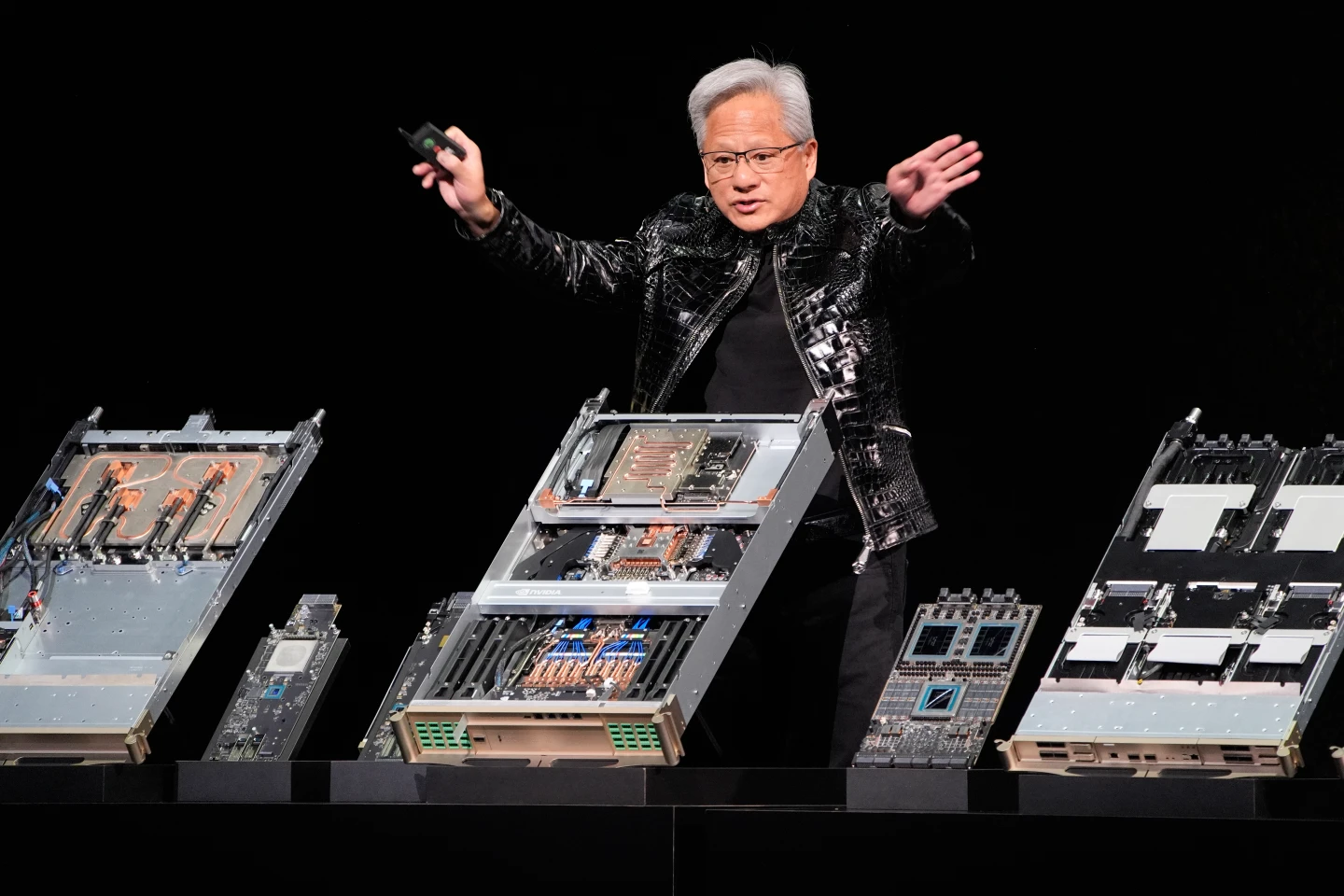
NVIDIA's next generation AI infrastructure is reportedly becoming significantly more expensive as the global memory shortage pushes component costs higher. Some of NVIDIA's largest customers have been informed that servers based on Grace Blackwell and Vera Rubin could see price increases exceeding 15% when systems begin shipping in early 2027, while The Information places the increase at approximately 17%. The adjustment reportedly applies to systems including Grace Blackwell 300 and Vera Rubin 200, with the final increase depending on GPU generation and memory configuration. NVIDIA has not officially announced the reported pricing changes.
The financial impact becomes considerably larger when scaled across an AI data center. The Information estimates that a 17% increase in NVIDIA system pricing could add at least 5$ billion to the hardware cost of building a 1GW AI data center. Server manufacturers supplying customers including Microsoft, Google and Oracle have reportedly begun communicating the higher pricing, creating the possibility that cloud providers will eventually pass part of the additional infrastructure cost to customers through more expensive AI computing services.
$NVDA RUBIN NVL72 RACK COULD COST ~$8M
— Wall St Engine (@wallstengine) August 23, 2026
The ~17% price hike could add at least $5B to the chip cost of a 1 GW data center, with cloud providers expected to pass some of the higher costs on to customers. https://t.co/LuNhwI4vyM pic.twitter.com/3DeemcWgNe
Memory is becoming one of the primary reasons behind the increase. AI racks require enormous quantities of HBM for GPUs while CPUs and surrounding infrastructure consume large amounts of conventional DRAM. NVIDIA's Vera Rubin NVL72 can carry approximately 74.7 TB of combined memory, including around 20.7 TB of HBM4 attached to Rubin GPUs. As memory capacity grows with every AI generation, even relatively small increases in cost per GB can translate into substantial increases across complete rack scale systems.
The pressure extends beyond HBM. TrendForce expects server DRAM contract prices to increase another 13% to 18% during Q3 2026, with prices continuing to rise through 2H 2027. The research firm expects total RDIMM bit supply to grow only around 15% to 20% in 2027, leaving memory production struggling to keep pace with expanding server deployments.
This reinforces warnings that the current shortage is becoming structural rather than another short memory cycle. SK hynix has warned that 2027 could become the worst supply year in memory industry history, while NVIDIA has already been securing supply years in advance as AI infrastructure absorbs increasing quantities of HBM, LPDDR and server DRAM.
NVIDIA can design faster GPUs every generation, but memory is increasingly determining how expensive those GPUs are to deploy. Vera Rubin pushes this problem to a new scale because the rack combines enormous HBM4 capacity with equally aggressive CPU memory requirements. A 17% increase may be manageable for the largest hyperscalers, but when that percentage is applied across gigawatt scale AI infrastructure, the additional capital requirement reaches billions of dollars. The memory shortage is therefore no longer just raising DDR5 prices for PC builders. It is becoming a fundamental cost constraint for the entire AI industry.
Could rising memory prices eventually slow the global AI data center expansion, or will hyperscalers continue absorbing higher hardware costs?
