
Intel Fab 38 Shows Signs of Renewed Activity as Israel Expansion Returns to Focus
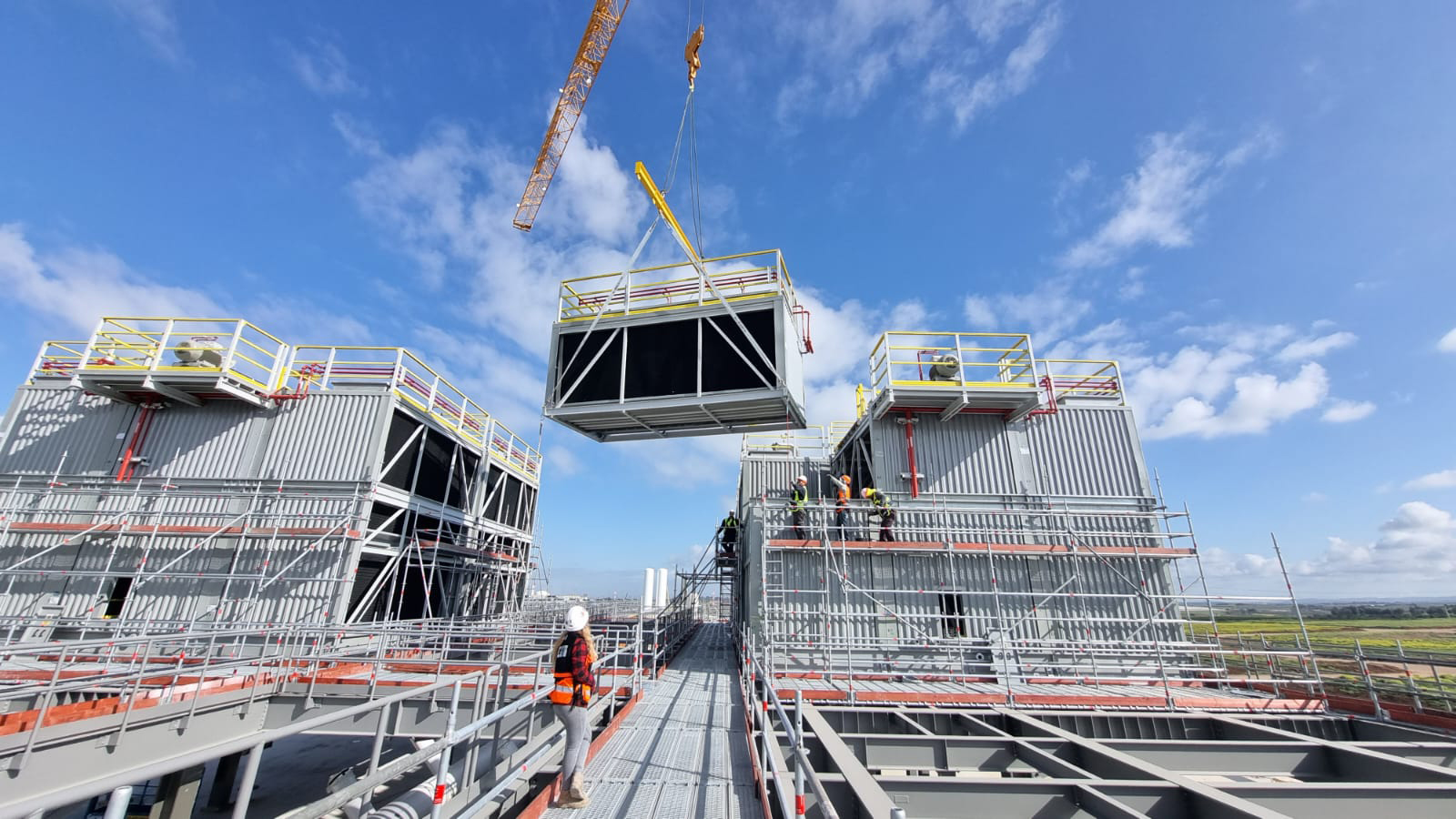
Intel appears to be increasing activity around its Fab 38 semiconductor manufacturing complex in Kiryat Gat, Israel, after previously slowing a significant portion of the $25 billion expansion. New construction information and an Intel planning position suggest the site is moving back into focus, although there is not yet official confirmation that Intel has approved a complete restart of the second clean room.
Construction contractor Hoffman has updated its Fab 38 project information to list 2026 as the project year. Hoffman Construction says the facility will eventually provide more than 600,000 square feet of clean room space and accommodate manufacturing equipment capable of supporting EUV based process technologies. The project also includes 2 central utility buildings and supporting infrastructure required for advanced semiconductor manufacturing.
Intel has simultaneously opened a position for a Site Master Planner and Site Permitting Owner in Kiryat Gat. The role is responsible for maintaining a 3 to 5 year site master plan covering space reservations, infrastructure expansion, utilities, business continuity, and regulatory permitting. The opening is notable because these responsibilities align with longer term capacity planning at a manufacturing site, although the recruitment itself does not confirm that Intel has authorized construction or equipment installation for Fab 38's second clean room.
Fab 38 in Israel was the last free cleanroom Intel had sitting around. It was also likely the one Intel would reach to last. It was in my opinion the single best indicator of demand given lower subsides (US has 35% credit) and geopol risk
— Alex (@Alex_Intel_) August 11, 2026
Now Intel is rushing to fill every… https://t.co/vvdKFlCXkC
The development represents a significant change in direction compared with the situation reported in 2025. Globes reported in July 2025 that Intel had frozen work on part of the Fab 38 expansion and concentrated resources on the first of 2 planned manufacturing sections. At that stage, the first section had its major cooling, electrical, and piping infrastructure installed but was still waiting for semiconductor production equipment. The structural shell of the second section had also been completed, but further work on electromechanical systems, cooling, and piping had been suspended.
Intel originally described Fab 38 as a $25 billion expansion adjacent to its existing Fab 28 facility. The company said the new manufacturing capacity would support advanced semiconductor production using EUV lithography. Israel agreed to provide approximately $3.2 billion in government support for the project, equivalent to around 12.8% of the planned investment. Intel also committed to purchasing billions of dollars in goods and services from Israeli suppliers as part of the agreement.
The decision to potentially increase activity at Kiryat Gat is particularly notable because the site carries additional geopolitical and operational risk compared with several of Intel's manufacturing locations. Intel itself continues to identify conflict affecting Israel and the broader Middle East among the geopolitical risks that could affect manufacturing operations and its global supply chain. Despite this environment, Intel has repeatedly described Israel as an important part of its manufacturing and research footprint.
@Alex_Intel_ New jefe inbound pic.twitter.com/EgkrTHYrsh
— An old old wooden ship (@Anoldoldwooden) August 9, 2026
Any renewed Fab 38 investment also arrives at an important moment for Intel Foundry. CEO Lip Bu Tan has emphasized greater financial discipline around manufacturing expansion, while Intel continues seeking meaningful external customer commitments for its future processes. The company is currently ramping Intel 18A and developing Intel 18A P while placing increasing strategic importance on Intel 14A. Intel 18A P entering risk production detailed the performance, power, thermal, and transistor improvements Intel is introducing as it prepares the process for future client, server, AI, and foundry products.
Intel 14A could be even more relevant to decisions involving additional leading edge capacity. Intel has increased investment around the node while expanding its design ecosystem through collaborations such as the Intel 14A partnership with Cadence. The company is attempting to secure external customers before committing to increasingly expensive manufacturing expansion, making any substantial equipment installation at Fab 38 an important potential indicator of future demand.
There is already growing speculation around external customer interest. Recent reports have connected companies including AMD, NVIDIA, OpenAI, Apple, Google, Microsoft, and others with evaluations or potential engagements involving Intel's advanced manufacturing and packaging technologies. However, many of these relationships remain unconfirmed, and design evaluations should not automatically be treated as guaranteed volume production contracts.
The timing also coincides with a major capital raise. Intel initially announced a $15 billion common stock offering on August 10 before increasing the transaction to $20 billion. Intel expects approximately $19.7 billion in net proceeds before any additional option exercise and says the money will be available for general corporate purposes that may include capital expenditure and working capital. The company has not said that the proceeds are specifically intended for Fab 38.
Fab 38 is becoming an interesting indicator of how confident Intel really is about future manufacturing demand. A completed clean room shell has limited strategic value until billions of dollars of semiconductor manufacturing equipment are installed, qualified, and connected to actual product demand.
The Hoffman update and Intel planning vacancy are meaningful signals, but they should not yet be interpreted as confirmation that both Fab 38 clean rooms are entering full production. The stronger signal would be Intel committing substantial equipment capital or confirming which process family will eventually operate at Kiryat Gat.
If that happens while Intel is simultaneously raising capital and increasing investment around 14A, the story becomes much more significant. Intel's foundry recovery ultimately depends on filling expensive factories with profitable silicon. Fab 38 moving from an underutilized expansion project into an equipped leading edge facility would suggest Intel believes the demand needed to justify that capacity is becoming much more tangible.
Do you see renewed activity at Fab 38 as another sign that Intel Foundry demand is strengthening, or should Intel wait for more confirmed external customers before committing billions more to manufacturing capacity?
