
Intel CEO Lip Bu Tan Praises Elon Musk as Memory and Helium Threaten AI Chip Supply
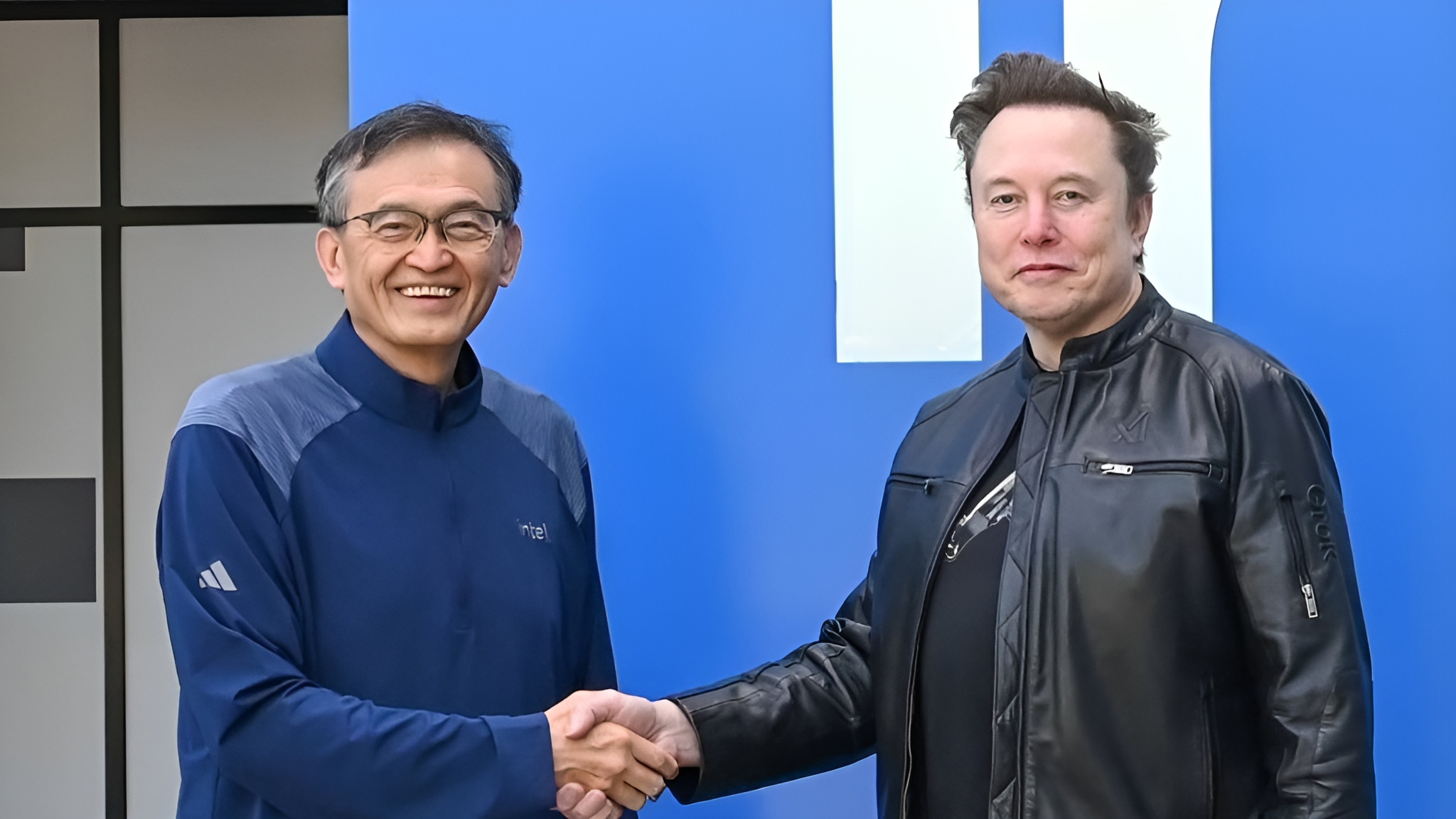
Intel CEO Lip Bu Tan has warned that the semiconductor industry is struggling to expand quickly enough for the artificial intelligence boom, identifying memory, power, helium, CPU capacity, and GPU production as potential constraints that could keep prices elevated for years. Speaking during the No Priors interview, Tan also discussed Intel’s work with Elon Musk on Terafab, praising the entrepreneur’s unconventional approach to engineering and his habit of challenging every stage of a manufacturing process.
The Terafab initiative brings together Tesla, SpaceX, and xAI around an ambitious plan to integrate logic production, memory, advanced packaging, and testing under one manufacturing strategy. Intel confirmed in its Q1 2026 earnings comments that it is partnering with the 3 companies to support the project and explore new approaches to semiconductor manufacturing efficiency. Musk has separately said Terafab plans to use Intel’s future 14A process once the technology is mature enough for large scale production, although the final manufacturing scope and commercial timeline remain under development.
Tan said he and Musk share the view that semiconductor infrastructure is not expanding quickly enough to support AI demand. "Semiconductor infrastructure is not catching up with AI growth." Quote by: Lip Bu Tan. His concern is that the AI industry is demanding more processing, memory, packaging, networking, and power capacity at a rate that conventional factory expansion cannot easily match.
Tan described Musk as highly unconventional and said he repeatedly questions why established manufacturing processes are performed in their traditional way. "He basically questions every step." Quote by: Lip Bu Tan. That approach aligns with the first principles method frequently associated with Musk, where a process is broken down into its most basic components before being rebuilt around cost, efficiency, and production speed rather than industry convention.
For Intel, Terafab could become an important opportunity to prove its foundry technology with one of the most demanding AI and robotics ecosystems in the market. Tesla needs chips for vehicles and Optimus robots, xAI requires enormous amounts of training and inference capacity, and SpaceX is exploring increasingly advanced computing requirements for communications, spacecraft, and possible orbital AI infrastructure. Intel’s role could extend across manufacturing, process development, packaging, and system integration if the partnership reaches full scale.
The wider supply chain warning may be even more important than the Musk discussion. Tan said power remains one of the clearest restrictions because some regions simply cannot provide enough electricity for planned AI data centers. He then highlighted helium as an underestimated semiconductor dependency before pointing to memory as the most immediate shortage. "Memory is the biggest shortage." Quote by: Lip Bu Tan.
Helium is used throughout advanced semiconductor factories for cooling, plasma processing, and leak detection. The Semiconductor Industry Association says it can be used at hundreds of points inside a fab, while industrial gas supplier Linde describes it as important for temperature control and other high precision electronics processes. A significant disruption in helium availability could therefore affect more than one isolated manufacturing step.
Memory is already under visible pressure as AI accelerator manufacturers compete for HBM, advanced DRAM, and packaging capacity. NVIDIA, AMD, hyperscalers, and custom silicon developers are reserving supply far in advance, while Samsung, SK hynix, and Micron are prioritizing higher margin HBM products as tight supply becomes the new “normal”, where conventional PC and server memory markets were shown increasingly competing with AI infrastructure for investment and production resources.
Tan warned that even when a manufacturer commits to expanding a fab, the additional output does not arrive immediately. New cleanroom space, tools, utilities, suppliers, process qualification, yield improvement, and customer validation can take several years. This delay means supply can remain tight long after companies have approved more capacity, while the cost of new factories, equipment, energy, and materials can eventually be passed through to customers.
The same pressure applies to CPUs and GPUs. AI data centers need accelerators, but they also require large numbers of host processors for orchestration, storage, networking, data preparation, security, and agentic workloads. Intel has increasingly argued that the next stage of AI could expand CPU demand rather than eliminate it, a strategy.
Tan also said AI could help semiconductor companies improve their own development cycles by accelerating design, reducing costs, and shortening the time required to bring new products to market. Chipmakers are already using machine learning for layout optimization, defect analysis, process control, verification, and manufacturing efficiency. This creates a feedback loop where AI increases chip demand while also becoming part of the toolset used to design and manufacture those chips. Intel’s ability to benefit from that cycle depends on its execution across 18A, 18A P, 14A, advanced packaging, and external customer support where Tan said 18A yields were running ahead of internal expectations and 14A development was progressing better than 18A at a comparable stage.
Tan’s comments show that the next AI bottleneck may not be one single component. Memory is the most visible shortage, but the industry also needs electricity, helium, leading edge wafers, packaging capacity, networking equipment, cooling systems, and skilled manufacturing labor. The AI market is attempting to scale an entire industrial ecosystem at once, and every weak link can slow deployment or increase cost.
Terafab represents one possible response: a more vertically integrated supply chain designed around the demands of AI, vehicles, robotics, and space systems. Whether Musk and Intel can execute that vision remains uncertain, but Tan’s warning is difficult to dismiss. AI demand is accelerating faster than semiconductor infrastructure can be expanded, and the cost of closing that gap will likely be felt across data centers, enterprise hardware, gaming PCs, and consumer electronics.
Will memory remain the biggest AI supply chain bottleneck, or could power and helium become even more disruptive as semiconductor production expands?
