
Intel CEO Lip Bu Tan Reshapes Company Strategy After Admitting Intel Lost Data Center Leadership
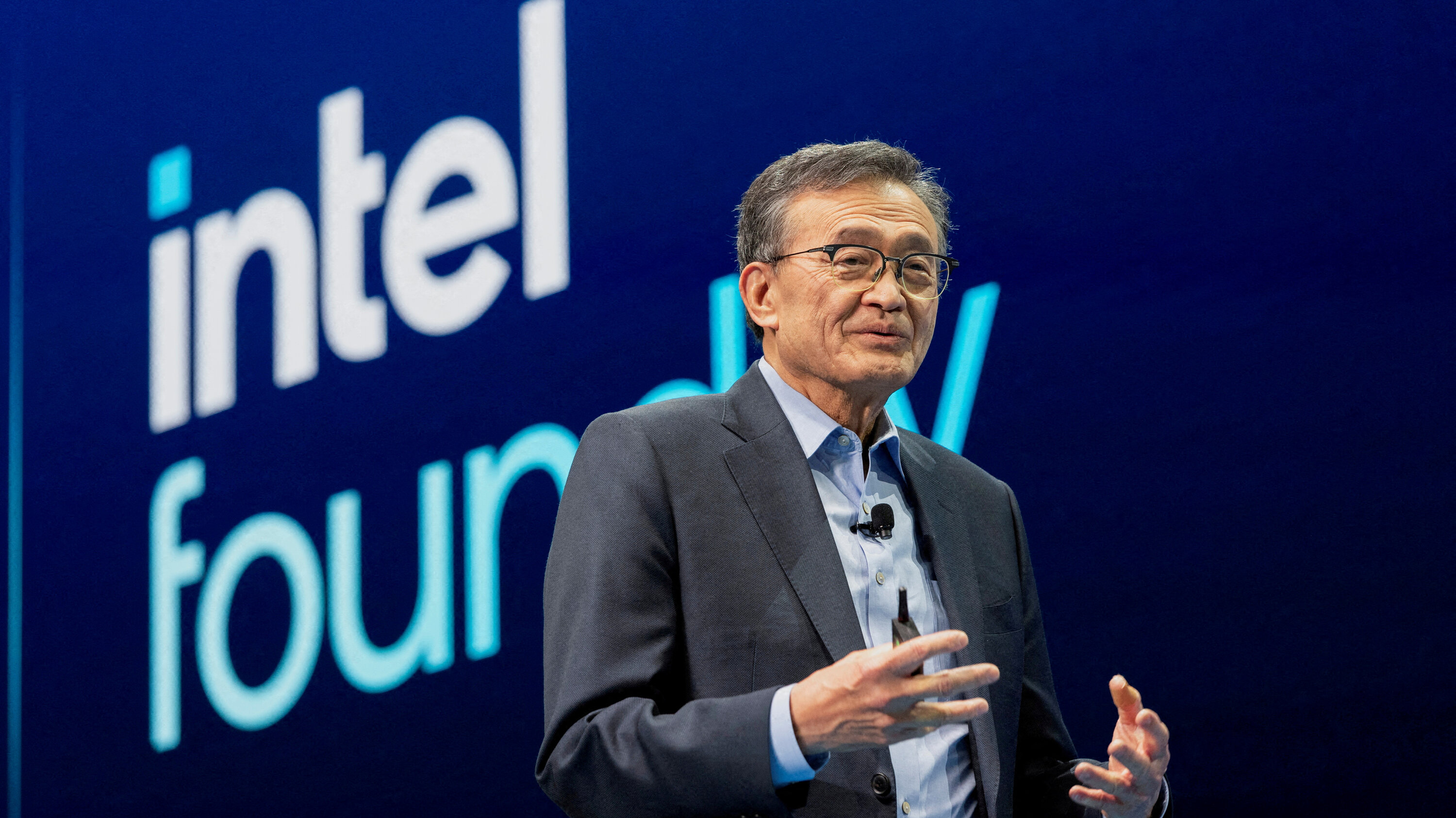
Intel CEO Lip Bu Tan is taking a sharper and more direct approach to rebuilding the company’s position in the data center market, openly acknowledging that Intel made major mistakes in recent years while outlining a new internal strategy focused on engineering discipline, stronger product execution, and fewer organizational barriers.
In a recent interview with CNBC’s Jim Cramer, Tan spoke candidly about Intel’s current position and the challenges the company inherited after years of declining momentum against AMD. Intel, once the dominant force in server CPUs, has seen its market position weaken significantly as AMD gained ground across data center platforms, enterprise deployments, and high performance computing workloads.
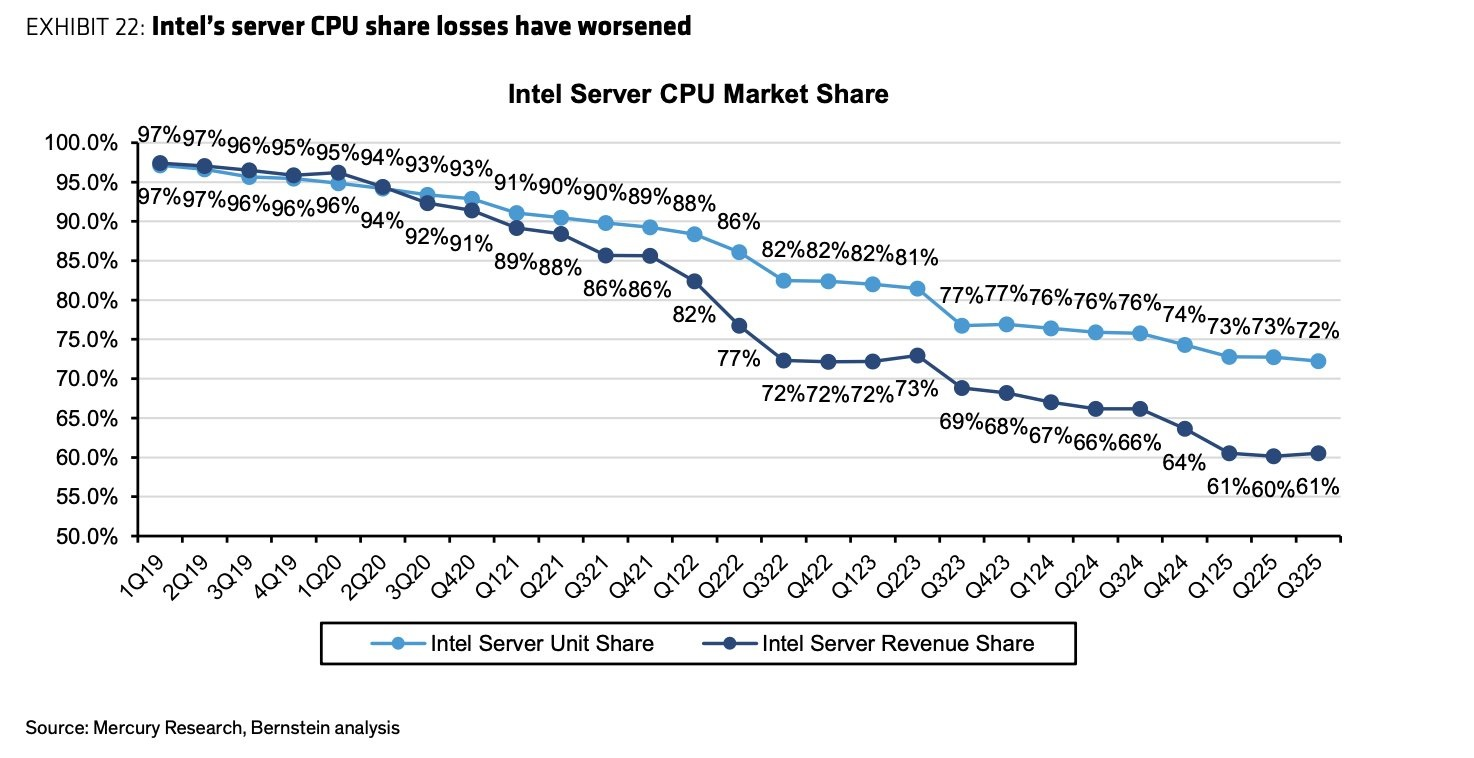
The scale of that shift is clear in the numbers. According to the report, Intel’s server market share fell to 72% in Q3 2025, while its server revenue share declined to 61%. Both figures stood at 91% in Q1 2019, showing how much leadership Intel lost over the past several years. AMD’s market capitalization was also listed at $689 billion, ahead of Intel’s $563 billion, even after Intel’s share price had reportedly jumped 182% year to date.
Tan did not avoid the issue. Instead, he directly admitted that Intel lost the position it once held in data center computing.
“We used to have leadership in data center, and over the years we lost it,”
- Lip Bu Tan
To rebuild that position, Tan said he has brought former Intel workers back into the company and placed renewed focus on key product lines. This signals a strategy centered on recovering institutional knowledge, improving execution, and reconnecting product development with customer needs.
One of the biggest changes under Tan appears to be how Intel’s engineering organization reports and operates. He explained that engineers now report directly to him, giving him a clearer view of product issues, customer feedback, and roadmap execution. For a company trying to restore trust in its technology leadership, that direct line into engineering could be one of the most important internal changes.
Tan also criticized the previous management structure, saying Intel had become too fragmented.
“Had too many silos, too many people reporting,”
- Lip Bu Tan
His solution is to reduce those silos, simplify the product process, and focus more aggressively on the company’s core engineering strengths. In his view, Intel needs to better understand where its problems are before it can redesign products, simplify execution, and deliver what he described as “real killer products.”
“The best thing is to really understand where the problem is, so I can focus on the engineering, how to redesign, simplify the product and then get the real killer products out,”
- Lip Bu Tan
Tan also discussed Intel’s 18A manufacturing process, which has been under heavy industry attention due to Intel’s reported agreement with Apple to supply chips built using the technology. While he admitted that the yield was not satisfactory when he took over, Tan said the situation has improved.
“The best practice is to see 7% or 8% yield improvement per month, and now I’m seeing it,”
- Lip Bu Tan
That comment is important because Intel’s foundry ambitions depend heavily on whether 18A can become a competitive and reliable manufacturing node. Stronger yield improvement would support Intel’s broader turnaround plan, especially as the company looks to prove that it can compete not only as a chip designer, but also as a manufacturing partner for major technology companies.
During Intel’s latest earnings call, Tan also shifted the narrative around the AI infrastructure boom. While GPUs have dominated most AI investment discussions, Tan argued that agentic AI could make CPUs increasingly relevant in future data center growth. His position is that current CPU demand is already strong and could expand further as AI workloads evolve beyond pure accelerator focused training and into broader enterprise deployment, inference, orchestration, and system level computing.
The message from Tan is clear. Intel is no longer treating its data center decline as a temporary setback. The company is acknowledging that it lost leadership, that previous internal structures slowed execution, and that a different operating model is needed to compete in the next generation of computing.
For Intel, the turnaround challenge is massive. AMD has built years of momentum in server CPUs, NVIDIA continues to dominate AI acceleration, and customers are now evaluating complete platform value rather than brand legacy alone. Tan’s strategy focuses on removing internal friction, reconnecting leadership with engineering, improving manufacturing yields, and delivering stronger products at a faster pace.
Whether this transformation can fully restore Intel’s data center leadership remains uncertain, but Tan’s approach marks a clear break from the previous playbook. Instead of defending past decisions, Intel’s new leadership is openly admitting where the company fell behind and trying to rebuild from the engineering level upward.
Do you think Lip Bu Tan’s engineering focused strategy can help Intel regain data center leadership, or has AMD already built too much momentum?
