
CXMT Considers Second Beijing DRAM Fab After Record IPO
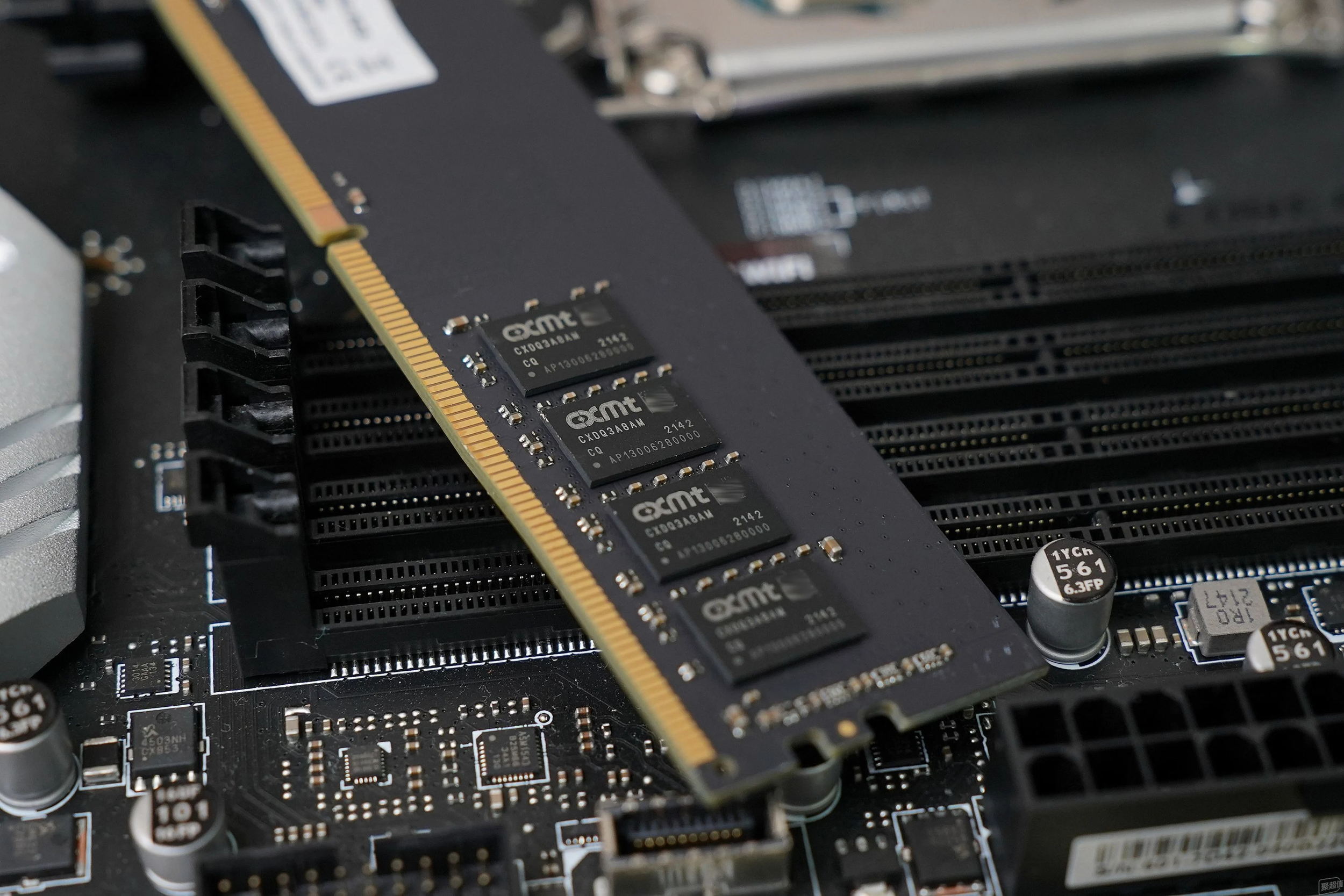
Chinese memory manufacturer CXMT is reportedly considering a second DRAM fabrication plant in Beijing as it uses fresh capital from its record 8.6 billion$ public offering to expand production during the global memory shortage. The proposed 12 inch facility would be built in the Yizhuang district, where the company already operates another DRAM factory. The discussions remain at an early stage, and CXMT has not officially confirmed the investment, production capacity, construction schedule, or final financing structure.
According to a report on the proposed Beijing expansion, CXMT is seeking at least 60 million yuan, approximately 8.9 million$, in support from the Beijing Economic Technological Development Area. State controlled technology companies have also expressed interest in participating. That amount would represent only an initial contribution rather than the complete project cost, since a modern DRAM fab capable of producing advanced memory can require an investment exceeding 10 billion$.
| CXMT Expansion Area | Reported Status |
|---|---|
| Existing Hefei Fabs | 2 facilities with approximately 100,000 wafers per month each |
| Existing Beijing Fab | 1 facility with approximately 100,000 wafers per month |
| New Hefei Project | Under development |
| New Shanghai Project | Under development |
| Second Beijing Fab | Early planning and financing discussions |
| Potential Combined Capacity | More than 600,000 wafers per month |
| Initial Beijing Support Sought | At least 60 million yuan, approximately $8.9 million |
| Estimated Advanced Fab Cost | More than $10 billion |
| Official CXMT Confirmation | Not provided |
CXMT currently operates 2 DRAM fabs in Hefei and 1 in Beijing, with each facility reportedly capable of processing approximately 100,000 wafers per month. New projects in Shanghai and Hefei, combined with another Beijing facility, could more than double total monthly production to above 600,000 wafers once fully operational. One supply chain estimate suggests that this output could allow CXMT to surpass Micron in wafer capacity by 2030, although manufacturing volume does not directly measure usable chip output, technology leadership, product quality, or profitability.
The expansion follows CXMT’s record 8.6 billion$ IPO, which raised 57.92 billion yuan and became the largest mainland Chinese semiconductor offering on record. Proceeds could reach 66.61 billion yuan if the additional share option is fully exercised. CXMT shares closed at 49 yuan during their first trading session after being offered at 8.66 yuan, lifting the company’s market capitalization to approximately 3.3 trillion yuan, or 487.73 billion$. Only 6.73% of its enlarged share capital was initially available for public trading, potentially intensifying the size of the first day movement.
CXMT has become the fourth largest global DRAM manufacturer, but a substantial market gap remains. Counterpoint Research estimated that Samsung held 38% of global DRAM revenue during Q1 2026, followed by SK hynix with 29%, Micron with 22%, and CXMT with 8%. The established 3 manufacturers therefore controlled approximately 89% of the market, supported by more advanced process technology, established international customer relationships, and stronger positions in High Bandwidth Memory.
| DRAM Manufacturer | Q1 2026 Revenue Share |
|---|---|
| Samsung | 38% |
| SK hynix | 29% |
| Micron | 22% |
| CXMT | 8% |
| Other Suppliers | 3% |
CXMT’s opportunity is being strengthened by the strategic decisions of its larger competitors. Samsung, SK hynix, and Micron are directing considerable manufacturing resources toward High Bandwidth Memory and high value server products required by artificial intelligence infrastructure. That transition has reduced the availability of conventional DDR5, mobile DRAM, and other mainstream products, giving CXMT more room to expand across consumer electronics, servers, and personal computers.
This changing market has already improved the company’s pricing power. Selected CXMT 64 GB server DDR5 modules have reportedly become more expensive than comparable Samsung products, while the company has secured multiyear supply agreements with major Chinese technology groups. CXMT silicon has also appeared inside globally recognized consumer products, including a Corsair DDR5 module using Chinese DRAM.
The company still faces major technical and geopolitical constraints. CXMT depends on deep ultraviolet lithography because Chinese manufacturers cannot acquire the extreme ultraviolet systems used by leading memory suppliers. Its High Bandwidth Memory technology is also reportedly several years behind the strongest products from Samsung, SK hynix, and Micron. Additional factories can increase production, but competitive yields, equipment access, process maturity, advanced packaging, and customer qualification will determine how much usable output reaches the market.
A second Beijing facility would reinforce CXMT’s transformation from a domestic alternative into a serious fourth DRAM supplier. The company now has capital, government support, domestic demand, growing pricing power, and an unusually favorable market created by the global memory shortage.
The immediate threat to Samsung, SK hynix, and Micron is not advanced HBM leadership. CXMT remains behind in process technology, lithography access, packaging, and international qualification. Its stronger opportunity is conventional DDR5, mobile memory, server DRAM, and other products receiving less attention as the largest suppliers prioritize artificial intelligence infrastructure.
More than 600,000 wafers per month could eventually influence global DDR5 availability and pricing, but headline capacity should not be confused with competitive output. Yield, density, reliability, product mix, and platform validation will determine whether the proposed factories genuinely narrow the gap or simply add expensive production capacity.
Could CXMT’s rapid factory expansion help stabilize DDR5 prices, or will technology restrictions prevent it from challenging the established memory leaders?
