
CXMT Secures $8.6 Billion IPO as China’s DRAM Expansion Challenges the Big Three
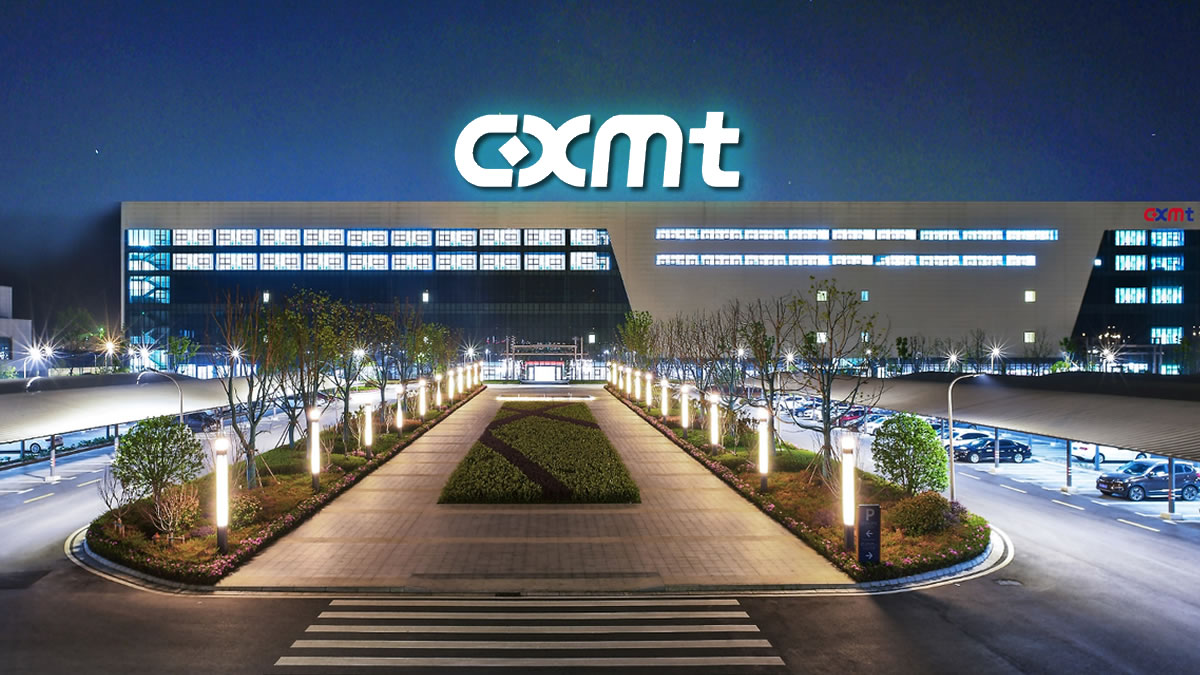
China’s ChangXin Memory Technologies has completed subscriptions for an $8.6 billion initial public offering ahead of its scheduled Shanghai STAR Market debut on July 27, 2026. The capital injection will support CXMT’s efforts to expand DRAM production, accelerate DDR5 and LPDDR5 development, and establish a domestic HBM supply chain for China’s growing artificial intelligence industry.
According to Reuters, the retail portion of the offering was initially subscribed approximately 244 times over, while the final rate reached around 212 times following the redistribution of shares between institutional and retail investors. The offering is the largest Asian IPO announced during 2026 and values CXMT at approximately $85.5 billion. Proceeds could increase to around $9.8 billion if the full additional share option is exercised.
CXMT has rapidly established itself as the world’s fourth largest DRAM manufacturer. Its 2025 revenue reached approximately $8.6 billion, up from $3.3 billion in 2024, while Q1 2026 revenue reportedly increased by more than 700% compared with the previous year. The improvement was supported by higher memory prices, strong domestic demand, and a global DRAM shortage created partly by the artificial intelligence infrastructure boom.
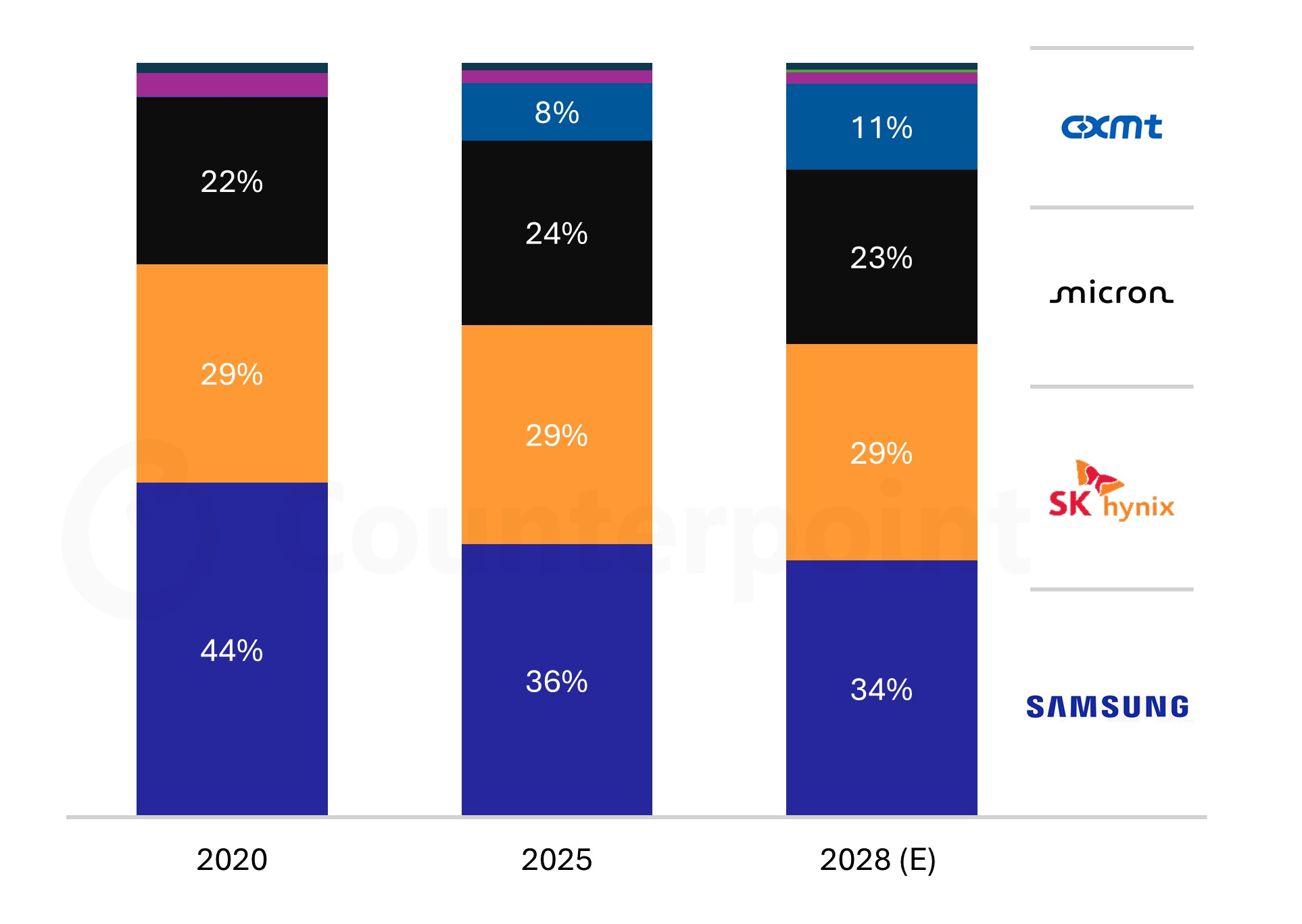
Current market data still shows a considerable gap between CXMT and the established memory leaders. Counterpoint Research estimated that Samsung controlled 38% of global DRAM revenue during Q1 2026, followed by SK hynix at 29%, Micron at 22%, and CXMT at 8%. CXMT’s rise is significant, but it has not yet reached the scale, product diversity, or advanced memory position of the largest 3 suppliers.
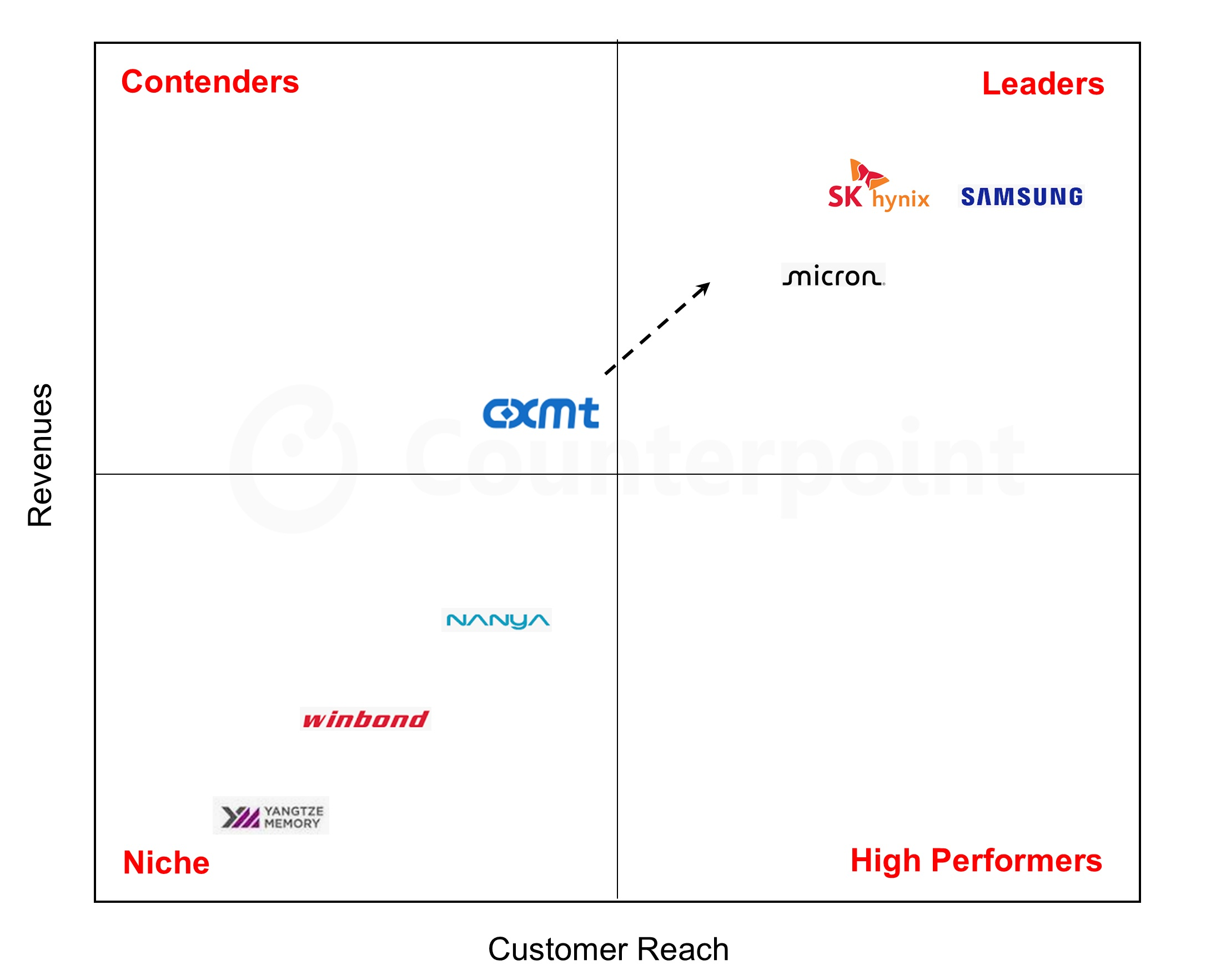
Counterpoint’s base projection places CXMT at approximately 11% of global DRAM bit shipments and 9% of revenue by 2028. The company could potentially exceed a 15% revenue share by 2035 if its manufacturing expansion and advanced memory programs progress successfully. That would place it closer to the scale required to support continuous investment in new fabrication plants and process technologies.
CXMT plans to use its new capital to substantially increase manufacturing output. Counterpoint estimates that monthly capacity could rise from approximately 320,000 wafers to 420,000 wafers during 2027 through additional production in Shanghai, Beijing, and Hefei. Sources cited by Reuters describe an even broader expansion that could eventually double current capacity to approximately 600,000 wafers per month once new facilities are fully operational.
The company is also shifting production toward more advanced products. DDR5 and LPDDR5 are expected to approach 75% of its output as CXMT expands beyond entry level and domestic memory applications. This transition is already becoming visible internationally. Corsair Vengeance DDR5 module had been spotted using CXMT chips, suggesting that Chinese DRAM is beginning to enter products from globally recognized consumer brands.
CXMT silicon is also demonstrating greater performance potential. A recent Colorful DDR5 demonstration pushed CXMT based memory to 8600 MT/s on an AMD X870E platform while completing a full stability test. The result does not guarantee that every commercial kit will achieve the same speed, but it indicates that CXMT is progressing beyond the value focused memory segment.
HBM remains the most important and uncertain part of the roadmap. CXMT is reportedly working toward volume production of 12 Hi HBM3, with Huawei, Cambricon, and Biren evaluating potential applications. Counterpoint estimates that successful production at competitive yields could create approximately $2 billion in HBM revenue by 2028. This figure applies specifically to the HBM opportunity and is not a target for CXMT’s total revenue, which has already surpassed that amount.
However, CXMT remains technologically behind Samsung, SK hynix, and Micron in advanced HBM manufacturing, packaging, customer qualification, and large scale yield management. Export restrictions also limit access to extreme ultraviolet lithography and selected advanced manufacturing equipment. Analysts believe these constraints could encourage CXMT to investigate alternative structures including vertical channel transistors and wafer on wafer bonding, although their readiness for competitive mass production remains unproven.
The $8.6 billion IPO gives CXMT the financial resources required to expand aggressively, but capital alone will not immediately transform it into a fourth member of the memory industry’s dominant group. Samsung, SK hynix, and Micron possess decades of manufacturing experience, established relationships with global customers, and proven HBM production at volumes required by NVIDIA, AMD, and hyperscale data centers.
CXMT’s immediate opportunity is conventional DDR5, LPDDR5, server memory, and domestic artificial intelligence infrastructure. Strong demand and limited global supply provide an unusually favorable environment for a new competitor to increase production without immediately causing a major price collapse.
The decisive test will be HBM. Producing functional samples is considerably easier than achieving the yield, thermal performance, stacking consistency, and qualification standards required for large artificial intelligence deployments. If CXMT can solve those challenges, China will gain a strategically important domestic alternative. If it cannot, the company may remain a powerful conventional DRAM supplier without directly threatening the most profitable part of the market.
Can CXMT become a genuine fourth global memory leader, or will HBM manufacturing and export restrictions preserve the dominance of Samsung, SK hynix, and Micron?
