
RTX 5090 Prices Approach $10,000 as US Online Stock Disappears
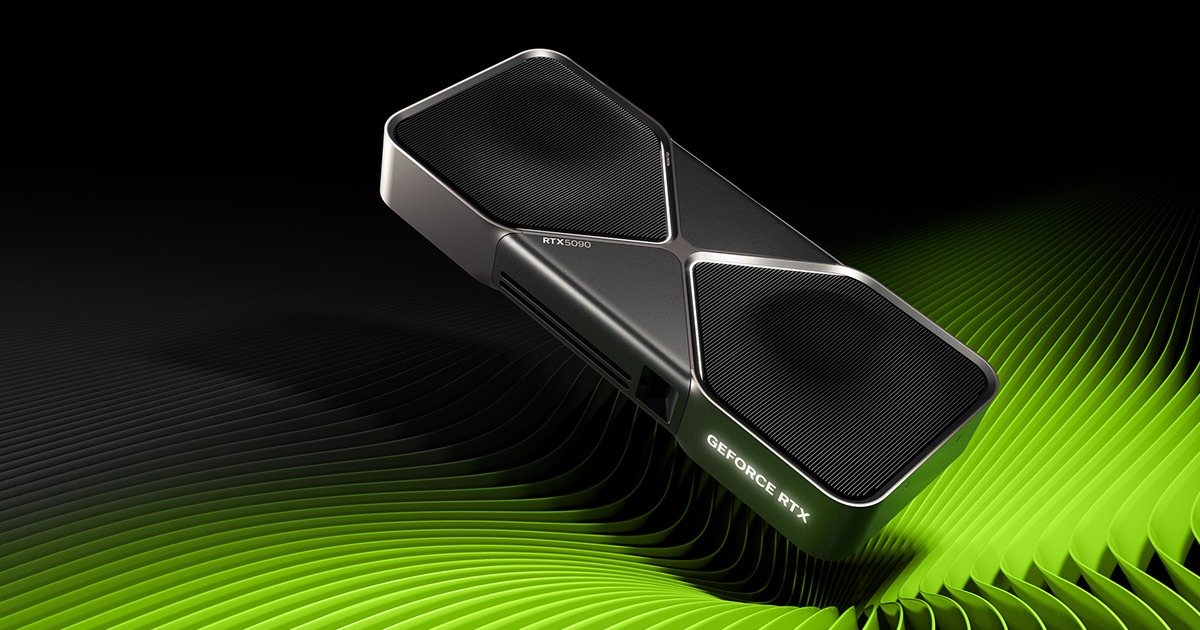
GeForce RTX 5090 pricing in the United States has reached another extreme, with third party marketplace listings now approaching $10,000 as normal online inventory becomes increasingly difficult to find. Some Newegg sellers are asking as much as $9,800 for premium models, almost 5 times the $1,999 launch price NVIDIA established for the Founders Edition.
The distinction between official pricing and marketplace pricing is important. NVIDIA still lists the RTX 5090 Founders Edition at $1,999, but it is currently out of stock. NVIDIA's own marketplace also shows premium partner cards around $4,600 to $5,030, with many unavailable. Meanwhile, Newegg marketplace listings have pushed considerably higher, including ASUS and GIGABYTE models between approximately $8,700 and $9,800.
| RTX 5090 Listing | Current Price |
|---|---|
| NVIDIA Founders Edition | $1,999, out of stock |
| ZOTAC RTX 5090 Solid at Micro Center | $4,499.99 |
| GIGABYTE RTX 5090 Gaming OC at Micro Center | $4,699.99 |
| ASUS ROG Astral at Micro Center | $5,029.99 |
| ASUS ROG Astral on Newegg Marketplace | $9,659 |
| GIGABYTE AORUS Models on Newegg Marketplace | Up to $9,800 |
Micro Center provides a useful comparison because it still lists several RTX 5090 cards between approximately $4,500 and $5,400 through in store sales. Those prices are already far above NVIDIA's original $1,999 Founders Edition positioning, but remain dramatically below some online marketplace offers.
The situation has deteriorated quickly. Recent US pricing data placed the RTX 5090 median around $4,699.99 in August, already 135% above launch MSRP. Previous coverage showed how RTX 5090 pricing had already moved well beyond $4,000, while premium models such as the AORUS RTX 5090 Infinity reached $5,299.99.
Rising prices are being driven by more than marketplace scarcity. Graphics memory costs have increased throughout 2026, while board partners are dealing with more expensive GPU and memory packages, cooling systems, circuit boards, and replacement inventory. PC Partner has also warned that graphics card availability could decline further during 2H 2026. We previously covered NVIDIA's reported GeForce price increases as those pressures moved through the supply chain.
AI demand adds another complication. The RTX 5090 carries 32 GB of GDDR7 and remains considerably cheaper than professional Blackwell GPUs with similar compute capability, making it attractive for local AI and workstation deployments as well as gaming. Current reports indicate US online availability has become extremely limited, leaving third party sellers increasingly dominant when buyers search for immediate stock.
A $9,800 RTX 5090 does not mean NVIDIA suddenly has a $10,000 gaming GPU. It means scarcity has pushed parts of the online marketplace into territory where asking prices have become detached from normal retail.
The more concerning number is closer to $4,500 to $5,000. Those are prices appearing through established retail channels, and they show how far the RTX 5090 market has moved from its $1,999 launch position.
At nearly $10,000, gamers should be especially cautious with third party sellers. At that point the issue is no longer simply poor value. Seller reputation, warranty support, fulfillment history, and fraud risk become just as important as finding the GPU itself.
At what price does the RTX 5090 stop making sense as a gaming GPU for you?
