
Micron Packs 512 GB Into a Single DDR5 RDIMM at Up to 9200 MT/s
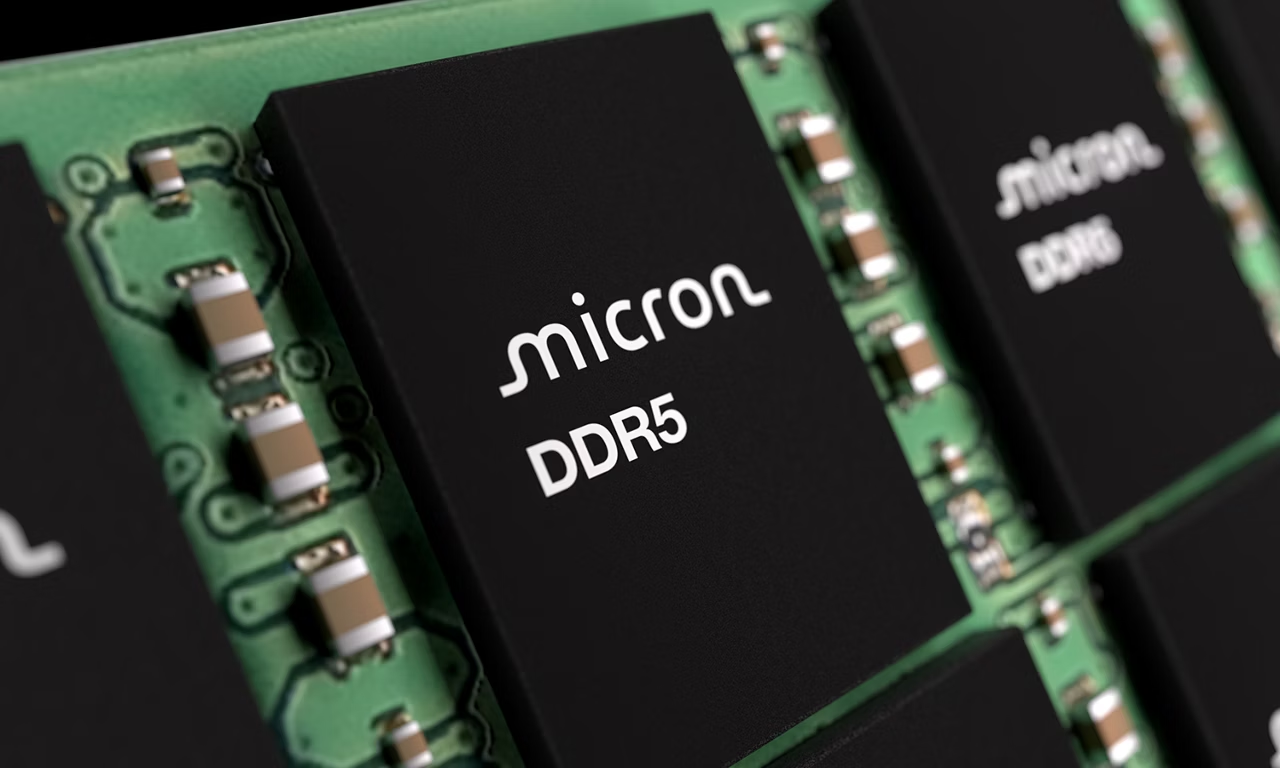
Micron has demonstrated what it calls the world's first 512 GB DDR5 RDIMM, doubling the capacity of its recently sampled 256 GB server modules while maintaining speeds of up to 9200 MT/s. The new memory is being validated with AMD and Intel for future server platforms and is expected to enter volume production during 2H 2027.
The 512 GB module uses advanced vertical packaging with DRAM dies stacked and connected through through silicon vias. This allows Micron to dramatically increase density without requiring servers to populate additional DIMM slots, an important advantage for AI, large databases, virtualization, analytics, and other workloads where memory capacity is becoming increasingly important.
| Micron 512 GB DDR5 RDIMM | Specification |
|---|---|
| Capacity | 512 GB per module |
| Maximum Speed | 9200 MT/s |
| Module Type | DDR5 RDIMM |
| Packaging | 3D stacked DRAM with TSV |
| Maximum 24 Slot Capacity | 12 TB |
| Operating Power | Approximately 16 W |
| Volume Production | 2H 2027 |
| Validation | AMD and Intel server platforms |
A 24 slot dual socket server populated entirely with the new modules could carry as much as 12 TB of DDR5 memory. Micron says the higher density also reduces power consumption by more than 60% compared with reaching the same 512 GB capacity using 4 separate 128 GB RDIMMs. The company's comparison places a single 512 GB module at approximately 16 W versus 44.2 W combined for 4 128 GB modules.
Performance gains can extend beyond lower power and higher density. Micron reports that memory bound Spark Support Vector Machine analytics workloads can run up to 1.4 times faster with its 512 GB RDIMMs compared with 256 GB DDR5 configurations. Larger memory pools allow more data to remain directly accessible to the processor, reducing movement to slower storage tiers and improving throughput for workloads such as Redis and RocksDB. These figures come from Micron testing and will vary depending on the server and workload.
AMD and Intel are both actively validating the new module, but Micron has not named the specific next generation processors or server platforms involved. The company currently says only that the 512 GB RDIMM is being prepared for future systems from both ecosystems, so linking it to a particular EPYC or Xeon generation would currently be speculation.
The announcement comes only months after Micron began sampling its 256 GB DDR5 RDIMM, which also reaches 9200 MT/s using 1 gamma DRAM and advanced 3D packaging. We previously covered how that module was already targeting the next wave of AI servers with higher capacity and lower power consumption.
The rapid jump from 256 GB to 512 GB highlights how quickly server memory requirements are growing. HBM receives much of the attention around AI accelerators, but conventional server DRAM remains critical for CPU workloads, data preprocessing, databases, retrieval systems, inference, virtualization, and keeping increasingly large datasets close to compute resources.
Duck IT Take
512 GB on a single DDR5 RDIMM is more than a capacity milestone. It shows how advanced packaging is beginning to reshape conventional server memory in much the same way stacking transformed HBM.
The combination of 12 TB per 24 slot server, 9200 MT/s speeds, and substantially lower power per 512 GB of capacity could make these modules particularly valuable for memory dense AI and enterprise systems. The real test will come when AMD and Intel complete platform validation and Micron moves from demonstration hardware into volume production during 2H 2027.
Question for readers
Could 512 GB DDR5 modules become more important to future AI servers than simply pushing memory frequencies higher?
