
DeepSeek AI Helps Resident Evil 7 Run Faster on a Snapdragon 8 Gen 2 Phone
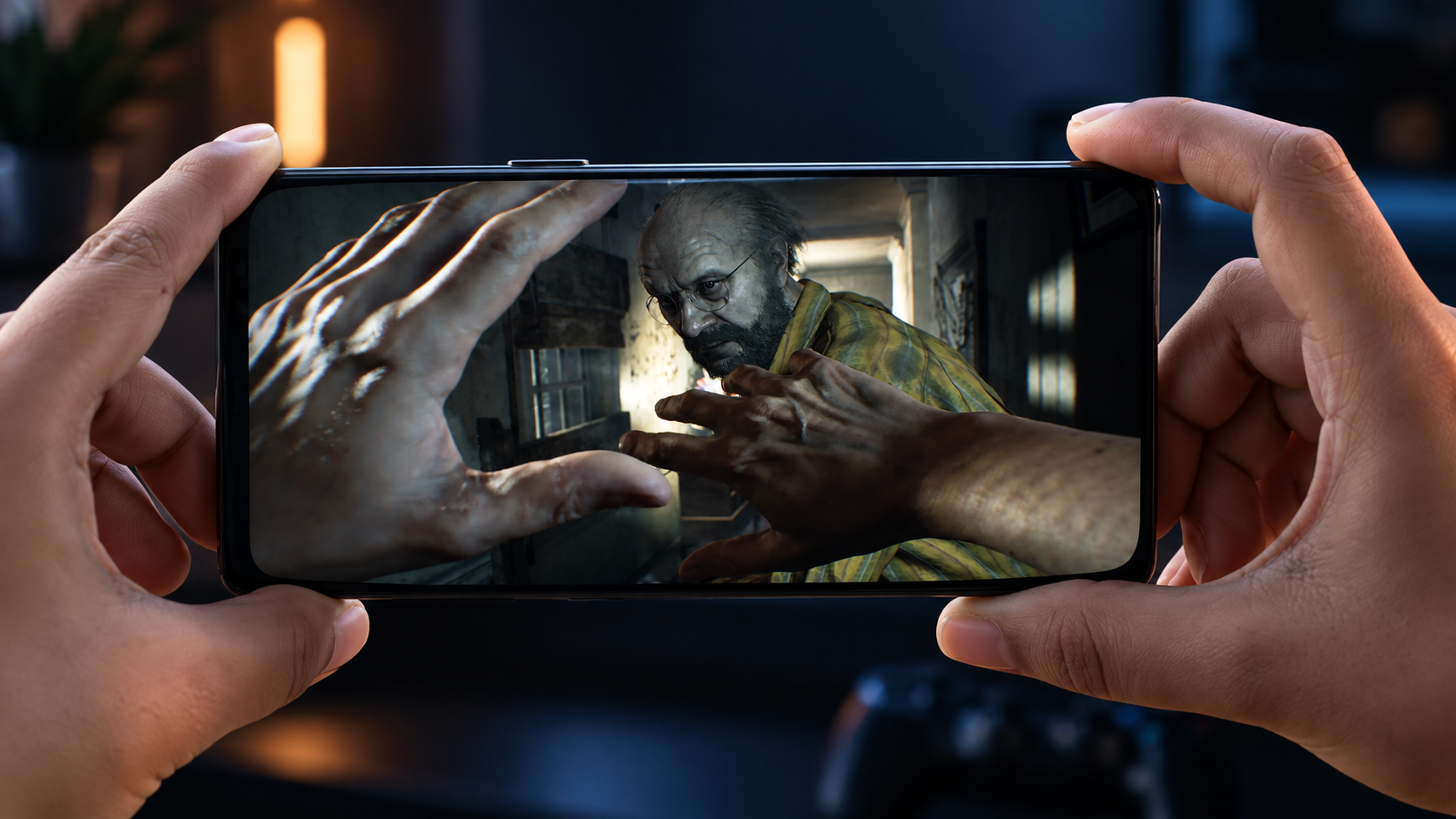
A smartphone enthusiast has used DeepSeek V4.1 Flash together with the Hermes Agent framework to optimize the Windows version of Resident Evil 7 for Android, reducing texture storage from roughly 20 GB to 8 GB while reportedly improving performance on a OnePlus 12R powered by Qualcomm's Snapdragon 8 Gen 2.
The experiment was shared by X user Pixel Gamer 4K, who says DeepSeek V4.1 Flash and Hermes were used to analyze the game and prepare a lighter version better suited to the limited memory bandwidth and storage environment of a smartphone. The complete modified game reportedly occupies around 13 GB after texture compression and removal of unnecessary assets.
Compressed textures from 20gb ~> 8gb and this still looks miles better than the iOS version
— Pixel Gamer 4k (@4k_isn) September 14, 2026
iOS version is like 25gb and mine is only 13gb
I used DeepSeek V4.1 Flash and Hermes Agent to do the job and now I am Running Resident Evil 7 on a midrange android phone smoothly 😁 pic.twitter.com/Xn31khI6lK
The optimization focused heavily on textures. Assets originally reaching 4096 pixel resolution were reportedly reduced to 1024 and 512 pixel versions where appropriate, cutting texture storage by approximately 60%. Snapdragon Game Super Resolution was then used to reconstruct a higher resolution image from a lower internal rendering resolution.
Subsequent technical analysis of the demonstration reports that Resident Evil 7 improved from roughly 20 FPS to around 30 FPS after the changes, representing an approximate 50% increase. The optimized version reportedly rendered internally at 720p before being reconstructed toward 1200p through Qualcomm's upscaling technology. Power consumption was also reported around 5 W to 6 W during testing. These measurements come from the individual experiment rather than a controlled independent benchmark and should therefore be treated cautiously.
| Resident Evil 7 Experiment | Before | After |
|---|---|---|
| Reported Performance | Around 20 FPS | Around 30 FPS |
| Texture Data | Around 20 GB | Around 8 GB |
| Complete Modified Game | Not specified | Around 13 GB |
| Internal Resolution | Not disclosed | 720p with SGSR |
| Reported Power | Not disclosed | Around 5 W to 6 W |
DeepSeek itself did not directly run Resident Evil 7 or replace the game's rendering engine. DeepSeek V4.1 Flash acted as the reasoning model used to analyze the workload and propose optimization steps. The model is a 552 billion parameter Mixture of Experts architecture that activates 8 billion parameters for input and 16 billion for output, with DeepSeek specifically targeting faster agent based workflows and lower inference costs.
Hermes Agent provided the execution layer. Developed by Nous Research, Hermes can give supported AI models access to tools including terminal commands, file manipulation, scripts, and remote systems. In this experiment, the combination allowed the model to move beyond simply recommending changes and assist with the actual optimization workflow.
That distinction matters because the performance gain did not come from AI magically making the Snapdragon GPU faster. The improvement came from reducing the amount of texture data the phone needed to process and move through memory while using existing Qualcomm upscaling technology to recover image quality.
There are also important limitations. No complete scripts, prompts, before and after performance logs, thermal traces, or controlled image quality comparisons have been published. The reported 50% gain therefore demonstrates an interesting optimization experiment rather than a repeatable benchmark showing what every Snapdragon 8 Gen 2 device can achieve.
This is a far more interesting AI use case than simply asking a model for graphics settings. DeepSeek and Hermes were effectively used as an optimization assistant, identifying a likely memory and I/O bottleneck, reducing oversized assets, and combining that work with hardware already available inside the Snapdragon platform.
The real potential is automated device specific optimization. A future tool could theoretically inspect a game's assets, available memory, GPU capability, storage bandwidth, and resolution target before automatically generating a version optimized for that particular device.
The current Resident Evil 7 demonstration is still an enthusiast experiment, but it shows where agentic AI could become genuinely useful for game optimization.
Would you use an AI tool that automatically optimized game textures and settings specifically for your PC, handheld, or smartphone?
