
Intel’s 14A Foundry Push Is Reportedly Drawing Interest From Major Customers, but the Big Names Are Still Unconfirmed
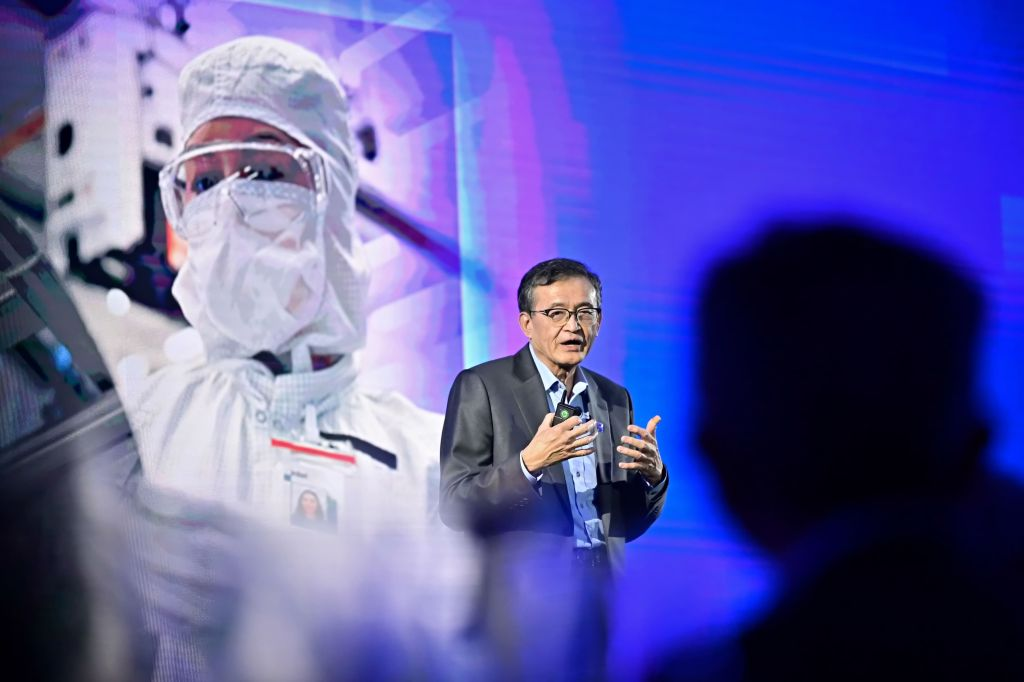
Intel’s long term foundry story is increasingly centering on 14A, the process node the company has repeatedly positioned as a key offering for external customers rather than just an internal manufacturing step. A recent industry discussion, amplified through this X post, claims that Intel could land meaningful 14A customer commitments by the end of 2026, with Apple, NVIDIA, Google, and AMD all mentioned as potential names tied to future wins. But right now, that part of the story remains firmly in the realm of analyst expectation and market speculation rather than public customer confirmation.
UBS Group highlights $INTC 14A PDK as a key catalyst, raising the target price to $65.
— MQ (@Mar364503) April 14, 2026
UBS Group released a research report stating that $INTC exhibits resilient demand for personal computers (PCs), with significant growth in server CPU demand as well. In addition, the company…
The core of the claim appears to come from a UBS research note, referenced through UBS, which reportedly argues that Intel Foundry’s prospects are improving and that formal customer commitments could follow once 14A PDK 1.0 is available. What matters here is the distinction between customer engagement and signed production business. Intel has publicly said that 14A is being developed with outside customers in mind and that its process development is benefiting from earlier external involvement than 18A had at the same stage, but Intel has not publicly named Apple, NVIDIA, Google, or AMD as 14A foundry customers.
What Intel has confirmed is the broader direction. In Intel’s own foundry and engineering communication, the company has said it is developing multiple PDKs in parallel, including for Intel 18A, Intel 14A, and beyond, and it has previously highlighted how important mature PDK readiness is for design adoption. Intel also confirmed last year that 18A PDK 1.0 had been released, which gives some context for why observers are now watching closely for the equivalent 14A milestone. A full 14A PDK 1.0 release would be a meaningful signal because it is the point at which external customers can work against a more stable design foundation instead of an earlier definition stage.
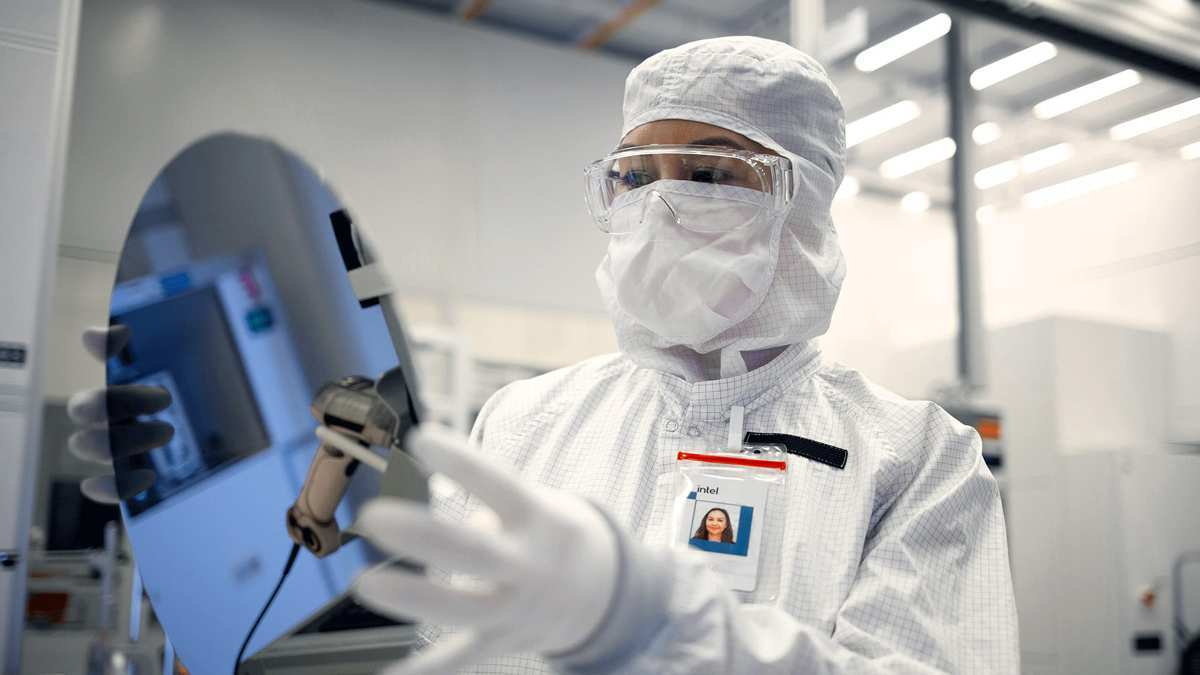
That said, the specific customer list being circulated should be treated carefully. Apple, NVIDIA, Google, and AMD are the exact kind of logos Intel would want for credibility, but they are also the exact kind of names that attract rumor inflation whenever a foundry process starts to look commercially viable. Until Intel, or one of those companies, confirms an actual tapeout, test chip, or foundry commitment, there is no solid public evidence that any of them have signed onto 14A. The more disciplined conclusion is that Intel may be in active discussions with high profile potential customers, but the major wins being talked about are not yet official.
The other part of this narrative involves Terafab and Intel’s broader manufacturing credibility. There is now real evidence that Intel is involved in that orbit. Reuters has reported that Intel has joined Musk’s Terafab initiative, while other Reuters reporting shows Tesla actively recruiting semiconductor engineers in Taiwan for the project and pushing toward a 2029 manufacturing target. But the idea that Intel’s Ohio fabs could be merged with Terafab appears to be speculative rather than confirmed policy or deal structure at this stage. There is no public Intel or Reuters confirmation that such a merger has been agreed or formally planned.
Intel has made great strides. I was one of the only analysts that gave them a shot when the company had been written off for dead by most.
— Patrick Moorhead (@PatrickMoorhead) April 18, 2026
They’re definitively getting advanced packaging from big XPU players. I called this a long time ago. Lower risk, less time, very high need,…
That matters because Intel’s foundry story does not need speculative Ohio combinations to be strategically relevant. The company is already trying to sell a more complete manufacturing stack, and that includes packaging. Intel has been openly promoting EMIB as one of its major differentiation points for advanced multi die designs, especially in AI and high performance computing, where packaging constraints are becoming almost as important as wafer capacity itself. In practical terms, Intel’s pitch is not just “use our process node.” It is “use our node, our advanced packaging, and our manufacturing footprint as an alternative to an increasingly crowded TSMC ecosystem.” That is where 14A could become especially important if Intel can prove both transistor competitiveness and supply chain reliability.
The real business question is timing. Intel needs 14A to do more than exist on a roadmap. It needs the node to arrive with a credible PDK, a strong external design ecosystem, and at least a few recognizable customers willing to commit publicly. If that happens by the end of this year, it would be a major perception win for Intel Foundry, especially after years of skepticism around whether the company could truly compete for outside business at the leading edge. If it does not, then 14A risks becoming another promising process story without the commercial validation needed to change the market narrative.
For now, the smartest reading is this: Intel’s 14A process appears to be gaining interest, analysts believe larger names may be involved, and a key milestone will be the arrival of PDK 1.0. But the headline claim that Apple, NVIDIA, Google, and AMD are about to become surprise Intel 14A customers is still not something the public record can confirm today. The opportunity is real. The customer list is still speculative.
Do you think Intel’s 14A can actually land a top tier external foundry customer this year, or will packaging and niche wins arrive before any blockbuster logo does?
