
ASML Says Advanced Logic and Memory Chips Will Remain Supply Constrained for the Foreseeable Future
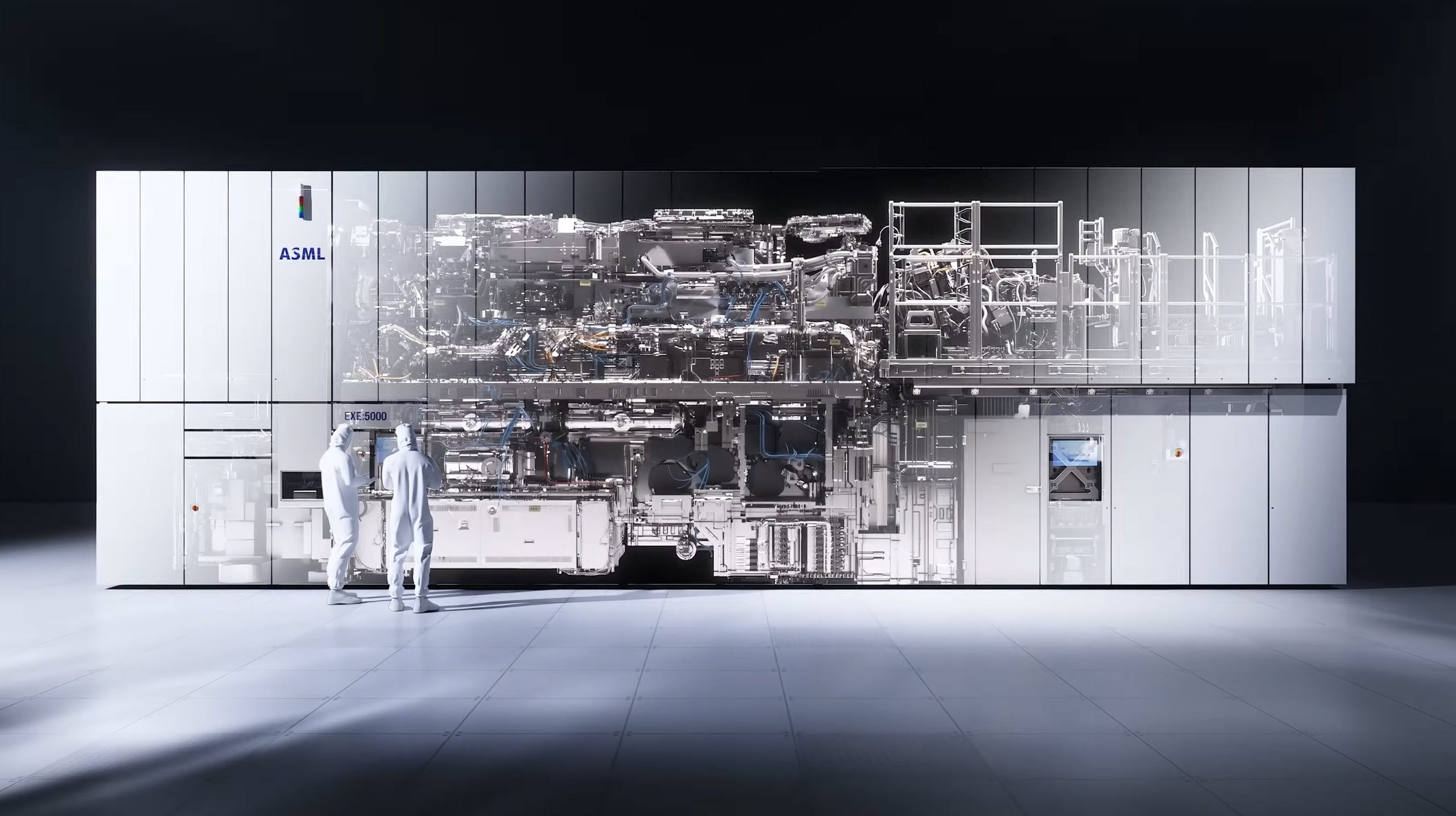
ASML is making it increasingly clear that the semiconductor supply crunch at the leading edge is not easing anytime soon. During its Q1 2026 earnings discussion, president and chief executive officer Christophe Fouquet said demand for advanced logic and memory chips will continue to outpace supply for the “foreseeable future,” with AI infrastructure spending remaining the primary force behind that imbalance. He added that this is now creating constraints across multiple end markets, including AI, mobile, and PCs, while pushing customers to add capacity more aggressively.
That message matters because ASML sits at the center of the advanced semiconductor manufacturing chain. When the company says its customers are still scrambling for more capacity, it is effectively describing a structural shortage at the tool level, not just a temporary fluctuation in chip orders. Fouquet said memory customers are already telling ASML they are effectively sold out for 2026, with supply constraints expected to continue beyond 2026, while advanced logic customers are expanding across several nodes at the same time they continue ramping 2 nm for AI related products.
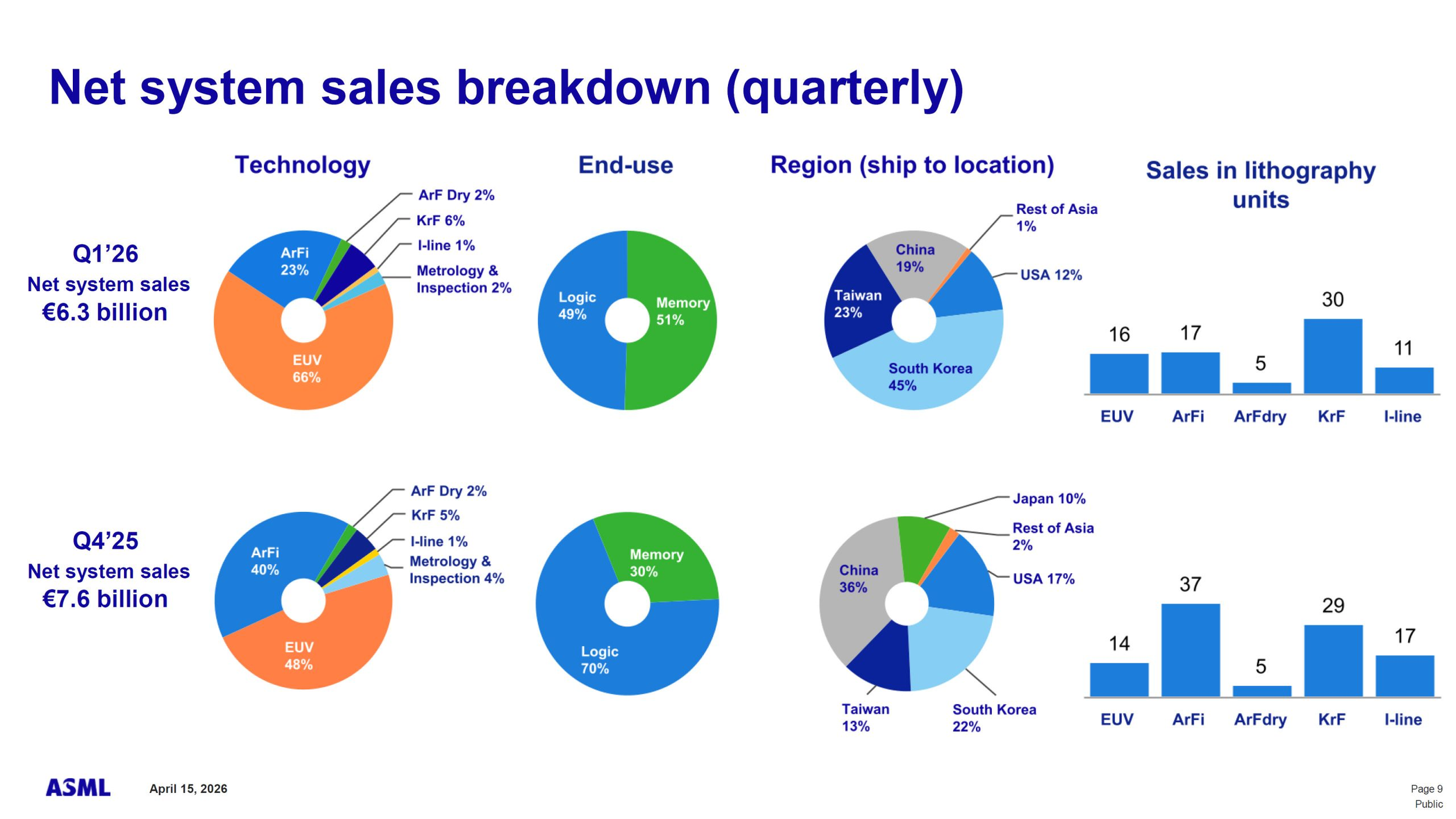
ASML’s own Q1 sales mix supports that picture. The company reported €6.3 billion in net system sales for the quarter, with the split landing at 51% memory and 49% logic. By technology, EUV accounted for 66% of quarterly net system sales, while ArFi immersion DUV represented 23%. On a regional ship to location basis, South Korea led with 45%, followed by Taiwan at 23%, China at 19%, and the United States at 12%. Those figures underline how concentrated advanced lithography demand remains in the fabs building next generation memory and logic products.
The memory side of this story is especially important. ASML said both DRAM and advanced logic customers are increasing their adoption of EUV and immersion DUV, which raises lithography intensity and therefore drives even more tool demand. In practical terms, that means advanced memory is no longer just a passenger in the AI buildout. It is one of the core bottlenecks. As HBM and other advanced memory products become more critical to AI accelerators and data center platforms, fabs need more leading edge lithography to keep up.
ASML also said it is trying to ease some of this pressure from both ends. On one side, it is increasing new system output. On the other, it is pushing productivity upgrades into the installed base so customers can extract more wafers from tools that are already on their fab floors. CFO Roger Dassen said ASML is targeting output of at least 60 Low NA EUV systems in 2026 and at least 80 Low NA EUV units in 2027, assuming customer demand continues to support that ramp. He also said the company is working to keep non EUV capacity aligned with what customers need across their different nodes.
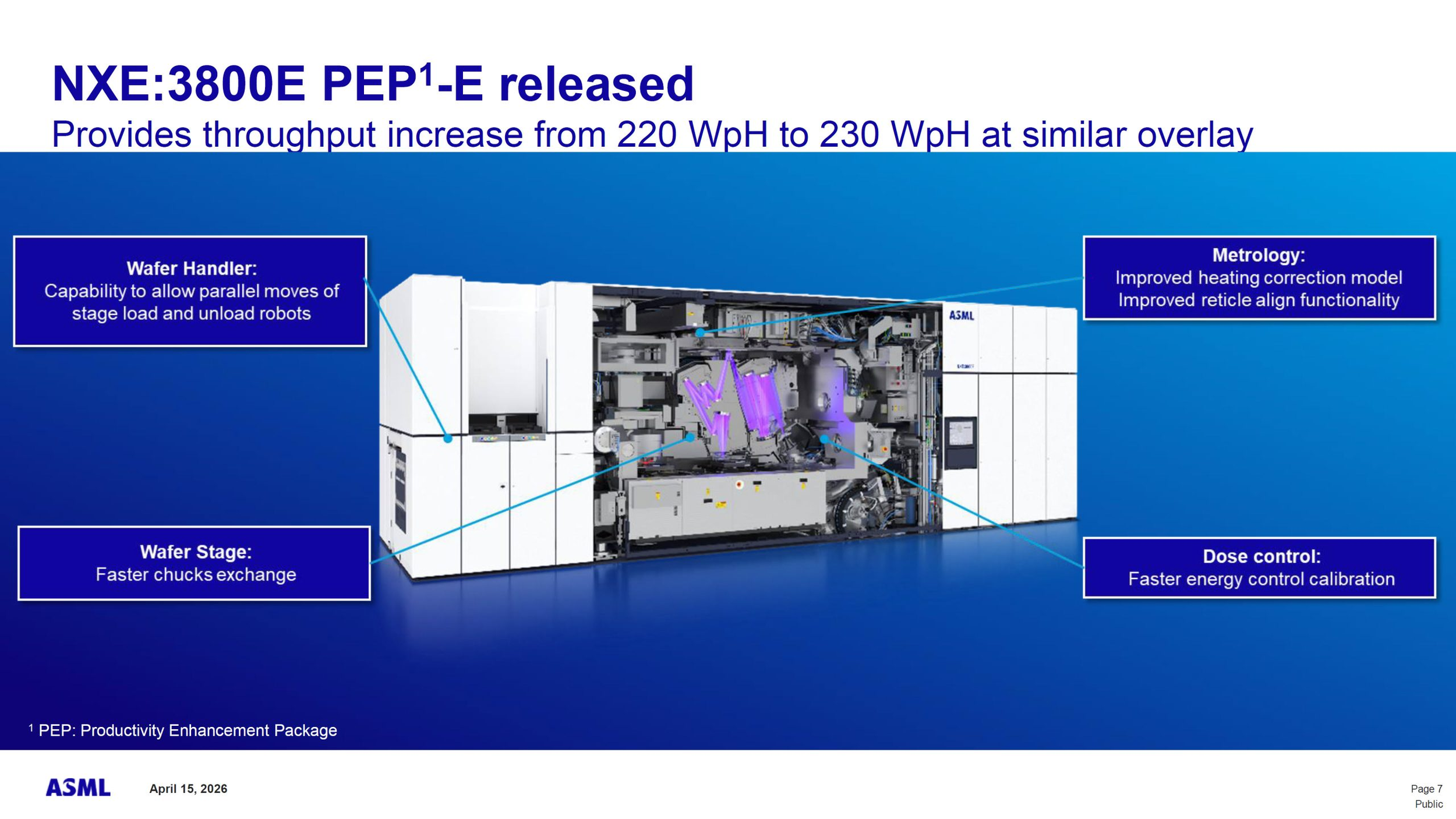
The near term productivity story is also improving. Fouquet said ASML has increased throughput on the NXE:3800E from 220 wafers per hour to 230 wafers per hour, and the company’s product materials identify this upgraded release as the NXE:3800E PEP E. He added that the next NXE:3800F is now targeted at 260 wafers per hour, up from the previously stated 250, which should help support customer capacity needs around 2028.
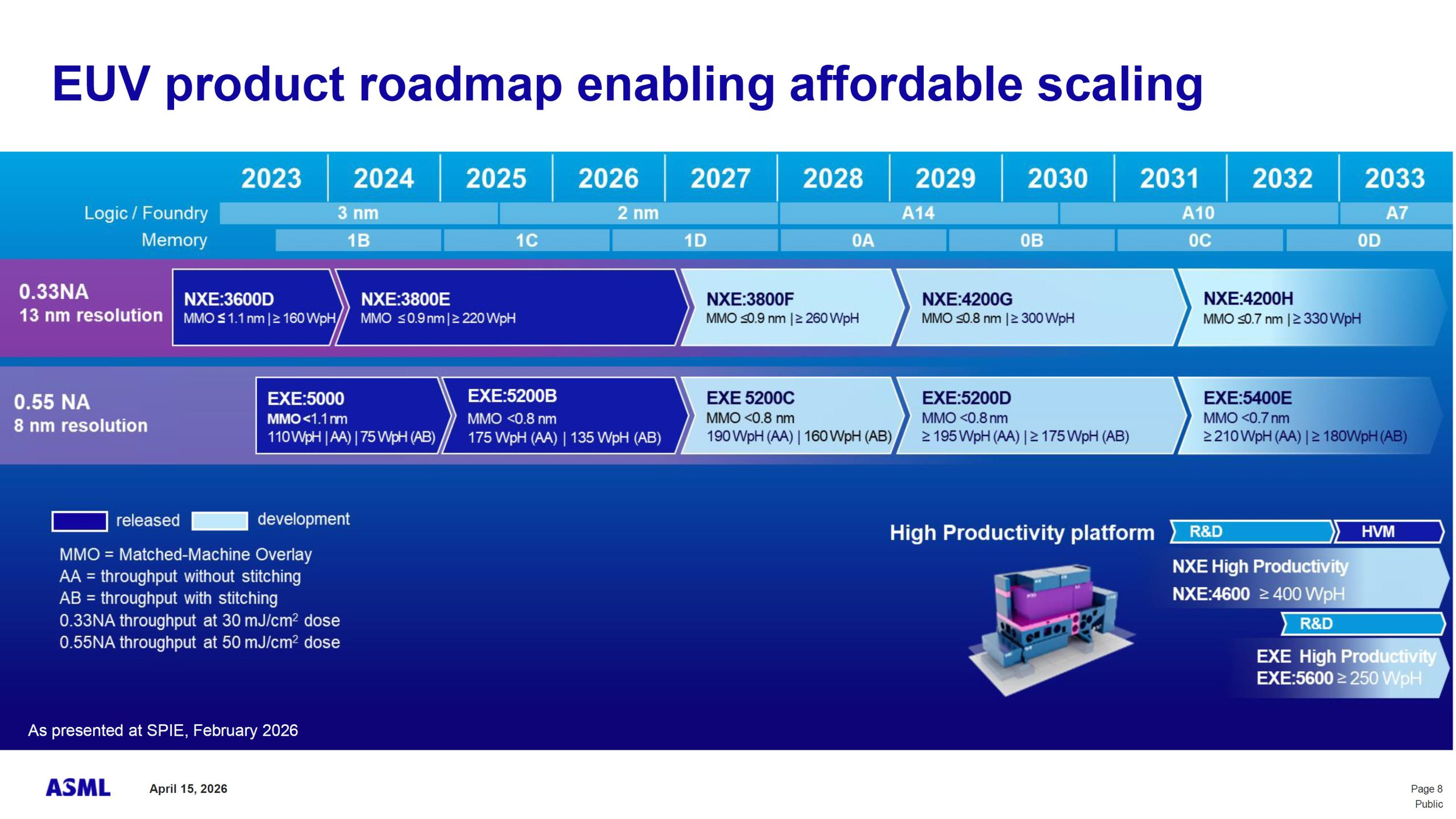
Longer term, ASML is still building toward much higher Low NA EUV productivity. Fouquet highlighted the company’s 1,000 watt source demonstration and said that this should allow ASML to reach 330 wafers per hour in 2031 on Low NA EUV. The roadmap shown in ASML’s investor presentation aligns with that goal, placing the NXE:4200G at 300 wafers per hour or more around 2029 to 2030, followed by the NXE:4200H at 330 wafers per hour or more around 2031. The same roadmap also shows the EXE:5200D High NA platform at 175 wafers per hour or more, reinforcing that both Low NA and High NA systems are being tuned for higher productivity as nodes continue to shrink.
There is a broader strategic point here. ASML is not saying the market is merely strong. It is saying customers are adding capacity because they do not believe current supply will be enough for the next stage of AI, mobile, and PC demand. That is a much stronger signal than a normal cyclical rebound. It suggests the industry is still in the middle of a leading edge buildout where advanced logic and memory remain capacity constrained at the same time, which is exactly the kind of environment that keeps pricing, lead times, and fab expansion pressure elevated.
Do you think advanced memory will remain the biggest bottleneck in AI hardware through 2027, or will logic capacity become the next major pressure point?
