
Valve’s Proton 11 Beta Brings a Major Linux Gaming Upgrade With Wine 11, DXVK 2.7.1, Better Launcher Support, and Wider Game Compatibility
Valve has rolled out Proton 11.0 Beta 1, and this is one of the more meaningful updates Linux gaming has seen in a while. According to the official Proton 11.0 Beta 1 release notes, the new version is rebased on Wine 11.0 and updates several key compatibility components, including DXVK 2.7.1, VKD3D, VKD3D Proton, DXVK NVAPI 0.9.1, and Wine Mono 11.0.0.
That combination matters because Proton is the core compatibility layer that powers Windows game support on Linux, SteamOS, and devices like the Steam Deck. A major Wine rebase is not just a routine maintenance step. It usually brings a deeper wave of compatibility improvements, bug fixes, and lower level behavior changes that affect everything from game launch reliability to rendering stability and launcher handling. In this case, Proton 11 looks less like a small tuning pass and more like a broad platform upgrade for Linux players.
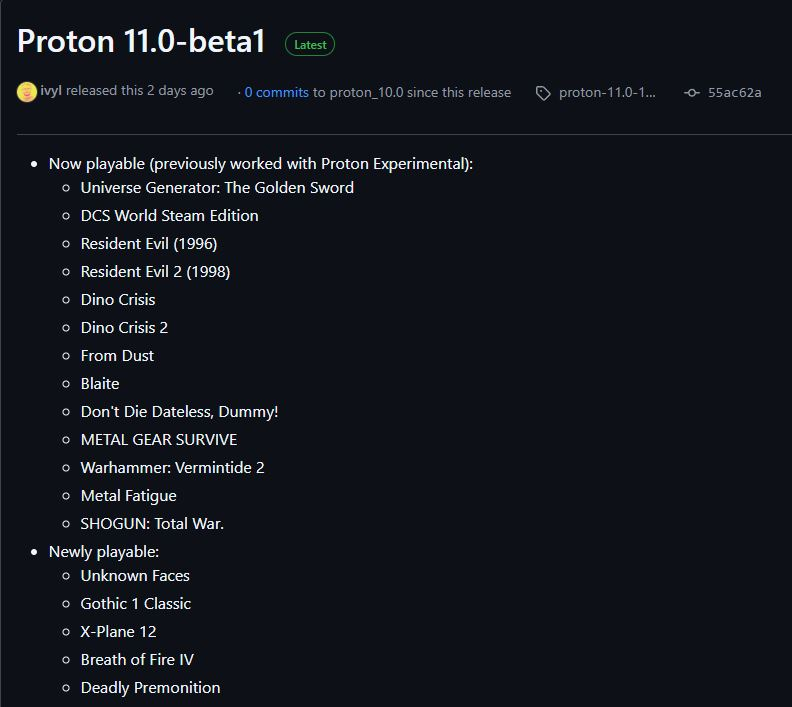
One of the biggest headline improvements is simple: more games now work under the main Proton branch without needing Proton Experimental. Valve says titles that are now playable after previously relying on Proton Experimental include Resident Evil (1996), Resident Evil 2 (1998), Dino Crisis, Dino Crisis 2, METAL GEAR SURVIVE, and Warhammer: Vermintide 2. It also lists newly playable games such as Gothic 1 Classic, Deadly Premonition, Breath of Fire IV, X Plane 12, and Unknown Faces.
Launcher related fixes are another major part of the update. Valve specifically says Proton 11 improves Rockstar Launcher popups, fixes many EA games that broke after a recent EA Desktop update, restores proper Steam Overlay behavior in many EA titles, and shortens the long exit behavior affecting REDLauncher in games such as Cyberpunk 2077 and The Witcher 3. For Linux players, these are exactly the sort of changes that matter in daily use because launcher friction has often been one of the most annoying parts of getting Windows games to behave consistently outside Windows itself.
The release also includes a long list of targeted game fixes and quality of life improvements. Valve says it fixed voice chat in the Phasmophobia lobby, a HELLDIVERS 2 crash in high enemy count missions, video playback issues in several games, VR controller tracking in Microsoft Flight Simulator, and VR support for No Man’s Sky, making that mode playable again. It also fixed black screen behavior in Sea of Solitude, black blocks in windows created by ARC Raiders and The Finals, and a range of issues affecting fullscreen, scaling, Alt Tab behavior, controllers, and video playback across many titles.
There are also meaningful under the hood changes beyond game specific patches. Proton 11 adds FEX 2604 for ARM64EC builds, which is relevant to broader architecture compatibility work, and updates Xalia to 0.4.8, adding controller support for more installers and launchers. Valve also says it added support for SteamWorks SDK 1.64 and improved support for Kodi as well as more MonoGame based titles. Those changes reinforce that Proton is no longer just about getting a few popular games running. It is maturing into a deeper compatibility platform with stronger surrounding ecosystem support.
The bigger story, though, is momentum. Linux gaming has been improving for years, but Proton updates like this are what continue to close the practical gap between Linux and Windows for many players. Proton 11 does not magically eliminate every compatibility issue, and Valve’s notes do not mention the specific NTSync claim in the release details, so that point should not be treated as confirmed from this changelog. What is clearly confirmed is that Valve has delivered a substantial stack refresh, wider game support, stronger launcher compatibility, and a large set of real fixes that make Linux and Steam Deck gaming more reliable right now.
For Linux players, that is the real value of this release. Not hype, not abstraction, but fewer broken launchers, more playable games, and a more stable path to running modern Windows titles without leaving the platform.
What game do you most want to test first on Proton 11 Beta?
