
NAND Flash Shortage Could Ease in 2027 as Suppliers Upgrade Production
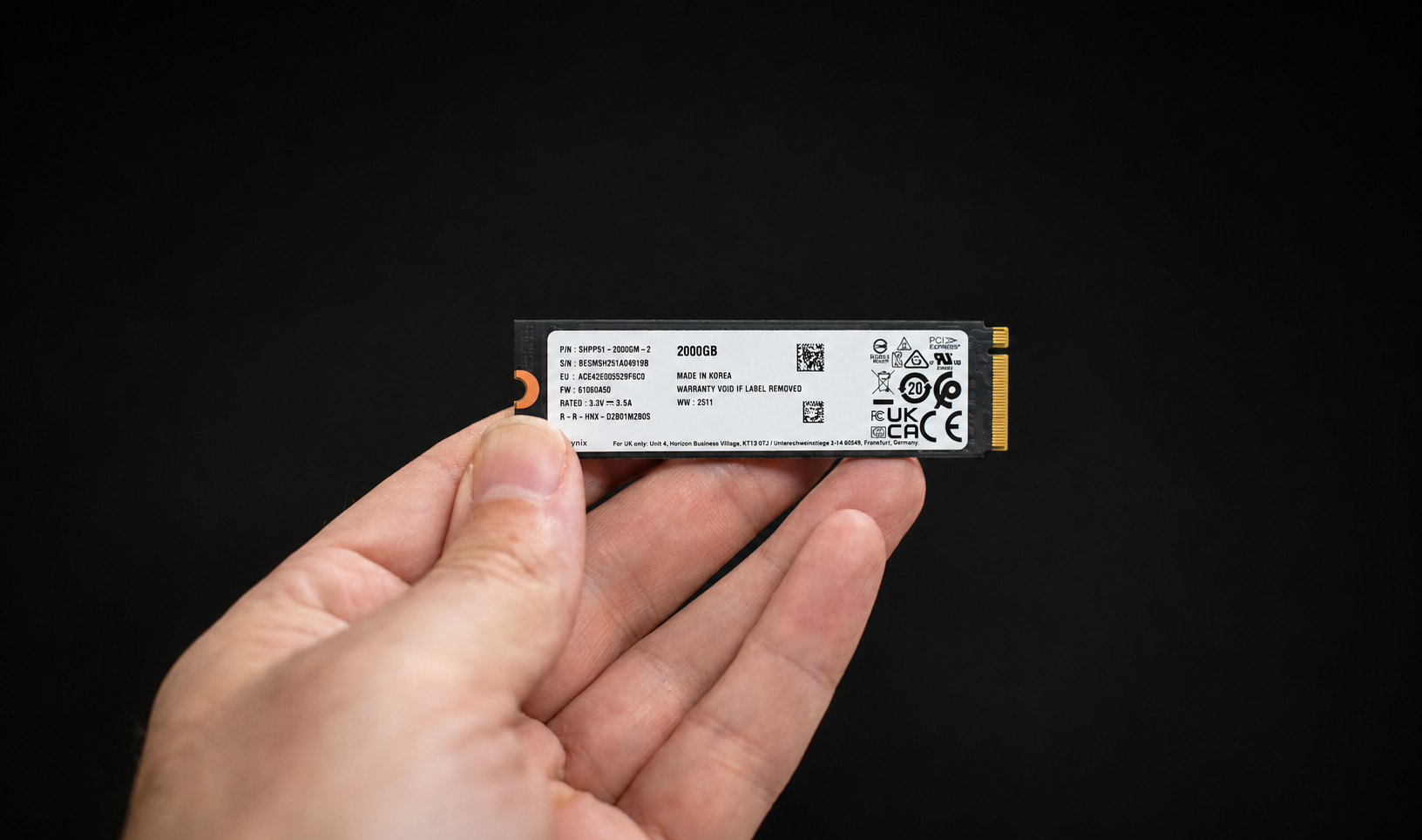
The global NAND Flash shortage is expected to continue throughout 2026, but improving production output and weaker consumer demand could begin restoring market balance during the second half of 2027. According to the latest analysis from TrendForce, NAND supply growth is projected to overtake demand next year as manufacturers upgrade existing production lines and gradually increase bit output.
TrendForce estimates that the NAND Flash market will record a supply deficit of between 4% and 5% during 2026. Artificial intelligence infrastructure remains the primary source of demand growth, particularly as cloud providers deploy larger quantities of enterprise solid state drives for model storage, retrieval systems, inference workloads and agentic AI applications.
NAND manufacturers have limited capacity to immediately resolve the shortage because available factory space remains constrained and many suppliers continue prioritizing DRAM and High Bandwidth Memory production. During 2026, most NAND output growth will therefore come from manufacturing process migrations that increase the number of usable storage bits produced from each wafer rather than from major new factories.
Korean, United States and Japanese suppliers are expected to upgrade existing production lines and selectively expand output inside current facilities. Samsung, SK hynix, Micron, Kioxia and Sandisk are all investing in more advanced NAND generations, higher layer counts and denser QLC products to improve manufacturing efficiency.
Chinese manufacturers are expected to increase production more aggressively as additional equipment enters service. TrendForce estimates that Chinese suppliers could represent nearly 19% of global NAND Flash bit output, introducing additional capacity that may help reduce supply pressure during 2027.
The expected recovery will also depend on slower consumer electronics demand. TrendForce forecasts global smartphone production to decline between 15% and 20% during 2026, followed by another smaller contraction in 2027. Notebook shipments are expected to fall by approximately 10% during 2026 before declining slightly again the following year.
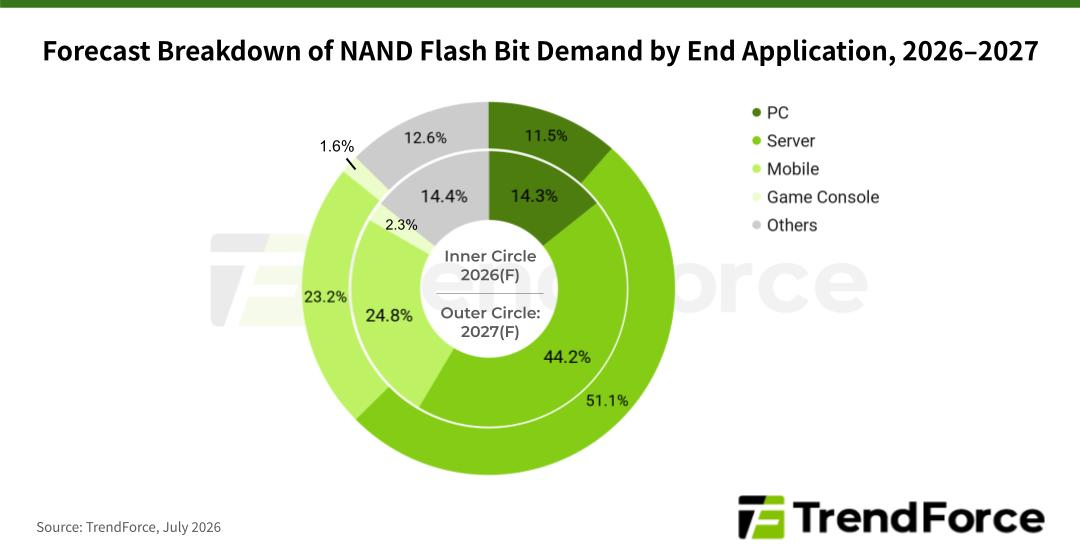
Servers now account for more than 40% of global NAND Flash bit demand, but smartphones and notebooks together still consume almost 40%. This means weaker consumer sales can substantially influence the wider market, even while artificial intelligence servers continue absorbing increasing quantities of enterprise storage.
Server shipments are projected to grow by 17% during 2026 as AMD and Intel introduce their next generation platforms. Demand is expected to remain strong during 2027 as agentic AI applications expand and server CPU availability improves. Long term supply agreements between cloud companies, system manufacturers and memory suppliers should also reduce some of the production uncertainty currently affecting the market.
The new outlook provides a more optimistic counterpoint to recent warnings from memory industry executives. ADATA Chairman Chen Li Bai previously suggested that the wider memory shortage could continue for another 10 years, although that forecast covers DRAM, HBM and NAND rather than NAND Flash alone.
The NAND market could recover sooner because suppliers can increase bit output through process migrations and higher density memory technologies. However, consumers may not immediately see SSD prices return to previous levels. Manufacturers continue prioritizing profitable enterprise products, while new AI storage architectures such as NVIDIA Inference Context Memory Storage could introduce additional demand during 2027.
A positive supply balance during the second half of 2027 would represent meaningful progress, but it should not be interpreted as a guarantee of inexpensive SSDs. Supply can technically exceed demand while retail prices remain elevated, particularly if manufacturers maintain disciplined production and prioritize enterprise storage.
For gamers and PC builders, the most important factor will be whether additional production reaches consumer SSDs or remains allocated to data centers. Higher layer NAND and expanding Chinese output should improve availability, but artificial intelligence is permanently changing which customers receive production priority.
Do you expect SSD prices to decline when NAND supply improves in 2027, or will manufacturers keep prices elevated by prioritizing enterprise and AI customers?
