
NVIDIA Inference Context Memory Storage Could Consume a Massive Share of Global NAND Output
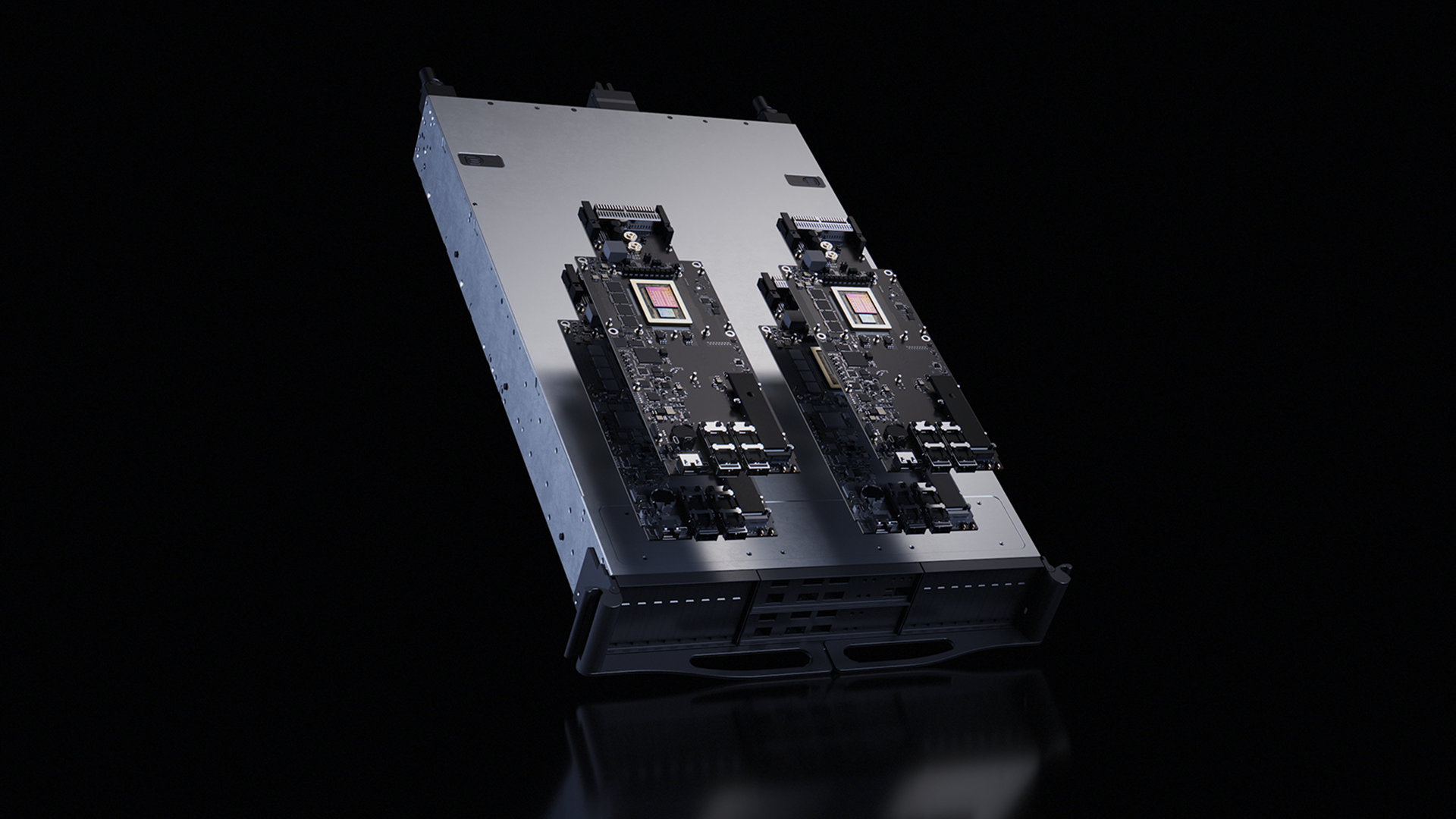
One of the most under discussed bottlenecks in agentic AI is not just raw compute, it is the data plumbing that keeps models responsive while they build and maintain context. In practical terms, query processing generates a large temporary context log commonly referred to as the KV cache, and today a significant portion of that data is effectively treated as a high speed memory problem, living close to the GPUs in HBM. That works at small scale, but it becomes increasingly fragile as clusters grow, context windows expand, and the industry pushes toward agentic workflows that keep multiple threads of reasoning and tool use alive at once.
At CES 2026, NVIDIA signaled a major architectural shift to address that scaling wall by introducing a new storage approach for inference context. The company announced that BlueField 4 DPUs will connect to a platform called Inference Context Memory Storage, also referred to as ICMS. The concept is to give inference systems a dedicated, high performance storage tier for context data, improving throughput and reducing the pressure to keep everything on HBM.
On paper, this looks like a clean solution to a compute era problem. In reality, it may simply shift the supply chain stress point from DRAM and HBM to NAND. That is the core warning in an analysis circulated from Citi and shared by Jukan on X, which suggests the scale of NAND required for NVIDIA’s ICMS enabled racks could become large enough to materially move the global storage market.
The numbers being discussed are not subtle. The Citi based analysis claims that in a Vera Rubin era system, NVIDIA could be equipping roughly 16TB of NAND per GPU in a rack, adding up to 1,152TB in a single NVL72 configuration. If Vera Rubin shipments scale to 100,000 units in 2027 as suggested by the same estimate, the implied storage demand from NVIDIA alone could reach 115.2 million TB. Citi’s projection frames that as roughly 9.3% of total global NAND demand over the coming years, which would be a shock level concentration of demand even before you account for other hyperscalers and AI hardware vendors competing for the same supply pool.
This matters because agentic AI changes the applications layer in a way that naturally inflates KV cache requirements. If the industry pivots toward systems that continuously retrieve, store, and refresh context, then the need for a deeper and broader KV cache pool becomes a structural requirement rather than an optimization. ICMS is positioned as the answer for that, but it also implies that more of the AI stack’s memory footprint could move into NAND based storage tiers at an unprecedented scale. If NVIDIA succeeds in making this architecture the norm, NAND becomes more than a commodity component. It becomes a strategic resource.
The timing is also uncomfortable for the broader market. NAND supply is already under pressure from ongoing data center buildouts, continued inference deployment, and the general trend toward higher capacity enterprise SSD adoption. If NVIDIA’s ICMS ramps as aggressively as this analysis suggests, the NAND industry could face a supply environment that starts to rhyme with what the memory market is already seeing in DRAM. In other words, price pressure and allocation would not be a surprise, it would be an expected outcome of supply being pulled into large scale AI infrastructure first.
For consumers and PC builders, the risk is familiar. When the data center segment begins absorbing a disproportionate share of a component category, availability and pricing for general purpose devices tends to degrade. If NAND is pulled into AI racks at this scale, mainstream SSD pricing could become more volatile, high capacity drives could see longer cycles of scarcity, and the market could enter a new phase where storage is no longer the predictable upgrade path it has been for years. The same dynamic that has made high end memory upgrades and certain DRAM parts harder to plan for could apply to SSDs, especially if multiple vendors follow NVIDIA’s direction and build similar context storage tiers into their next generation systems.
NVIDIA is effectively betting that agentic AI is the next major focus of the applications layer and ICMS is the infrastructure that keeps that future from hitting a context wall. If the Citi estimate holds even partially, this is not just a platform story, it is an upstream supply story. The takeaway is simple: a new AI architecture can create a new component bottleneck, and ICMS may be the first clear signal that NAND could be next.
What do you think is more likely in 2026 and 2027, NAND vendors rapidly scaling supply to match AI demand, or consumers seeing SSD pricing and availability tighten the way DRAM has over the past cycle?
