
Microsoft and Intel have announced an expanded partnership that will bring Intel Foundry's advanced EMIB packaging technology to Microsoft's custom Azure silicon while securing server processor supply for several years. According to the official Intel announcement, Microsoft becomes the first publicly announced external customer adopting Intel's Embedded Multi Die Interconnect Bridge technology for its own Azure processors. The agreement also includes future Xeon server CPUs, particularly the upcoming Diamond Rapids generation, strengthening Intel's position within Microsoft's expanding cloud and artificial intelligence infrastructure.
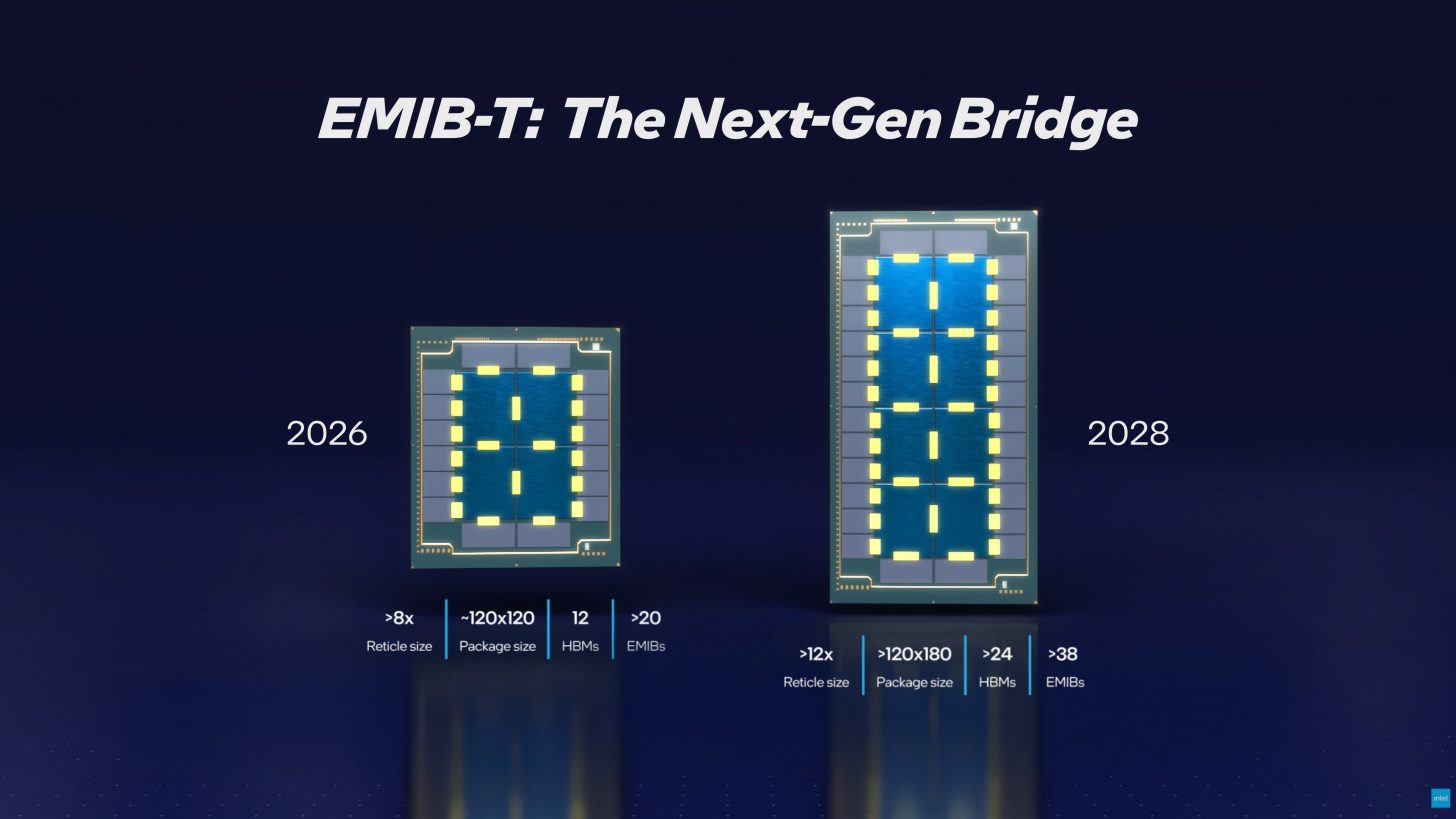
Intel's EMIB technology allows multiple semiconductor dies to communicate through small silicon bridges embedded directly into the package substrate, eliminating the need for a large silicon interposer. This approach supports complex chiplet designs combining different manufacturing processes, compute architectures, and memory technologies while improving packaging flexibility. For Microsoft, the technology could support increasingly sophisticated custom processors designed around Azure's computing requirements. The companies have not disclosed which Azure chip will use EMIB, its manufacturing process, production volumes, or commercial deployment schedule.
The agreement represents a significant commercial development for Intel Foundry's advanced packaging business, which is competing for customers seeking alternatives to established semiconductor packaging solutions such as TSMC's CoWoS. However, adopting Intel's EMIB technology does not necessarily mean Microsoft will manufacture the underlying compute dies using Intel's fabrication nodes, as packaging and wafer production are separate services.
Microsoft has also secured multiyear Xeon capacity, including Diamond Rapids, Intel's upcoming server processor family manufactured using the Intel 18A P process. The architecture is expected to enter volume production during 2027, targeting demanding cloud computing, AI inference, and agentic workloads. The Intel 18A P manufacturing roadmap introduces enhanced RibbonFET transistors, PowerVia backside power delivery, and improvements to power efficiency and performance.
Beyond processor supply and advanced packaging, Intel and Microsoft are expanding their collaboration around Compute Express Link memory technologies, Intel QuickAssist acceleration, and confidential computing. According to Microsoft's announcement, existing Azure optimizations have demonstrated up to 2.3 times greater performance and memory flexibility in selected M series v4 virtual machine workloads using CXL memory and Intel Flat Memory Mode. The companies also report up to 2.5 times faster SQL backups using Intel QuickAssist enabled virtual machines, while Intel Trust Domain Extensions provide additional protection for encrypted virtual machine memory and CPU registers during migration between hosts. These performance figures are workload specific and do not represent benchmarks for Diamond Rapids.
For Intel, the partnership provides an important opportunity to expand its foundry packaging business while securing demand for future server processors. As AI infrastructure investments continue accelerating, advanced packaging capacity, memory bandwidth, and manufacturing availability are becoming as strategically important as raw processor performance.
Microsoft's decision to adopt Intel EMIB is an important commercial validation for Intel Foundry, particularly as the semiconductor industry searches for additional advanced packaging capacity beyond TSMC. Intel does not need to manufacture every chiplet to participate in the expanding AI market, and securing major customers for packaging services could help strengthen its manufacturing business.
However, the increasing concentration of semiconductor production around hyperscale data centers raises concerns for the broader PC industry. Intel must balance its growing server commitments with sufficient manufacturing capacity for consumer processors, ensuring that AI infrastructure expansion does not further limit hardware availability for gamers, enthusiasts, and everyday computer users.
Could Microsoft's adoption of Intel EMIB help Intel Foundry become a serious competitor to TSMC, or will growing AI infrastructure demand place even more pressure on consumer PC hardware availability?
