
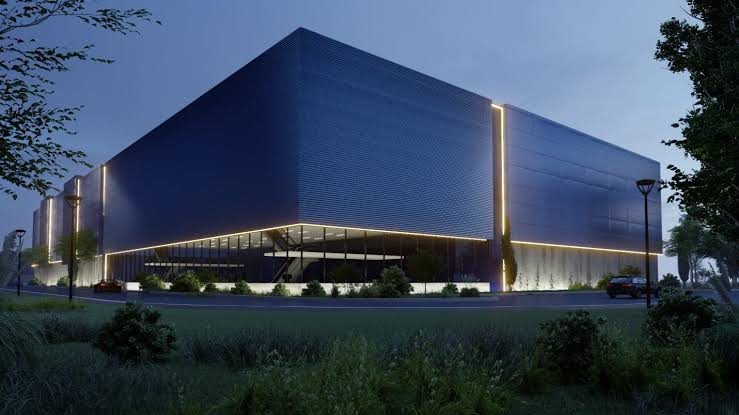
The Kraft Group, owned by New England Patriots owner Robert Kraft, is facing growing opposition over plans to develop a massive $16 billion data center campus in Sutton, Massachusetts. The proposed development, presented alongside Unified Global Packaging Group, would consist of 10 buildings with a combined electricity demand reaching 900 MW. According to the Town of Sutton's preliminary financial assessment, the project could generate approximately $27.8 million in annual property tax revenue once completed, potentially reducing the average household's annual property tax bill by $5,800 by fiscal year 2035. However, residents have raised concerns about the enormous infrastructure requirements and the consequences of placing such a large industrial development near residential neighborhoods.
The proposed campus would occupy land near Boston Road and Providence Road, with construction beginning with 2 buildings measuring approximately 250,000 square feet each. The initial phase represents an estimated $3.35 billion investment, with operations potentially beginning in 2029. Additional facilities would follow through 2033, bringing the total projected investment to approximately $16.75 billion. Each building would require around 90 MW of electricity, making the completed campus a major industrial electricity consumer. The proposed 900 MW demand also raises questions about grid capacity, cooling infrastructure, and the long term effects on surrounding communities.
Sutton officials estimate that the first 2 buildings could generate $10.4 million annually in property taxes by fiscal year 2031, increasing to $27.8 million by 2035. Under the town's financial projections, the average household could save approximately $2,300 annually in 2031, rising to $5,800 in 2035 compared with a scenario without the development. These figures represent projected reductions in property tax bills rather than direct payments to residents, and depend on assumptions about construction, equipment valuation, and future municipal budgets.
Despite these potential financial benefits, community resistance has intensified. During a November 16 planning board meeting, residents raised concerns about electricity prices, water consumption, noise pollution, environmental disruption, and declining property values. Some residents are also pursuing restrictions on future data center construction within Sutton. The proposed campus remains in its preliminary evaluation stage, with no formal development application submitted or binding agreement negotiated.
The project also faces regulatory requirements under Massachusetts Executive Order 658, which requires qualifying data center developments to obtain local approval and establish community benefits agreements before receiving state permits. Developers must also address electricity infrastructure costs and clean energy obligations intended to prevent major facilities from transferring additional expenses to residential customers. For Sutton, several important details remain unresolved, including the facility's eventual operator, water requirements, electricity supply, and the full environmental impact.
The controversy reflects a broader challenge facing the expanding AI infrastructure industry. The rapid construction of large computing facilities is creating unprecedented demand for electricity and supporting infrastructure, while communities increasingly question whether the economic benefits justify the environmental and financial burden. As highlighted by research into US data center electricity consumption, the scale of modern computing infrastructure is becoming an increasingly important consideration for energy planning and regional development.
The expansion of computing infrastructure is essential for technological development, but projects of this magnitude must demonstrate meaningful benefits beyond projected tax reductions. A 900 MW facility represents an enormous electricity commitment, particularly when its future operator, cooling requirements, and long term infrastructure costs have yet to be established.
The projected $5,800 annual tax reduction could provide significant financial relief to homeowners, but it should not overshadow concerns about electricity affordability, environmental impact, and residential quality of life. Developers investing billions into computing infrastructure should be responsible for the additional resources their facilities consume, without transferring those expenses to surrounding households.
Communities should receive transparent technical assessments, enforceable infrastructure commitments, and meaningful participation in decisions before construction is approved. Technological progress should strengthen local economies without forcing residents to absorb the consequences of industrial expansion.
Would a potential $5,800 reduction in annual property taxes convince you to support a massive 900 MW data center near your neighborhood, or would concerns about electricity, noise, and environmental impact outweigh the financial benefits?
