
Micron Ends 2 GB GDDR7 Production as Graphics Memory Shifts Toward Higher Capacities
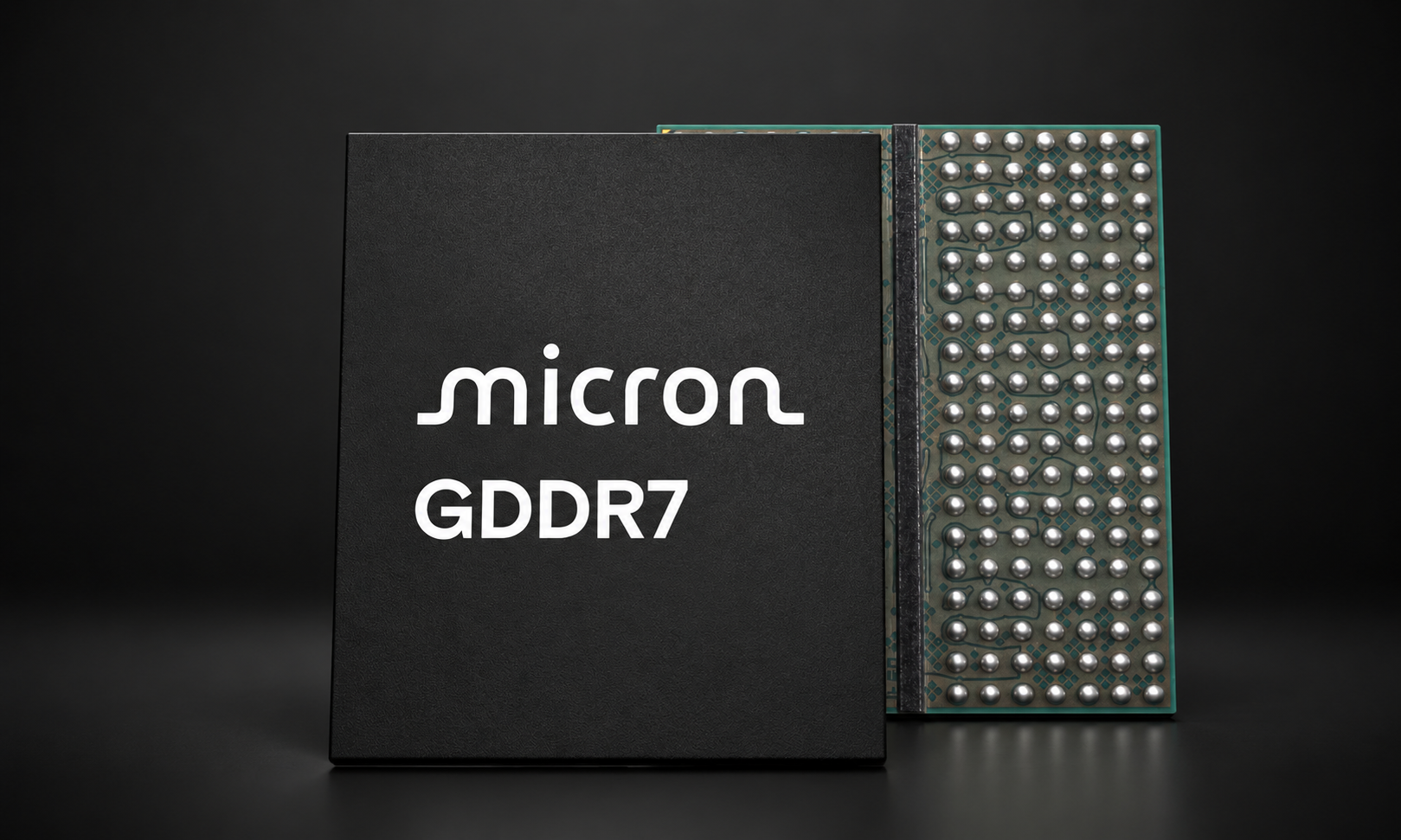
Micron has moved both of its publicly listed 16 Gb GDDR7 memory products to End of Life status, effectively ending production of its current 2 GB GDDR7 devices while the company shifts attention toward higher density 3 GB modules. The affected parts include Micron's 28 Gbps MT68A512M32DF 28 and 32 Gbps MT68A512M32DF 32, both of which now carry End of Life status in the company's product listings. The change comes only months after Micron GDDR7 began appearing on GeForce RTX 50 graphics cards, leaving Samsung and SK hynix as the remaining major suppliers of the 2 GB devices used throughout much of NVIDIA's current consumer lineup.
Micron originally developed its first GDDR7 generation around a 16 Gb density, equal to 2 GB per package, with transfer rates reaching 32 Gbps. Its 28 Gbps chips were later identified on GeForce RTX 50 cards, including the RTX 5060, giving NVIDIA another source of GDDR7 alongside Samsung and SK hynix during a period of unusually tight memory supply. The arrival of Micron GDDR7 inside RTX 50 graphics cards, where the additional supplier appeared capable of providing NVIDIA and its board partners with greater sourcing flexibility. The move to End of Life means that contribution from Micron's 2 GB devices may now prove relatively short lived.
Micron is not withdrawing from GDDR7. The company continues moving toward higher density products, with 24 Gb devices providing 3 GB of memory from each package. That allows graphics card manufacturers to increase VRAM by 50% while keeping the same number of memory chips and the same bus width. A 192 bit GPU using 6 packages, for example, can move from 12 GB with 2 GB devices to 18 GB with 3 GB devices, while an 8 chip 256 bit configuration can increase from 16 GB to 24 GB. SK hynix and Samsung are also developing or supplying 3 GB GDDR7, confirming that the broader graphics memory market is gradually moving toward higher capacities.

That transition is not necessarily simple for existing GeForce products. Current RTX 50 graphics cards were designed around particular memory densities and configurations, and switching from 2 GB to 3 GB packages is not equivalent to replacing one supplier with another. Higher density memory can require different firmware, board validation, and product configurations, while its current pricing remains considerably higher. 3 GB GDDR7 costs have reportedly complicated NVIDIA's RTX 50 SUPER plans, with the extra capacity becoming expensive enough to affect the economics of higher VRAM graphics cards.
The industry is already looking beyond 3 GB devices. Recent claims suggest 32 Gb and 48 Gb GDDR7 could arrive between 2027 and 2028, translating to 4 GB and 6 GB per package. Those densities could mean the future graphics card VRAM configurations, including the possibility of 16 GB or 24 GB on a 128 bit interface without increasing the number of memory packages. Those future capacities remain unconfirmed by the major memory manufacturers, but Micron's move away from its publicly listed 2 GB products reinforces the wider direction toward denser GDDR7.
Micron ending its 2 GB GDDR7 products does not mean RTX 50 production suddenly loses access to that memory density. Samsung and SK hynix remain established suppliers, and SK hynix specifically confirmed its 2 GB GDDR7 is used in NVIDIA GeForce RTX 50 graphics cards earlier this year. The more interesting part is how quickly Micron has moved beyond its first GDDR7 generation after only recently entering NVIDIA's consumer supply chain.
Higher density memory is clearly where the market is heading, but that transition could create an awkward period for GPU manufacturers. Gamers want more VRAM, yet 3 GB packages currently carry a substantial cost premium while many existing graphics cards are optimized around cheaper and more mature 2 GB devices. Moving toward 4 GB and eventually 6 GB GDDR7 could solve many of today's capacity limitations, but only if production scales enough to make those chips economically viable across mainstream GPUs rather than just premium models.
Would you rather see future graphics cards adopt higher density GDDR7 for more VRAM, or keep cheaper 2 GB chips if it helps control GPU pricing?
