
Entry Level GPUs Face Worse Shortages in 2H 2026 as PC Partner Warns Supply Will Tighten Further
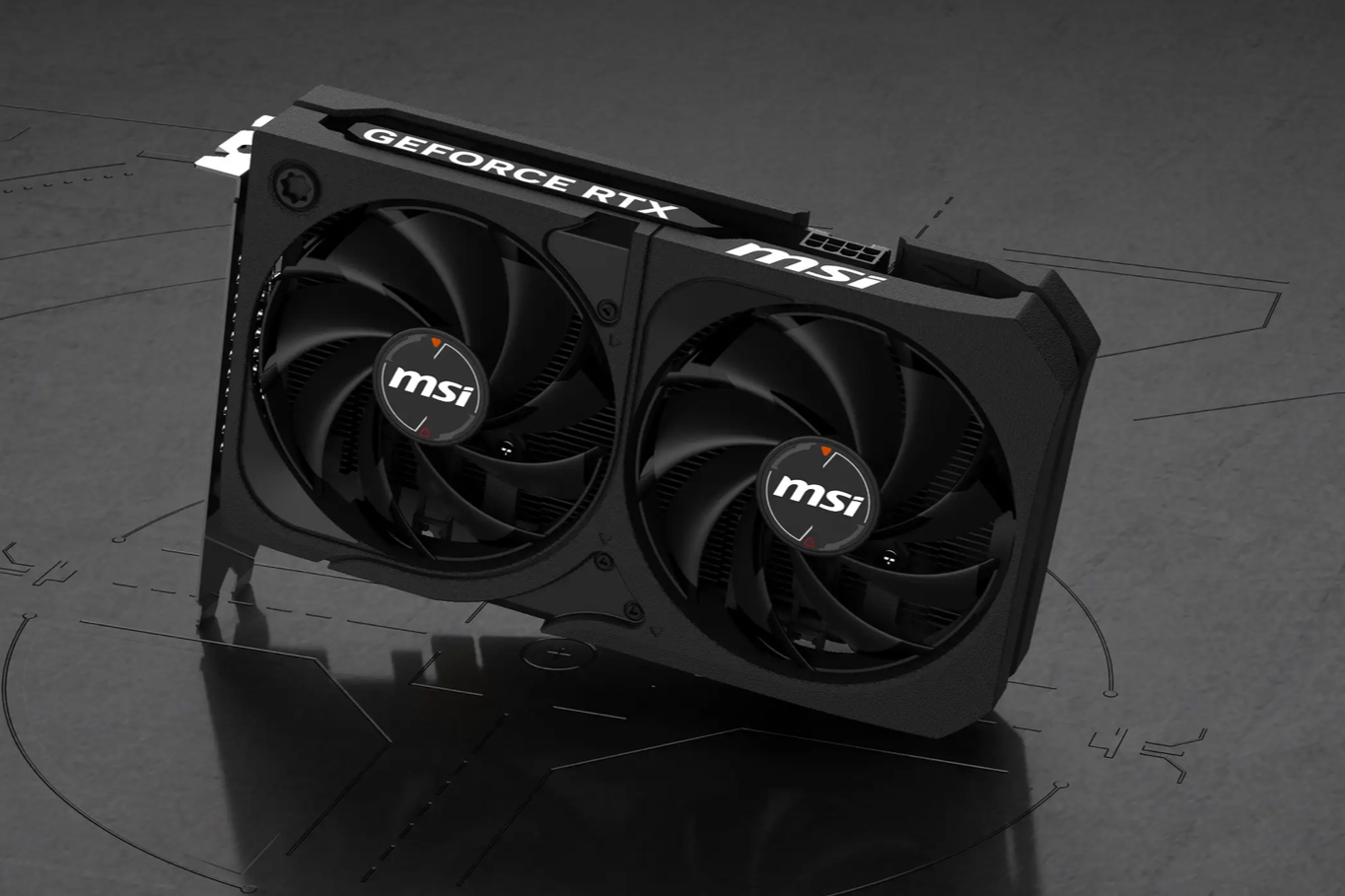
The affordable graphics card market could become considerably more difficult during the remainder of 2026. PC Partner Group, the company behind ZOTAC, Inno3D and Manli, is warning that graphics card availability is likely to decline further during 2H 2026, with entry level models expected to experience particularly severe shortages as GPU and graphics memory supply remains constrained.
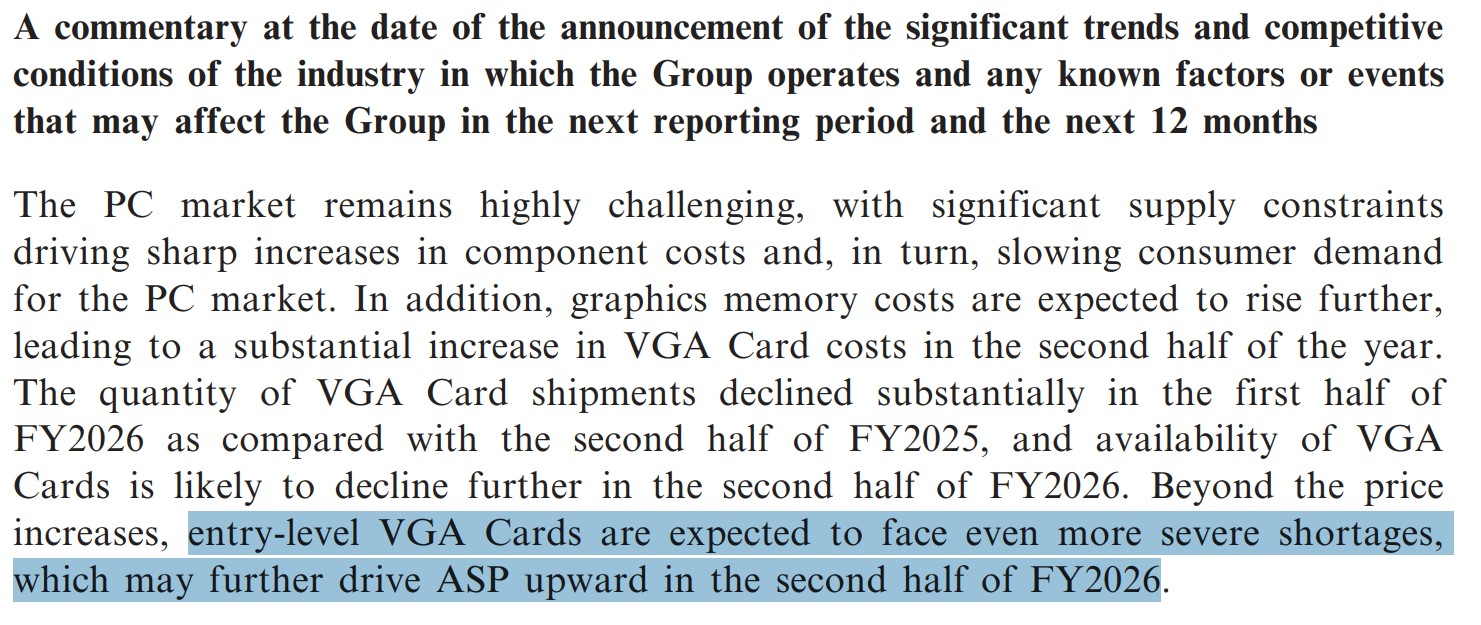
According to PC Partner Group’s latest financial results, graphics memory costs are expected to continue rising, resulting in a substantial increase in graphics card costs during the second half of the year. The company also expects overall graphics card availability to deteriorate after shipments already declined substantially during the first half of FY2026 compared with 2H 2025.
"Availability of VGA Cards is likely to decline further in the second half of FY2026."
— Quote by: PC Partner Group
The warning is especially concerning for budget PC gaming because PC Partner specifically expects entry level graphics cards to suffer even more severe shortages, potentially driving average selling prices higher. These products have traditionally provided an escape route for gamers unable or unwilling to absorb the rapidly increasing prices of enthusiast and upper mainstream GPUs. That protection could now begin disappearing as component constraints move further down the product stack.
PC Partner is already seeing the effect across its business. Revenue from its own graphics card brands fell 9.2% from 4.917 billion HKD during the first half of FY2025 to 4.463 billion HKD in H1 FY2026. Unit volume declined even more sharply at 18.4%, primarily because of restricted availability of GPUs and graphics memory. At the same time, average selling prices increased 10.7%, showing how fewer available cards are already being sold at substantially higher prices.
The company’s ODM and OEM graphics card operation moved in a different direction. Revenue increased 73.9% to 1.484 billion HKD, despite unit volume declining 38.4%, because average selling prices increased an enormous 181% as PC Partner received more orders for high end graphics cards. Overall graphics card revenue therefore still increased 3.1% to 5.947 billion HKD, even as the number of cards being shipped fell.
Higher pricing has also significantly strengthened profitability. PC Partner reported gross profit of 1.063 billion HKD, increasing 58.7%, while gross margin rose from 10.5% to 16.5%. Profit attributable to owners reached 545.5 million HKD, up 117.9% compared with H1 FY2025. The company directly attributed much of that improvement to higher graphics card average selling prices.
The warning arrives after substantial price increases have already reached mainstream GeForce products. Recent US retail tracking showed the RTX 5060 Ti 16 GB climbing to a median 804.99$, up 39% from June and approximately 88% above its original 429$ launch price. The RTX 5060 reached 469.99$, while even the RTX 5050 moved to 314.99$.
Board partners have been facing similar cost pressure elsewhere. MSI recently raised graphics card pricing by more than 20% across portions of its lineup, with reported increases affecting everything from the RTX 5080 down to the RTX 3050. AMD partners are not completely isolated either, with Radeon GPU and memory bundle costs reportedly increasing around 10%.
That makes upcoming products such as the Radeon RX 9050 particularly important. The reported 279$ positioning of its 8 GB version was already expensive for an entry level GPU, but worsening supply conditions could make maintaining even that pricing difficult if memory and other component costs continue increasing.
PC Partner says the problem extends beyond graphics cards. CPU, memory and other component lead times are also becoming significantly longer across its EMS and PC related businesses. Interestingly, the company expects its new GPU server and AI business to begin shipments during 2H 2026 and potentially offset weakness elsewhere in its portfolio, highlighting how PC hardware manufacturers are increasingly balancing traditional consumer products against rapidly expanding AI infrastructure opportunities.
The most worrying part of PC Partner’s warning is the shift toward entry level GPUs. High end graphics cards becoming expensive affects enthusiasts, but affordable models disappearing affects the accessibility of PC gaming itself.
An RTX 5060 already approaching 470$ and an RTX 5060 Ti 16 GB averaging more than 800$ show that mainstream pricing has already moved far beyond where these products originally launched. If supply becomes even tighter during 2H 2026, the RTX 5050, RX 9050 and similar cards may no longer provide the affordable upgrade path that PC builders normally rely on.
PC Partner’s financial results also expose an uncomfortable market dynamic. Graphics card unit sales can fall sharply while revenue and profitability improve because the remaining products sell for substantially more. That may work financially for manufacturers, but it creates an increasingly difficult environment for gamers trying to build capable systems without moving into premium pricing.
If entry level graphics cards also become significantly more expensive during 2H 2026, would you still build a gaming PC, buy a used GPU, move to a console, or simply delay upgrading?
