
AMD Reportedly Warns ASUS, XFX, and Sapphire of 10% Higher Radeon Bundle Costs
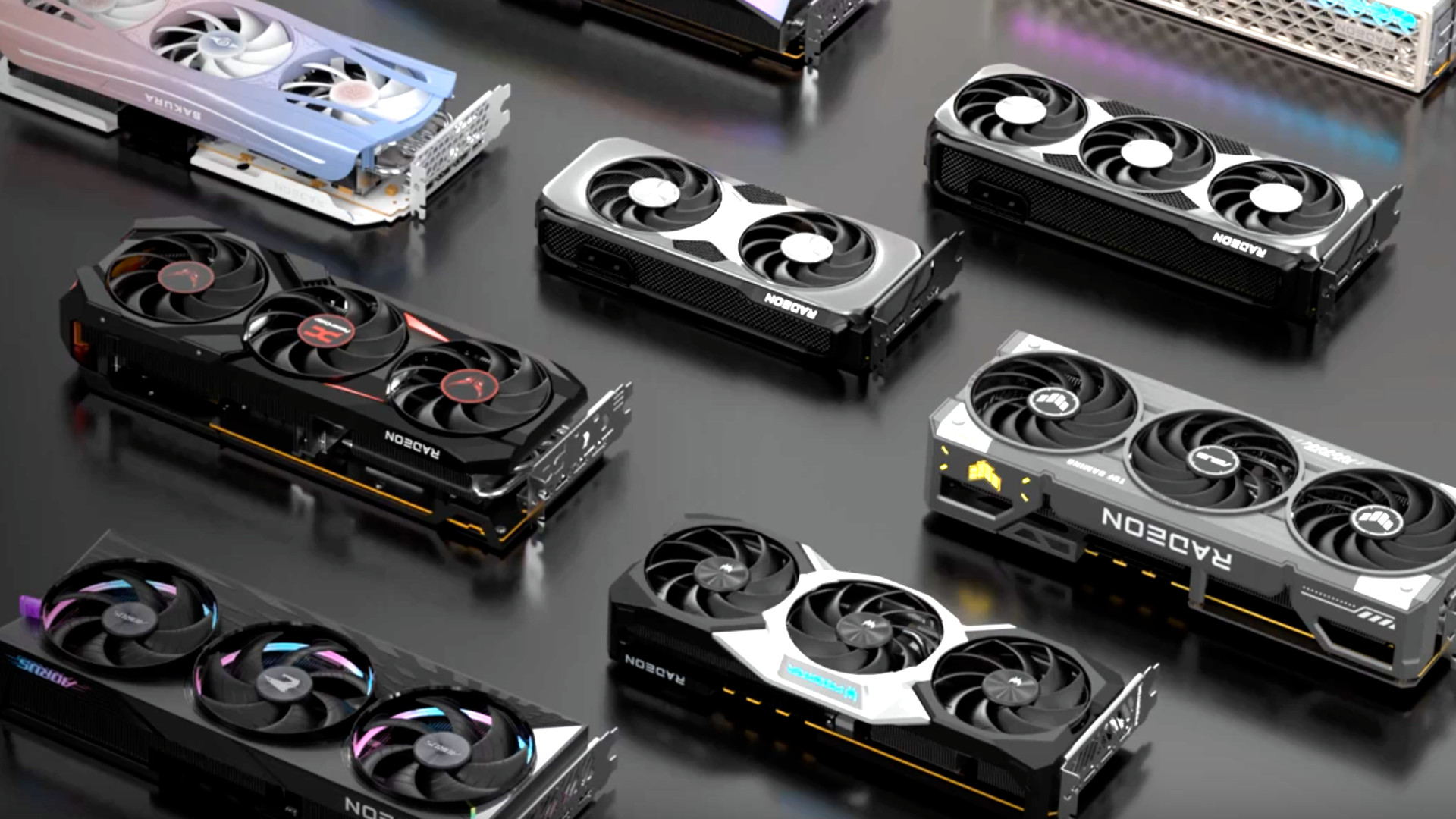
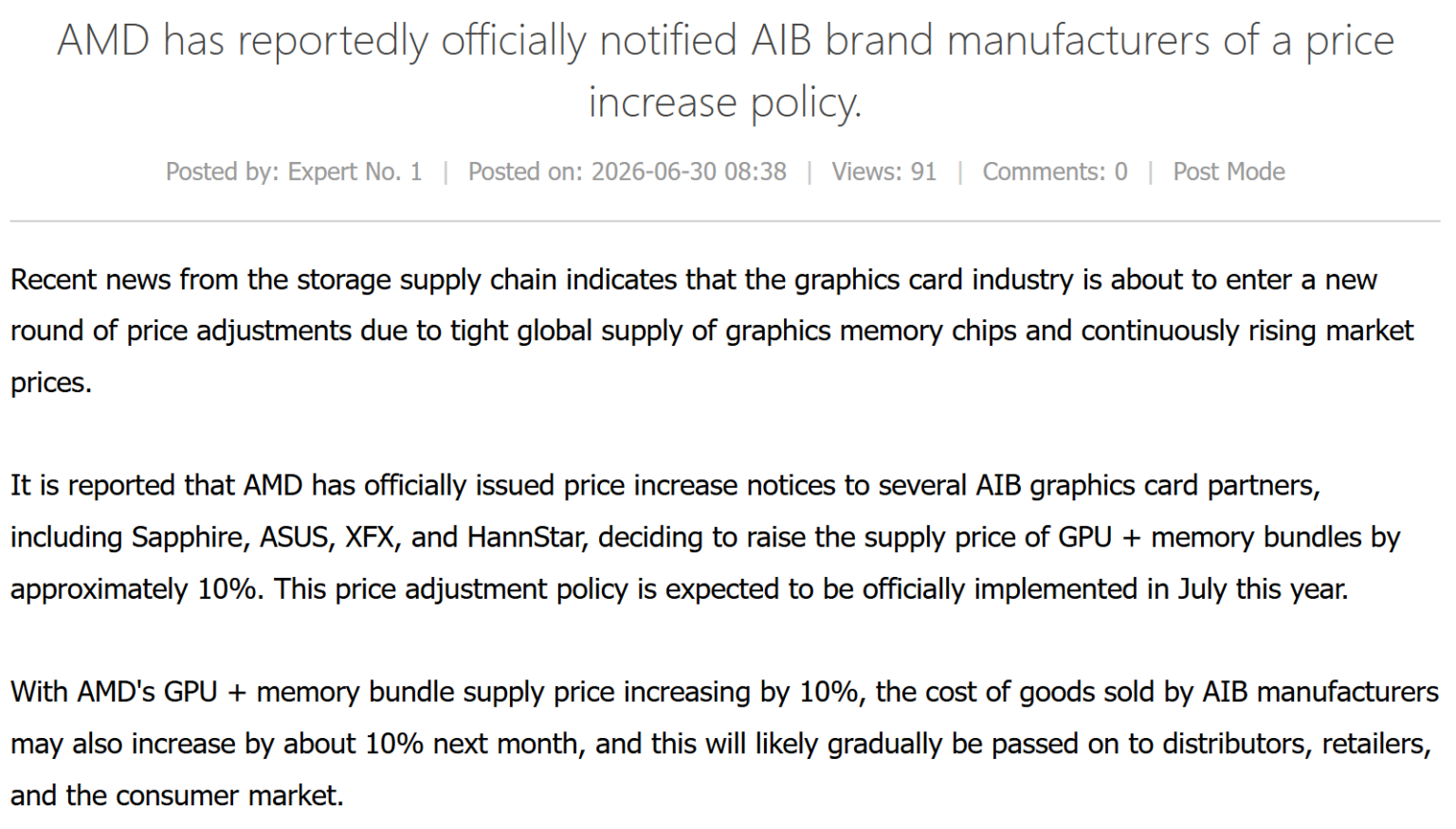
AMD has reportedly notified several graphics card partners that the cost of Radeon GPU and memory bundles will increase by approximately 10% during July 2026, adding further pressure to a graphics card market already affected by rising memory prices and expensive consumer hardware.
According to a supply chain report from Board Channels, AMD sent pricing notices to partners including ASUS, Sapphire, XFX, and Vastarmor. The adjustment reportedly applies to the GPU and graphics memory packages supplied to board manufacturers, rather than directly establishing a new retail price for completed graphics cards. VideoCardz has also labeled the information as a rumor because AMD and the named partners have not publicly confirmed the notice.
AMD commonly provides board partners with the central graphics processor and its required memory configuration, while companies such as Sapphire, ASUS, and XFX design the circuit board, cooling system, power delivery, firmware, packaging, and final retail product. A 10% increase at the bundle level would therefore raise one of the most important costs in producing a Radeon graphics card.
This does not guarantee that store prices will immediately rise by the same 10%. Manufacturers, distributors, and retailers may absorb part of the increase, reduce promotional activity, adjust margins, or delay changes until existing inventory is sold. However, graphics card margins are already under pressure, making it increasingly likely that at least part of the additional cost will eventually reach consumers. The report does not identify every affected Radeon generation. However, the current Radeon RX 9000 family is the most likely focus because it represents AMD’s active RDNA 4 gaming lineup and is widely available through its principal board partners. AMD’s official Radeon RX 9000 series currently includes products such as the Radeon RX 9070 XT, RX 9070, RX 9070 GRE, and RX 9060 XT.
The latest report follows an earlier Board Channels claim that AMD was considering a Radeon GPU and memory bundle increase of between 10% and 15% during the 3rd quarter of 2026. The new information narrows that figure to approximately 10% and places the implementation during July. Both reports originate from the same supply chain forum, so they should not be treated as separate confirmations.
Radeon products have already experienced several reported pricing adjustments since late 2025. A distribution source previously told Tom’s Hardware that AMD increased RX 9000 bundle pricing by 10$ for every 8 GB of graphics memory. Under that structure, a 16 GB card carried approximately 20$ in additional supply cost, while an 8 GB card increased by around 10$. That earlier change reportedly moved the effective price of the Radeon RX 9070 XT from 599$ to 619$, the RX 9070 from 549$ to 569$, the RX 9060 XT 16 GB from 349$ to 369$, and the RX 9060 XT 8 GB from 299$ to 309$. Retailers did not immediately apply every adjustment because older inventory and promotional pricing temporarily protected consumers from the full increase.
The current 10% report appears broader than the earlier fixed memory capacity adjustment. If implemented as described, it would increase the entire GPU and graphics memory package instead of applying only a defined amount for each 8 GB of VRAM. The final impact would vary between models because the GPU silicon, memory capacity, cooling hardware, and partner margins represent different portions of each card’s total cost.
Memory remains the primary explanation behind the continued increases. AMD acknowledged in its latest regulatory filing that the semiconductor industry is experiencing a widespread memory shortage because demand has exceeded available supply. The company also confirmed that memory prices have risen as a result.
AI infrastructure is consuming enormous quantities of high bandwidth memory, server DRAM, and related manufacturing capacity. This has strengthened the pricing power of major memory suppliers and placed additional cost pressure on consumer products that rely on conventional DRAM and GDDR memory. TrendForce expected conventional DRAM contract prices to increase by between 90% and 95% during the 1st quarter of 2026 compared with the previous quarter, reflecting the severity of the imbalance.
Graphics cards are especially exposed because every modern gaming GPU requires a substantial amount of dedicated memory. The Radeon RX 9070 XT and RX 9070 both carry 16 GB of GDDR6, while the RX 9070 GRE uses 12 GB and the RX 9060 XT is offered with 8 GB or 16 GB. Higher memory capacity has traditionally been one of AMD’s competitive advantages against similarly positioned NVIDIA products, but it also makes Radeon more sensitive to increases in graphics memory costs.
AMD has already warned investors that higher memory and component prices could weaken consumer demand. The company reported 720 million dollars in gaming revenue during the 1st quarter of 2026, supported by solid Radeon demand, but expects cost pressure to affect the PC and gaming markets during the 2nd half of the year.
The timing is particularly difficult because Radeon has continued competing primarily through value. The RX 9070 XT has frequently been positioned as a strong 1440p and 4K alternative to more expensive GeForce products, but its value depends heavily on remaining reasonably close to AMD’s expected pricing.
AMD has not issued a public statement confirming the reported 10% adjustment. Until the company, one of its partners, or an additional independent supply source verifies the change, the information should remain classified as an industry rumor. The clearest confirmation will likely come through distributor pricing, reduced promotions, and more expensive retail listings during the coming weeks.
The most important distinction is that AMD is not reportedly increasing every Radeon retail price by exactly 10%. It is increasing the cost of the GPU and memory bundle supplied to its partners. That cost must still move through manufacturers, distributors, and retailers before reaching gamers.
Unfortunately, the direction remains clear. Radeon’s position depends heavily on delivering competitive performance and generous memory capacity at prices below equivalent GeForce products. Repeated supply adjustments weaken that strategy and give board partners less flexibility to offer aggressive models near AMD’s original pricing targets.
The memory shortage also places AMD in a difficult position. Absorbing the increase would protect Radeon demand but reduce margins. Passing it to partners protects AMD’s profitability but risks making its graphics cards less competitive at retail. Neither outcome is especially attractive during a period when consumers are already delaying PC upgrades because processors, memory, storage, and graphics cards are becoming more expensive.
A 10% partner increase may not produce a 10% jump on store shelves, but it could quietly eliminate discounts, raise entry prices, and make premium partner models even harder to justify. Gamers considering an RX 9000 upgrade may therefore have a limited window to purchase from existing inventory before the latest costs move through the supply chain.
Would another Radeon price increase push you toward NVIDIA, Intel, or keeping your current graphics card for another generation?
