
Samsung and SK hynix Test Chinese Chip Tools as United States Export Risks Grow
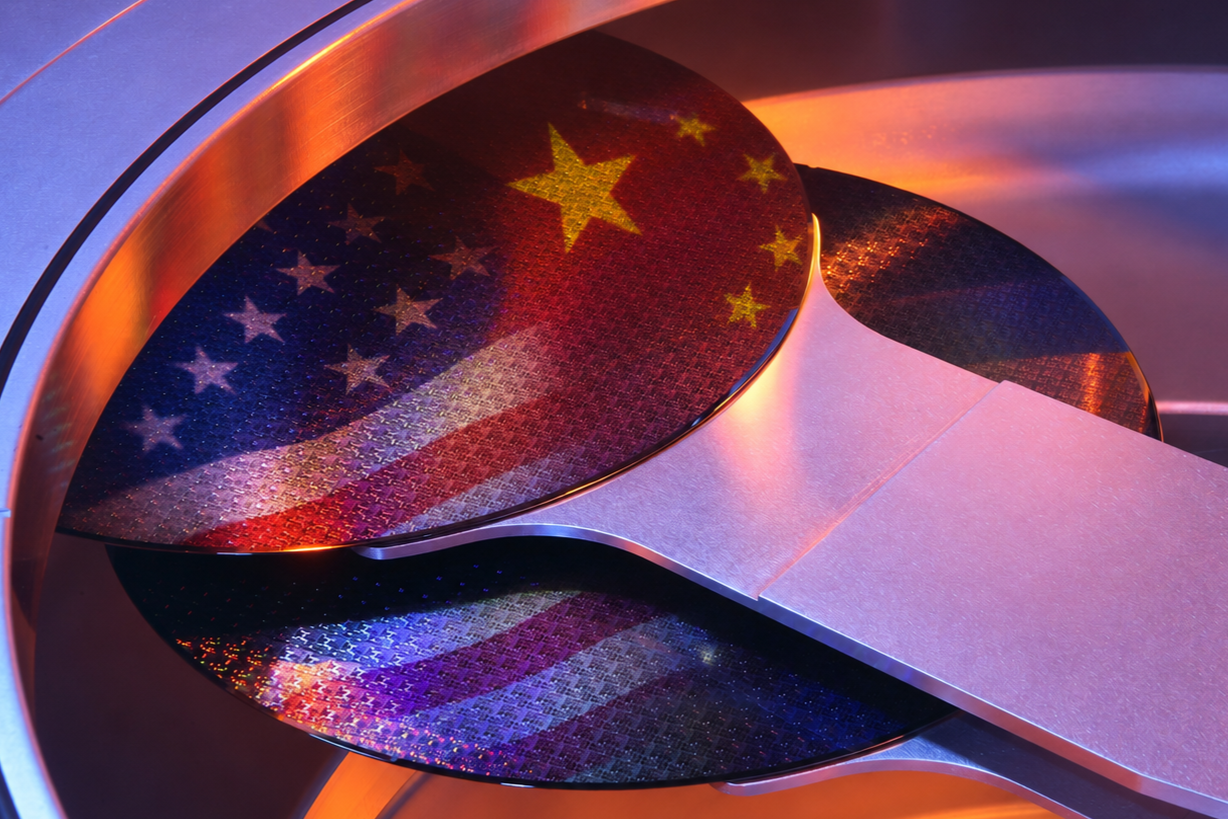
Samsung Electronics and SK hynix are reportedly evaluating semiconductor manufacturing equipment from Chinese supplier Advanced Micro Fabrication Equipment, known as AMEC, as protection against future United States export restrictions affecting their factories in China. The testing does not mean either company has committed to deploying Chinese tools at scale, but it shows how regulatory uncertainty is encouraging major memory manufacturers to develop alternative equipment strategies. According to Reuters, the evaluations began approximately 2 years ago and are focused on AMEC etching systems.
Samsung operates a major NAND Flash factory in Xian, while SK hynix produces DRAM in Wuxi and NAND Flash in Dalian. These facilities depend heavily on production equipment from United States suppliers including Applied Materials and Lam Research. The concern is not limited to purchasing new machinery. Future restrictions could also affect access to replacement components, maintenance services, repairs, and upgrades required to keep existing production lines operating reliably.
Samsung denied testing AMEC equipment for use at its China factory and said it had not considered doing so. SK hynix also denied testing AMEC tools for deployment in China. However, 3 sources familiar with the evaluations told Reuters that the companies are examining Chinese equipment as a contingency option. No decision regarding wider installation has been made.
The regulatory uncertainty increased after the United States revoked the Validated End User status previously granted to Samsung and SK hynix facilities in China. That authorization had allowed selected United States semiconductor equipment to enter the factories without individual export licenses. Washington later approved annual licenses covering equipment shipments during 2026, but future access will depend on continued government approval.
特朗普政府正準備對多晶矽及相關產品設定「最低進口價+關稅」混合制度,預計本月晚些時候公布,依據《1962年貿易擴展法》第232條國家安全調查結果。
— 駿HaYaO (@QQ_Timmy) August 5, 2026
此舉旨在保護美國本土多晶矽工廠(Hemlock Semiconductor、瓦克化學),對抗中國憑藉補貼與產能過剩主導全球市場的局面。Hemlock… https://t.co/i2r36m8Ct7
The United States has indicated that licenses may support existing factory operations but not significant capacity expansion or major technology upgrades. This creates a difficult position for Samsung and SK hynix because their China facilities remain important sources of conventional DRAM and NAND Flash. Replacing Western equipment with Chinese alternatives could help maintain production if access to servicing, components, or new systems becomes more restricted.
AMEC could benefit significantly from qualification by either Korean memory manufacturer. Its etching equipment is already used by major Chinese semiconductor companies including Yangtze Memory Technologies, giving Samsung and SK hynix a reference point for testing its production maturity. Chinese equipment is also estimated to cost between 20% and 30% less than comparable systems supplied by established international manufacturers.
Chinese suppliers continue to trail international competitors in advanced lithography and selected inspection technologies, but they have narrowed the gap in etching, deposition, cleaning, and planarization equipment. Deutsche Bank estimates that AMEC, Naura Technology, Piotech, and ACM Research could each generate more than $1 billion in revenue during 2026. Together, Chinese suppliers could capture between 25% and 30% of China’s $28 billion wafer fabrication equipment market, rising toward 40% when lithography and metrology systems are excluded.
Any transition would remain technically complex. Semiconductor tools require lengthy qualification, process integration, engineering support, replacement parts, and reliable service networks. Samsung and SK hynix would also need to evaluate intellectual property security, production yields, and possible political consequences before installing Chinese equipment inside commercially important memory factories.
The development highlights an unintended consequence of export controls designed to limit China’s semiconductor progress. Restricting Western equipment may reduce access to advanced technology, but it can also create demand and validation opportunities for Chinese alternatives. A similar pattern has emerged in AI processors, where Huawei has gained market momentum as NVIDIA’s position in China weakened.
Samsung and SK hynix are not replacing Applied Materials or Lam Research overnight. Testing AMEC equipment is an operational insurance policy designed to reduce dependence on regulatory decisions that can change annually.
However, equipment qualification from either company would provide AMEC with something more valuable than an immediate order. It would demonstrate that Chinese semiconductor tools can meet the requirements of leading international memory manufacturers, improving their credibility with other customers.
United States export controls can still restrict China’s access to the most advanced manufacturing technology, particularly lithography. The strategic risk is that continued pressure may accelerate Chinese competitiveness in equipment categories where the technology gap is already smaller. Washington could therefore weaken revenue opportunities for United States suppliers while encouraging foreign factories in China to build permanent relationships with local alternatives.
Could United States export controls unintentionally accelerate China’s semiconductor equipment industry?
