
CXMT Reportedly Rejects Apple’s Request for Lower DRAM Prices
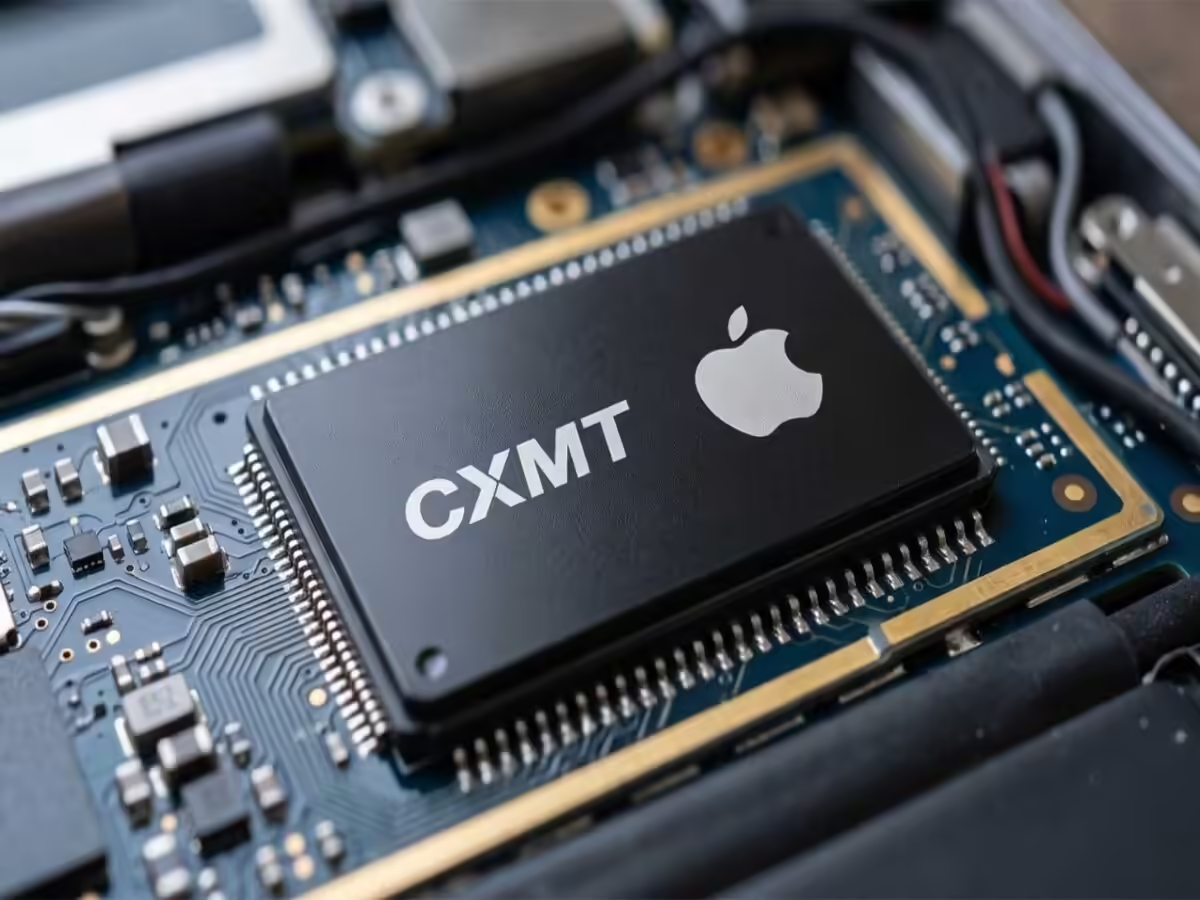
Apple reportedly approached ChangXin Memory Technologies to secure DRAM at prices below those offered by Samsung and SK hynix, but the Chinese memory manufacturer rejected the request. CXMT instead quoted prices comparable to or higher than its South Korean competitors, reflecting how constrained supply and strong domestic demand have shifted negotiating power toward memory producers.
According to South Korean publication Digital Daily, Apple sought lower pricing as rising memory costs increased pressure on its smartphone business and wider product portfolio. However, CXMT reportedly had little reason to offer a discount because Huawei, Xiaomi, and other Chinese companies had already secured significant portions of its DRAM production through advance supply agreements.
The report claims that these domestic contracts were negotiated at relatively high prices, giving CXMT existing customers willing to purchase its output without requiring the manufacturer to accept Apple’s traditional procurement conditions. Instead of using access to Apple’s supply chain as an opportunity to gain international recognition through aggressive discounts, CXMT can now prioritize customers offering stronger prices, longer commitments, and fewer geopolitical complications.
This represents a notable reversal for the consumer electronics supply chain. Apple has historically used its enormous purchasing volume and competition between suppliers to negotiate lower component prices. Adding another DRAM manufacturer would normally provide greater supply security while creating additional pricing pressure on Samsung, SK hynix, and Micron. In this case, CXMT reportedly refused to become the lower cost alternative Apple expected.
The wider DRAM shortage is strengthening CXMT’s position. Samsung and SK hynix continue allocating more advanced manufacturing resources toward high bandwidth memory used by artificial intelligence accelerators, where margins and long term demand are considerably stronger than conventional consumer DRAM. This has tightened the availability of DDR5 and mobile LPDDR products while allowing suppliers with available capacity to maintain higher prices.
An industry source cited by Digital Daily reportedly described CXMT as increasingly influential over the price floor for commodity DRAM. The company is no longer competing exclusively through lower prices and has already been reported charging more than Samsung for selected 64 GB server DDR5 products. Our previous coverage of CXMT server memory pricing showed how supply availability, rather than lower cost, has become one of the company’s most important advantages.
Apple’s potential relationship with CXMT also carries political risk. The company has reportedly sought assurances from the United States government before purchasing Chinese memory for products sold outside the country, amid concerns that future restrictions could disrupt the partnership. CXMT appears on a Pentagon list of companies alleged to have connections with China’s military, although that designation does not automatically prevent Apple from purchasing its products.
Neither Apple nor CXMT has publicly confirmed the reported price negotiations. The information should therefore be treated as an industry report rather than a finalized supply agreement.
CXMT rejecting Apple’s request for lower prices is a stronger signal than another production expansion announcement. It suggests that the company has enough demand, manufacturing confidence, and domestic customer support to negotiate as a strategic supplier rather than a discounted alternative.
The development also demonstrates how artificial intelligence is restructuring the entire memory market. HBM demand is pulling investment away from conventional DRAM, allowing manufacturers with available DDR5 and LPDDR capacity to command higher prices. Apple may offer enormous volume, but that advantage becomes less decisive when suppliers already have customers competing for limited output.
CXMT still trails Samsung, SK hynix, and Micron in advanced manufacturing, global qualification, and HBM production. However, its growing pricing power shows that closing the technology gap is no longer its only path toward influencing the market. Reliable supply during a shortage can be equally valuable.
Should Apple accept CXMT’s higher pricing to diversify its memory supply, or remain dependent on Samsung, SK hynix, and Micron?
