
YMTC Becomes World’s No. 3 NAND Supplier by Shipments as China Targets Samsung Scale Capacity
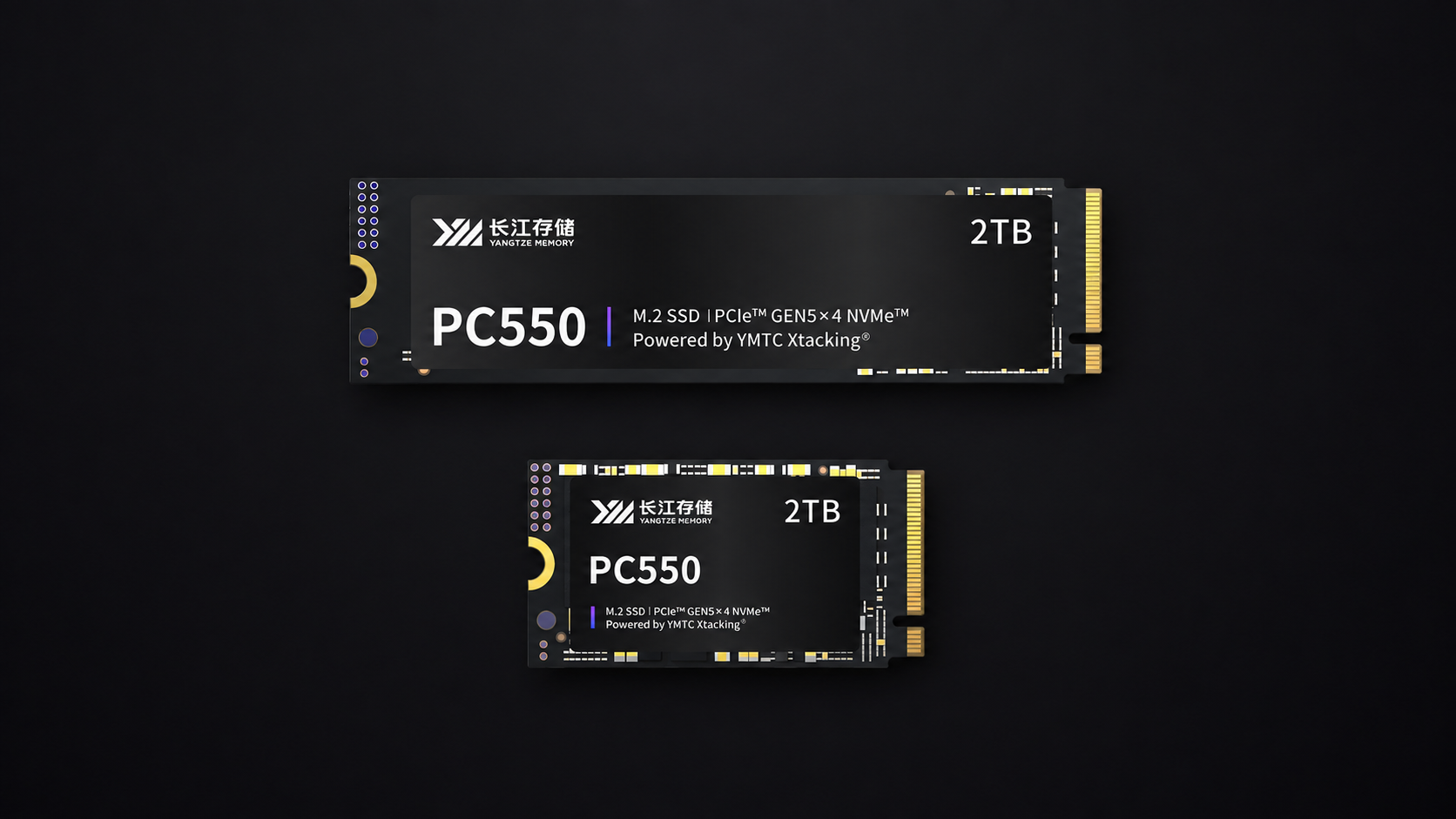
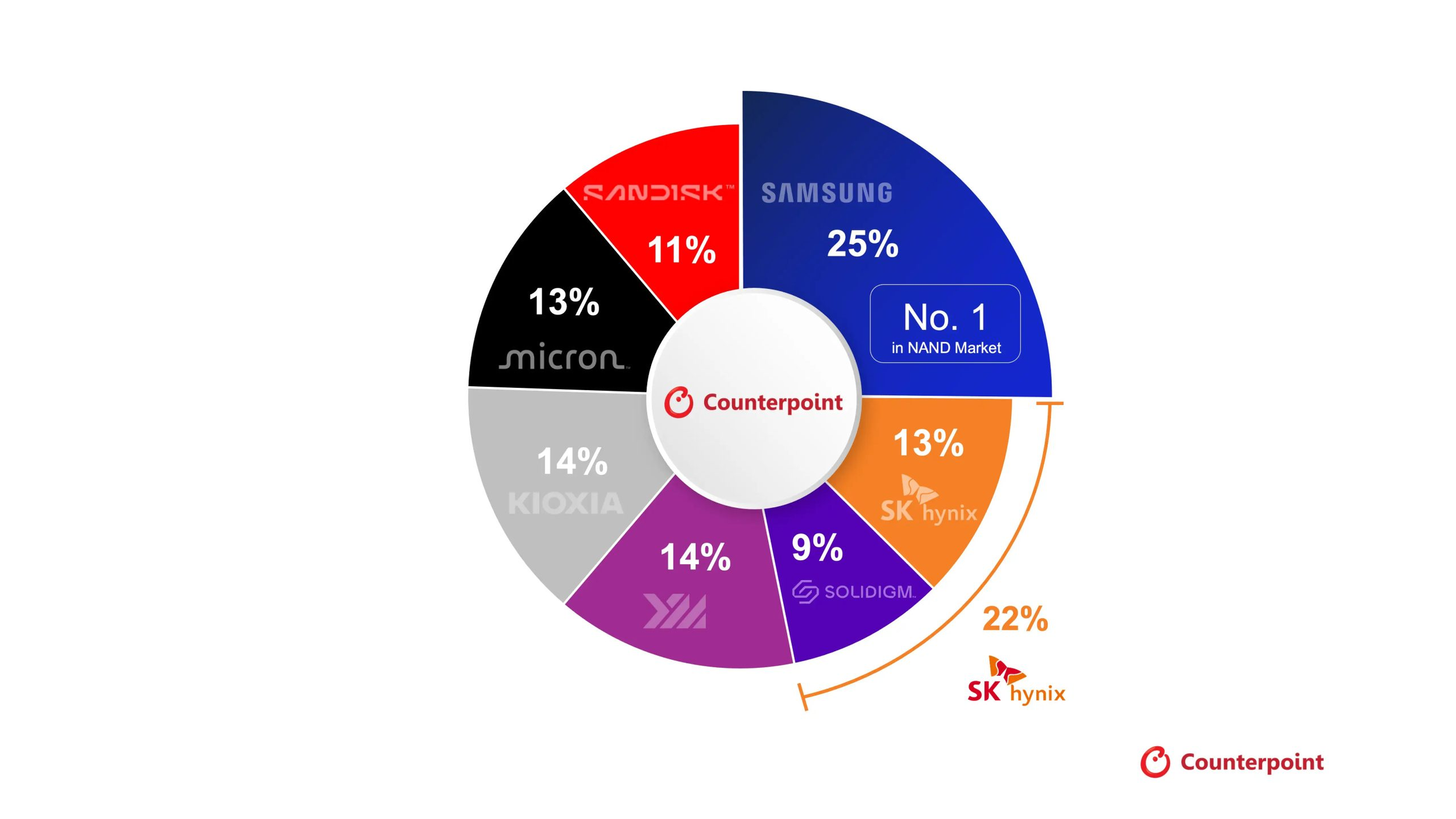
China’s Yangtze Memory Technologies has entered the global top 3 NAND Flash suppliers by shipment volume for the first time, marking a major milestone for the country’s semiconductor industry as YMTC continues expanding production despite United States technology restrictions. Counterpoint Research reports that YMTC captured 14% of global NAND bit shipments during Q2 2026, behind Samsung at 25% and SK hynix at 22%, while narrowly overtaking Kioxia.
| NAND Supplier | Q2 2026 Shipment Share |
|---|---|
| Samsung | 25% |
| SK hynix | 22% |
| YMTC | 14% |
The ranking requires an important distinction. YMTC is now the world’s third largest NAND supplier by bit shipments, but it has not yet reached third place by revenue. Counterpoint says YMTC remains fifth in NAND revenue because its product mix contains a smaller proportion of higher value enterprise SSD products than several established competitors. This means YMTC is shipping enormous quantities of NAND but is still generating less revenue per bit than suppliers with stronger enterprise storage businesses.
The shift comes as artificial intelligence dramatically changes where NAND capacity is being consumed. Enterprise SSDs represented 48% of global NAND bits shipped during Q2 2026, up from approximately 26% a year earlier. Counterpoint attributes the increase largely to the transition from AI training toward large scale inference, where data sets, model information, and KV caches require enormous amounts of high capacity storage close to accelerator infrastructure.
YMTC’s growth is particularly notable because the company held only 8% of global NAND revenue during Q1 2025. By Q1 2026 that figure had climbed to 13%, with Counterpoint reporting approximately 445% annual revenue growth during the period. The latest Q2 shipment data now puts the company directly behind the 2 dominant Korean suppliers in terms of NAND bits delivered.
Production capacity could expand even more aggressively. YMTC currently operates 2 fabs capable of producing a combined approximately 200,000 wafers per month. A third Wuhan facility is nearing completion and is expected to begin operations later in 2026, initially reaching around 50,000 wafers per month during 2027 before potentially scaling toward 100,000 wafers per month at full capacity. YMTC is also planning 2 additional fabs, with each designed for another 100,000 wafers per month. If all 3 facilities eventually reach their intended capacity, YMTC could theoretically operate around 500,000 wafers per month.
That would place YMTC in the same broad manufacturing scale as the largest NAND producers. Omdia estimates cited by Korean industry reporting indicate Samsung expects approximately 4.68 million NAND wafer starts during 2026, averaging roughly 390,000 wafers per month. Installed capacity and actual wafer starts are not directly equivalent measurements, but the comparison demonstrates how significant YMTC’s proposed expansion could become if all planned facilities reach volume production.
The expansion continues a strategy we previously examined when YMTC and CXMT accelerated major Chinese memory capacity investments. Those plans are increasingly moving from long term ambition toward physical manufacturing infrastructure, with YMTC’s Phase 3 facility becoming one of the most important tests of China’s ability to manufacture advanced memory using a predominantly domestic equipment ecosystem.
More than 50% of the manufacturing equipment being installed in the new Wuhan facility is reportedly sourced from Chinese suppliers, including tools used for the vertical stacking processes required by modern 3D NAND. YMTC increased its reliance on domestic equipment companies such as AMEC after being added to the United States Entity List in December 2022, restricting access to several categories of advanced semiconductor manufacturing technology.
Technology development has continued despite those restrictions. Industry analysts cited by Reuters consider YMTC’s latest Xtacking 4.0 architecture competitive with technologies from established suppliers including Samsung. Unlike conventional monolithic NAND manufacturing, Xtacking separately manufactures the NAND memory array and peripheral logic before bonding them together, allowing both sections to be optimized more independently.
The competitive environment could become even more intense if today’s NAND shortage eventually reverses. SK hynix has warned that memory supply could remain extremely constrained through 2027, while TrendForce currently estimates a 4% to 5% NAND supply deficit for 2026. Additional Chinese output could therefore provide valuable supply in the short term, but hundreds of thousands of additional monthly wafer starts could also create significant pricing pressure later if AI storage demand fails to grow as quickly as manufacturers expect.
YMTC is also preparing for a potential public listing. The company began the regulatory preparation process for a Chinese IPO earlier this year, potentially giving it access to additional capital for manufacturing expansion and research. Counterpoint has previously argued that sufficient IPO funding could eventually allow YMTC to establish itself more permanently as the world’s No. 3 NAND supplier.
YMTC reaching third place in NAND bit shipments is a much more meaningful milestone than simply increasing domestic Chinese market share. It means the company is now producing enough flash memory to compete directly with manufacturers that have dominated global storage for decades.
The revenue distinction remains important. Samsung, SK hynix, Kioxia, and Micron still maintain significant advantages in enterprise storage, premium products, global OEM relationships, and mature manufacturing ecosystems. Shipping 14% of global NAND does not mean YMTC has already matched them technologically or financially.
What changes the equation is capacity. If YMTC eventually reaches approximately 500,000 wafers per month while maintaining competitive yields and product quality, China could become a structural force in global NAND pricing rather than simply an alternative supplier. That could eventually benefit SSD buyers through stronger competition, but it also creates the possibility of another major NAND oversupply cycle if new production arrives after the current AI driven shortage begins easing.
Could YMTC’s rapid expansion eventually lower SSD prices worldwide, or will AI infrastructure absorb the additional NAND capacity before consumers see meaningful benefits?
