
UBS Says China Remains Around 10 Years Behind ASML in EUV Lithography
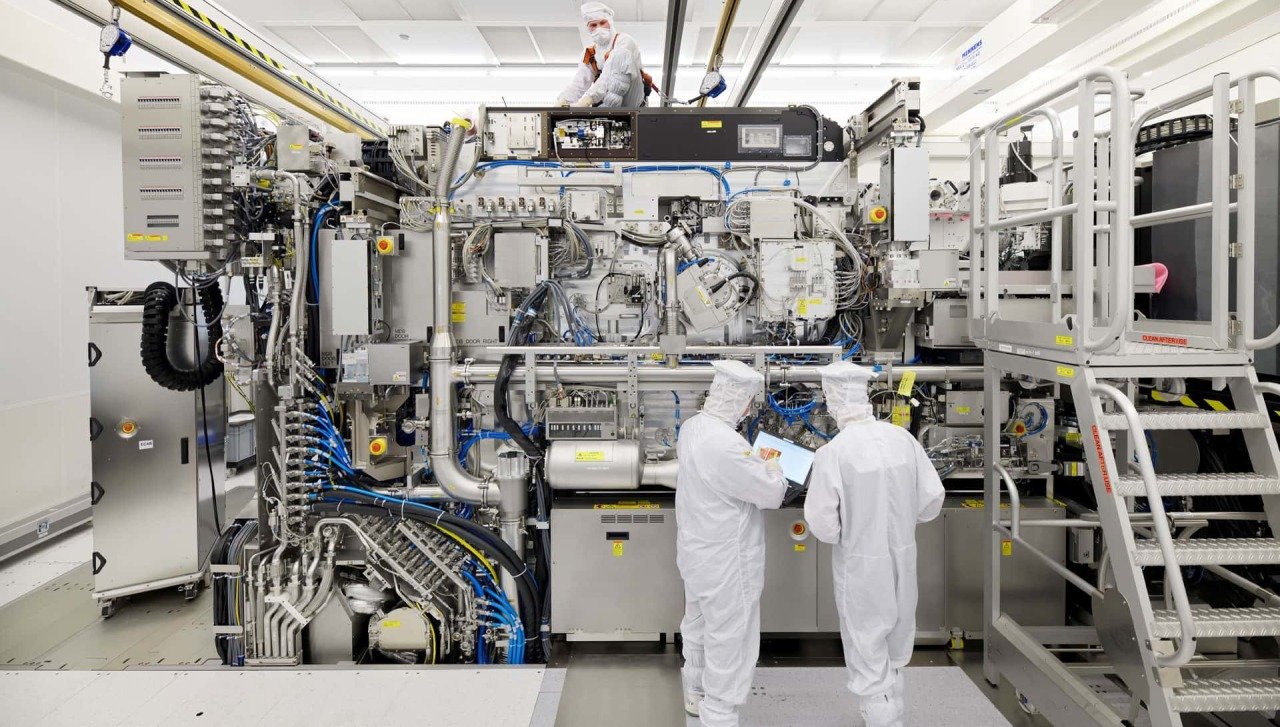
China could remain roughly 10 years away from developing an extreme ultraviolet lithography system capable of competing with ASML, according to a new analysis from investment bank UBS, highlighting how lithography remains one of the most difficult obstacles in Beijing’s push toward semiconductor manufacturing independence.
UBS analysts led by Francois Xavier Bouvignies estimate that China’s current EUV development is comparable to where ASML stood around 2004. "They seem to be at a similar stage to ASML in 2004." Quote by: UBS analysts led by Francois Xavier Bouvignies. The assessment is reportedly based partly on patent activity involving EUV light sources, lasers and related subsystems.
The comparison does not mean China is literally 22 years behind ASML. UBS instead believes the existing knowledge surrounding EUV development could allow Chinese engineers to advance faster than ASML originally did, while still requiring roughly another decade before producing a viable alternative comparable with the Dutch company’s commercial technology.
From UBS
— John Intel (@intelfabs) September 2, 2026
They dont think china can make their EUV machine within the next 10 years
I'm not an expert, but if there's one thing I know, it's never, ever underestimate China's reverse engineering capabilities$ASML pic.twitter.com/I3Vydrb7Wo
ASML’s own history illustrates the difficulty involved. The company had already received an order from Intel for an experimental EUV system in 2002, targeting 45 nm resolution using 13.5 nm light, but its first full field EUV demonstration systems were not delivered to research organizations until 2006. Preproduction NXE systems followed in 2010, while EUV required years of additional development before becoming a practical technology for high volume semiconductor manufacturing.
China faces the same fundamental engineering challenges across EUV light generation, reflective optics, masks, precision positioning, contamination control, software, throughput and system reliability. Producing EUV light is only one part of the problem. A commercially competitive scanner must repeatedly expose wafers with extraordinary precision while maintaining the throughput and uptime required for semiconductor factories operating continuously.
This is where the gap between an experimental system and a production lithography platform becomes particularly important. China has reportedly developed an experimental EUV system capable of generating extreme ultraviolet light, but there is still no confirmed domestic EUV platform producing advanced chips at commercial scale. China has been prevented from purchasing ASML EUV equipment through export restrictions, forcing the country to develop alternative manufacturing technologies domestically.
Progress is considerably faster in deep ultraviolet lithography. UBS estimates China could achieve high volume production of competitive immersion DUV equipment within approximately 2 to 5 years, although differences in throughput, yield and reliability could keep ASML equipment attractive to Chinese chipmakers even after domestic alternatives become available.
That forecast comes shortly after Shanghai Aishengna emerged as the company leading China’s domestic immersion DUV production effort. The state backed manufacturer reportedly plans to produce approximately 5 immersion systems during 2026 and around 20 during 2027 for customers including SMIC, Hua Hong Semiconductor and CXMT. These initial machines will still need to demonstrate competitive overlay accuracy, throughput, yield and reliability before they can be considered serious replacements for established ASML equipment.
The development is particularly important because DUV has effectively become China’s remaining route toward more advanced domestic semiconductor production. Recent efforts in the United States to tighten restrictions around ASML DUV equipment could increase pressure on Chinese manufacturers to accelerate domestic alternatives even if the first generation of machines cannot immediately match ASML performance.
ASML still generates significant business from China despite restrictions on its most advanced products. Its 2025 annual report recorded approximately €9.52 billion in total net sales to China from €32.7 billion globally, while the company confirmed that Chinese demand for DUV systems remained stronger than expected. ASML shipped 279 DUV lithography systems and 48 EUV systems globally during the year.
ASML is not standing still either. While China works toward its first commercially viable domestic EUV platform, ASML has already progressed into High NA EUV technology designed to increase numerical aperture and support even smaller semiconductor features. The challenge for China therefore involves catching a moving target rather than reproducing a fixed generation of existing equipment.
UBS placing China near ASML’s 2004 level sounds dramatic, but the more important number is the projected 10 year path toward a competitive EUV system. China does not need to repeat every experiment ASML conducted over several decades because much more is now publicly understood about EUV physics and semiconductor manufacturing. The difficult part is turning that knowledge into a machine capable of operating economically inside a high volume fab.
DUV could therefore become the more immediate disruption. If Chinese manufacturers can improve domestic immersion systems over the next 2 to 5 years, they could gradually reduce reliance on foreign equipment across a much larger portion of semiconductor production even while EUV remains out of reach.
Export controls may slow access to advanced manufacturing technology, but they are simultaneously creating an enormous commercial incentive to localize it. The question is no longer whether China will attempt to build its own lithography ecosystem. It is how quickly domestic machines can move from working prototypes into equipment that fabs can trust for millions of wafers.
Do you think China will really need another 10 years to develop a competitive EUV system, or could massive investment and existing industry knowledge close the gap significantly faster?
