
TSMC Raises US Investment to $265 Billion With Four More Arizona Facilities
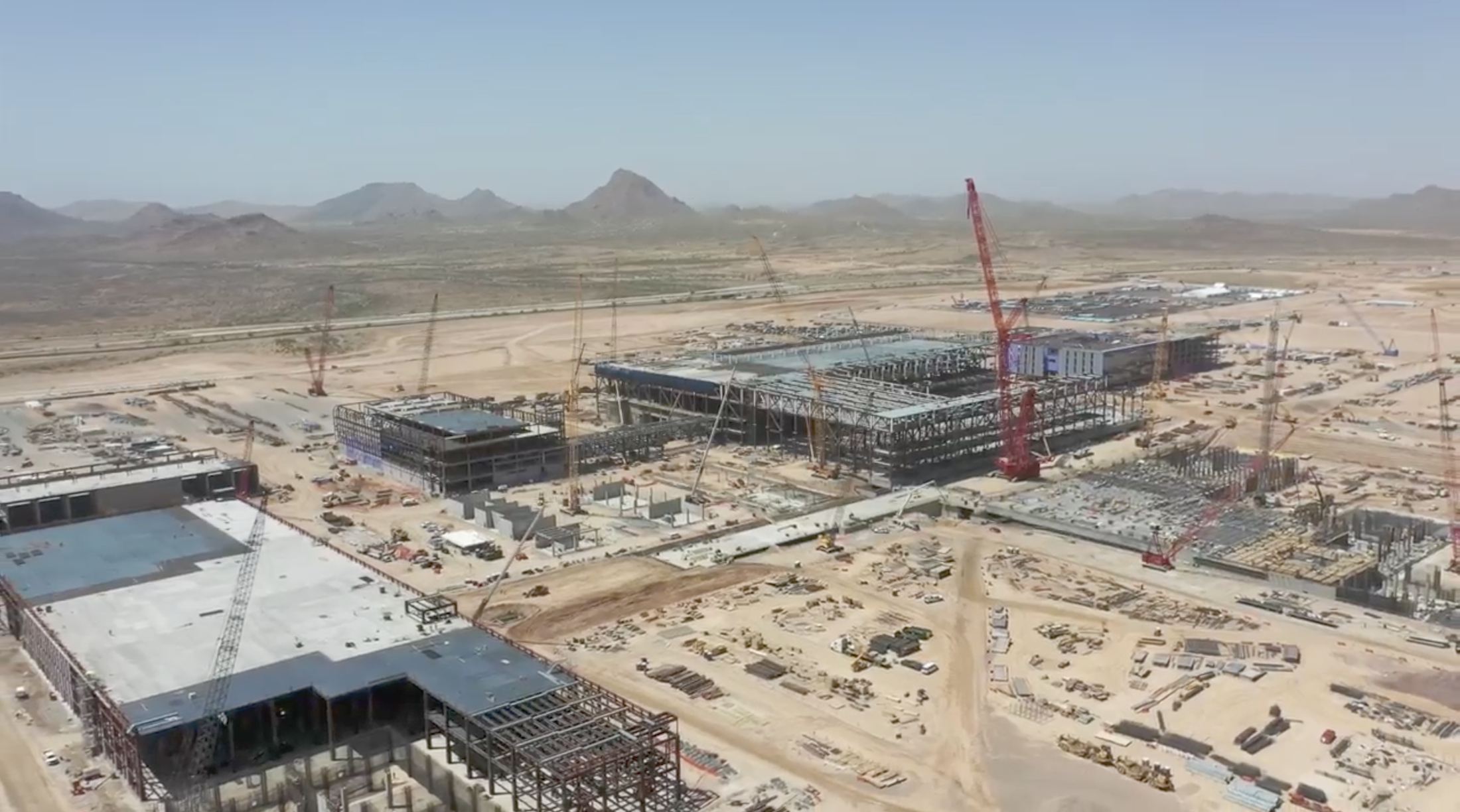
TSMC has announced another $100 billion investment in the United States, increasing its total planned commitment to $265 billion as demand for artificial intelligence processors and advanced semiconductor packaging continues to accelerate.
The expansion will add 4 advanced semiconductor manufacturing and packaging facilities in Arizona, bringing TSMC’s planned United States footprint to 12 facilities. According to the United States Department of Commerce, the investment will support additional wafer fabrication and advanced packaging capacity while creating construction, manufacturing, engineering, and supply chain jobs.
TSMC had previously committed $65 billion to establish 3 fabrication plants in Arizona, supported by the United States CHIPS Act. The company announced another $100 billion expansion in March 2025 for 3 additional fabs, 2 advanced packaging facilities, and a research and development center. The latest commitment adds another $100 billion, taking the total planned investment to $265 billion.
The company has not provided individual construction schedules for the 4 new facilities. During its Q2 2026 earnings conference, Chairman and CEO C. C. Wei said the pace of development would depend on the market situation, reflecting TSMC’s strategy of expanding capacity according to confirmed customer requirements rather than speculative forecasts.
"Our customers and customers' customers, who are mainly the cloud service providers, continue to provide us with their very strong signal and positive outlook."
— C. C. Wei
TSMC reported a 77% annual increase in Q2 profit to NT$706.6 billion, approximately $22 billion, while raising its 2026 capital expenditure forecast to between $60 billion and $64 billion. The company also expects its investment during the next 3 years to be significantly higher than during the previous 3 years as demand for AI accelerators, processors, advanced nodes, and CoWoS packaging continues to exceed available capacity.
TSMC currently manufactures its newest process technologies first in Taiwan, where 2 nm production is expanding for mobile, high performance computing, and future AI products. Many current AI accelerators continue using mature 4 nm class processes because their designs were finalized before 3 nm and 2 nm production became commercially available. Future AI processors are expected to adopt more advanced nodes as customers pursue higher performance and energy efficiency.
Arizona is already producing 4 nm class chips, while later facilities are expected to introduce 3 nm, 2 nm, A16, and advanced packaging technologies. The expansion will allow customers including NVIDIA, AMD, Apple, and Qualcomm to manufacture a larger portion of their products in the United States without eliminating Taiwan’s position as TSMC’s primary research, development, and leading process production center.
Advanced packaging is particularly important because AI processors require multiple computing dies and HBM stacks to operate within a single package. CoWoS capacity became one of the earliest constraints of the AI hardware boom, meaning additional wafer production cannot satisfy demand without matching growth in packaging capacity.
The Arizona expansion could also support future processors such as AMD EPYC Venice, which is expected to enter production at TSMC Arizona as AMD expands capacity for AI data centers and enterprise infrastructure.
TSMC’s $265 billion commitment represents more than a political investment announcement. It reflects the scale of manufacturing capacity required to support the next generation of AI infrastructure, where demand is increasing across processors, CPUs, networking chips, HBM, and advanced packaging simultaneously.
However, the phrase "market situation" remains critical. TSMC is committing to the facilities, but their construction and production schedules will depend on sustained customer orders. Semiconductor fabs require several years to build and equip, making aggressive expansion dangerous if AI demand slows or customers overestimate future data center requirements.
The United States will gain a significantly larger advanced semiconductor ecosystem, but Taiwan will remain central to TSMC’s technology leadership. Arizona provides geographic diversification and additional capacity, while Taiwan continues to receive the company’s newest process development and largest manufacturing investments.
Will TSMC’s $265 billion Arizona expansion meaningfully reduce global AI chip shortages, or will advanced packaging and HBM remain the larger bottlenecks?
