
PC Giants Reportedly Lock In CXMT DRAM Supply as Orders Stretch Through 2027
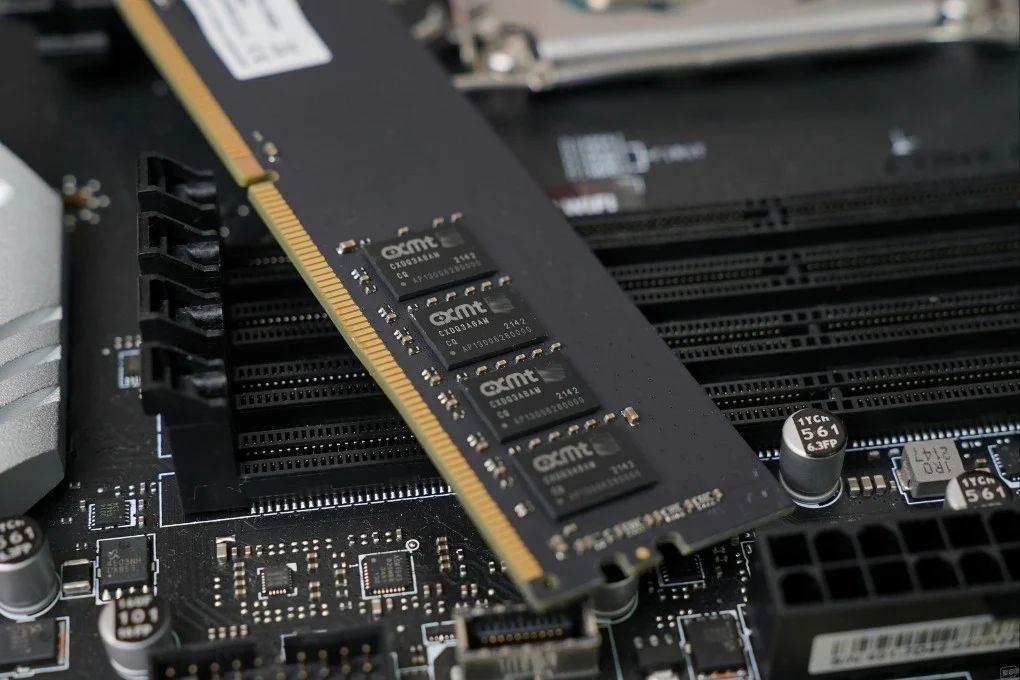
Major PC manufacturers are reportedly moving quickly to secure long term DRAM supply from ChangXin Memory Technologies as the global memory shortage continues restricting availability and driving component prices higher.
According to DigiTimes, orders placed with the Chinese DRAM manufacturer now extend through the end of 2027. Major PC vendors have reportedly completed the qualification process for CXMT memory, but passing technical validation does not guarantee that every manufacturer will receive the volumes it requires.
Large customers capable of committing to substantial multiyear orders are expected to receive priority allocation. Dell, HP, Lenovo, and Apple are among the companies reportedly positioned to secure supply, while smaller PC manufacturers could struggle to obtain enough DRAM for upcoming systems.
This shift reflects how memory procurement is moving beyond traditional short term pricing negotiations. PC companies are increasingly attempting to reserve capacity years in advance as AI infrastructure, servers, mobile products, and consumer devices compete for limited production.
CXMT is currently operating close to its manufacturing limits. Information referenced from its listing documents shows that factory utilization increased from 87.06% in 2023 to 92.46% in 2024 and reached 95.73% in 2025. At that level, the company has limited flexibility to absorb additional orders without expanding equipment, improving yields, or increasing manufacturing capacity.
The company has also become increasingly important within the global DRAM industry. CXMT held approximately 7.7% of the worldwide DRAM market in 2025, making it the fourth largest supplier behind Samsung, SK hynix, and Micron. Its products now include DDR5 memory for PCs and servers, alongside LPDDR solutions for mobile devices.
Motherboard manufacturers have also been improving BIOS compatibility and memory training support for modules using CXMT chips. This validation work is essential because DRAM adoption depends on more than speed and capacity. Stable yields, timing consistency, SPD programming, platform compatibility, thermal performance, and long term reliability remain critical for major PC manufacturers.
Geopolitical developments may also be influencing demand. DigiTimes reports that the United States previously considered adding CXMT to the Entity List but has not implemented that action. However, regulatory uncertainty has not disappeared. The United States Department of Defense designated CXMT as a Chinese military company in June 2026, while a possible Commerce Department Entity List addition remains a future risk.
Apple is also reportedly seeking permission from the United States government to purchase CXMT memory for products intended for the Chinese market. The company has reportedly tested CXMT components but has not publicly confirmed any supply agreement or identified which devices could use the memory. CXMT could provide PC manufacturers with another supply route during one of the most difficult memory markets in recent years. However, its available production will likely prioritize major Chinese customers and companies capable of signing large long term contracts.
This means CXMT may not immediately solve the worldwide DRAM shortage. China’s expanding DRAM industry could help moderate DDR5 prices from 2027 onward, but much of the additional production may be consumed by domestic demand before it meaningfully improves global retail availability. The wider market outlook also remains challenging. SK hynix has warned that 2027 could become one of the most severe periods for memory supply as AI infrastructure continues absorbing HBM, server DRAM, and conventional memory capacity.
CXMT is no longer simply an alternative Chinese memory supplier. It is becoming a strategically important part of the global PC supply chain at a moment when established DRAM manufacturers cannot satisfy every segment simultaneously.
The reported orders extending through 2027 show that major PC brands are prioritizing guaranteed availability over short term price advantages. For consumers, this could eventually bring more supplier diversity to laptops, prebuilt gaming PCs, and retail DDR5 products. However, smaller manufacturers may face an increasingly difficult market where the largest buyers secure capacity first.
CXMT’s expansion could reduce pressure on the memory market, but production volume alone will not determine its success. Consistency, reliability, platform support, manufacturing yields, and geopolitical stability will decide whether CXMT becomes a permanent global competitor or remains primarily focused on China’s domestic ecosystem.
Would you consider buying a gaming PC or DDR5 memory kit using CXMT DRAM if its performance, warranty, and reliability matched products using Samsung, SK hynix, or Micron chips?
