
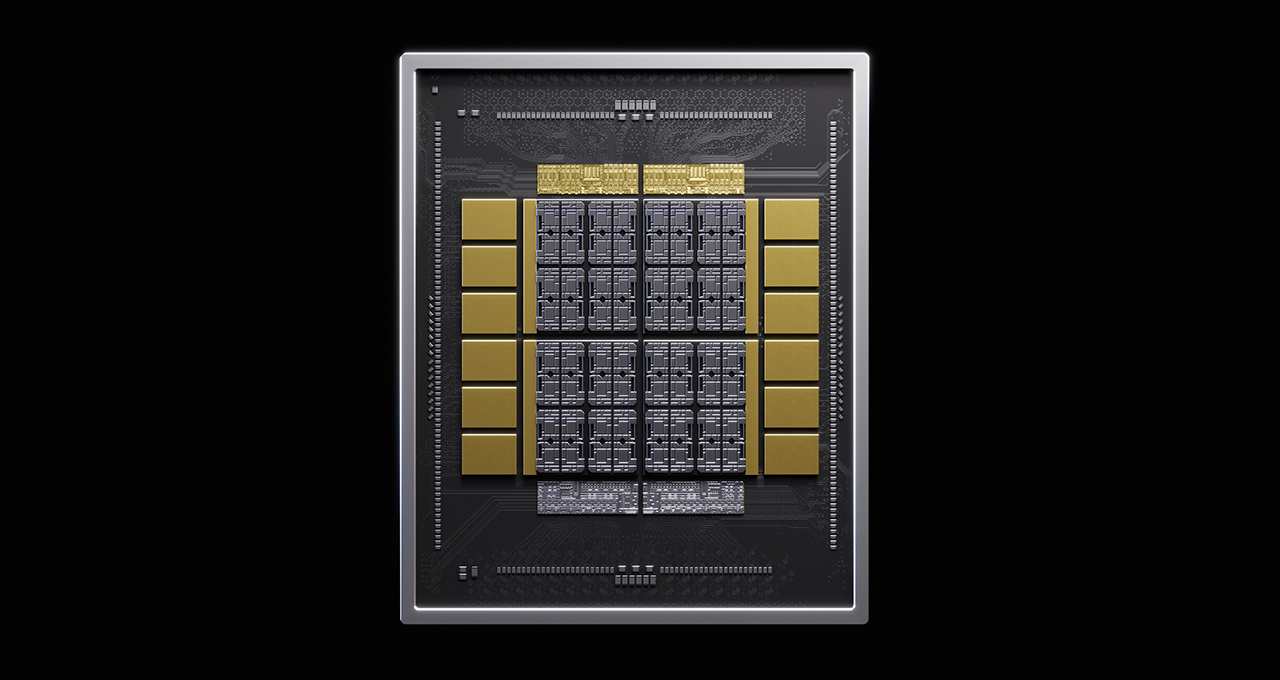
NVIDIA is reportedly bringing semiconductor rivals Samsung and TSMC together to manufacture its upcoming NVHBM custom High Bandwidth Memory, with both companies collaborating on an advanced logic base die manufactured using TSMC's 3 nm process. The arrangement represents a significant departure from Samsung's traditional manufacturing strategy, which relies on producing both memory dies and supporting logic components internally. NVIDIA is reportedly seeking a standardized manufacturing process to improve performance consistency, simplify validation, and secure additional memory supply for future AI accelerators.
According to South Korea's Seoul Economic Daily, NVIDIA has requested that Samsung, SK hynix, and Micron manufacture NVHBM base dies using TSMC's 3 nm technology while adopting sixth generation 1c DRAM for the memory layers. Samsung reportedly accepted the requirement following an internal review, marking a significant change from its traditional manufacturing approach. However, the company is also evaluating its own 2 nm process as an alternative if TSMC's production capacity becomes constrained.
The collaboration centers on NVIDIA's NVHBM architecture, introduced in August 2026. Unlike conventional HBM4E, which keeps the memory controller on the GPU or XPU, NVHBM integrates that controller directly into the memory stack's base die. This reduces the amount of silicon dedicated to memory management on the accelerator, allowing additional space for computing resources while improving communication efficiency.
NVIDIA claims its custom architecture can deliver up to 30% higher memory bandwidth, 15% lower HBM power consumption, and 25% more available XPU compute die area compared with standard HBM4E. These figures represent NVIDIA's projected architectural advantages rather than independently verified commercial performance.
SpecificationStandard HBM4ENVIDIA NVHBMMemory controllerIntegrated into GPU or XPUIntegrated into HBM base dieBase die processManufacturer dependentTSMC 3 nm reportedly requestedDRAM processSupplier dependentSixth generation 1c requestedMemory bandwidthBaselineUp to 30% higherHBM power consumptionBaselineUp to 15% lowerAvailable compute die areaBaselineUp to 25% more
<small>Manufacturing arrangements remain unconfirmed. Performance improvements are NVIDIA estimates.</small>
The latest developments also follow a separate report suggesting NVIDIA requested that TSMC explore manufacturing advanced 3D DRAM. However, TSMC responded by emphasizing its commitment to operating as a dedicated logic semiconductor foundry. The company did not explicitly address the reported project, leaving its involvement in actual DRAM production unconfirmed. Manufacturing logic base dies for NVHBM is fundamentally different from producing the stacked DRAM memory cells themselves.
For NVIDIA, the proposed collaboration could reduce dependence on individual memory suppliers while improving manufacturing consistency. However, the growing complexity of custom HBM production and advanced base die manufacturing could also increase pressure on TSMC's production capacity. Neither NVIDIA nor its manufacturing partners has announced final NVHBM production volumes or commercial availability.
NVIDIA's strategy demonstrates how the AI industry is reshaping relationships between semiconductor manufacturers. Samsung and TSMC are direct competitors in advanced chip manufacturing, yet NVIDIA's enormous demand for specialized memory could make cooperation more valuable than maintaining completely independent production processes.
Standardizing the NVHBM base die could improve supply flexibility and reduce development complexity, but it also gives NVIDIA greater influence over the architecture and manufacturing requirements of future AI memory.
For PC gamers and hardware enthusiasts, the concern remains the increasing concentration of manufacturing resources around AI infrastructure. While advanced memory technology promises improved computing efficiency, its benefits should not come at the expense of consumer DRAM availability or affordable gaming hardware. Greater production capacity and competition remain essential as memory shortages continue affecting the PC market.
Could NVIDIA's control over custom HBM manufacturing improve memory supply, or will increasing AI demand continue pushing DRAM prices higher for PC gamers and consumers?
