
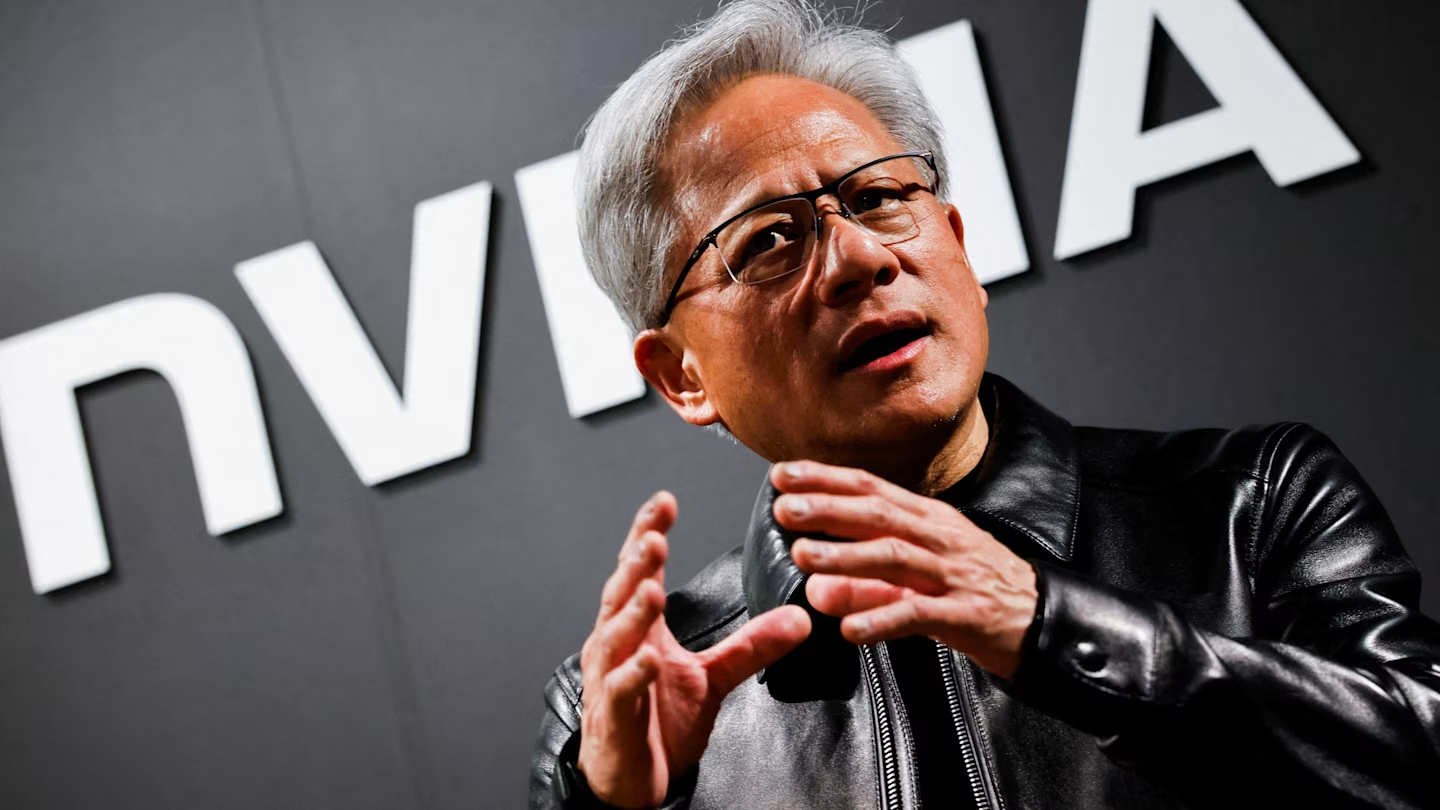
NVIDIA CEO Jensen Huang has openly challenged Anthropic CEO Dario Amodei's position on restricting advanced artificial intelligence hardware exports to China, arguing that American companies should compete globally rather than abandon major international markets. During a CBS News interview originally published in September 2026, Huang rejected the idea of broadly prohibiting American technology sales to China, emphasizing that maintaining technological leadership requires both innovation and global commercial participation. His comments have resurfaced as the debate over semiconductor export restrictions intensifies.
"America is about competition."
— Quote by: Jensen Huang, NVIDIA CEO.
Huang's position contrasts with Anthropic's semiconductor export policy, which advocates stronger restrictions on advanced AI accelerators and semiconductor manufacturing equipment. Amodei argues that limiting China's access to powerful computing hardware is essential for maintaining American leadership in artificial intelligence and preventing sensitive technologies from strengthening potential strategic competitors. Huang, however, believes excessively broad restrictions could weaken American technology companies by surrendering international market share to domestic Chinese alternatives.
Despite his opposition to sweeping restrictions, Huang supports prioritizing American access to the most advanced computing technologies. He confirmed that NVIDIA's Vera Rubin platform is already shipping in volume production, with American AI laboratories and companies receiving priority access. Huang also claimed that the architecture places the United States several years ahead of China in advanced AI computing capabilities. NVIDIA previously confirmed Vera Rubin's production ramp, with manufacturers preparing systems for large scale AI training and inference workloads.
The disagreement reflects NVIDIA's complicated position in the semiconductor market. The company must comply with American export regulations while competing against Chinese manufacturers developing alternative AI accelerators. As previously discussed in NVIDIA's approach to Blackwell and Rubin export restrictions, Huang has supported keeping the company's most advanced processors away from China while maintaining opportunities to sell permitted technology in international markets.
The challenge extends beyond commercial interests. Recent investigations identified 32 NVIDIA B300 Blackwell Ultra GPUs associated with China Telecom network infrastructure, raising questions about the effectiveness of existing semiconductor export controls. However, the findings do not establish whether the accelerators were physically located in China or obtained through unauthorized transactions.
For now, Huang's remarks represent a disagreement over industrial strategy rather than a change in American export policy. The underlying debate remains whether restricting advanced computing hardware protects American technological leadership or unintentionally encourages competitors to develop independent alternatives.Jensen Huang raises a legitimate concern about the long term consequences of excluding American semiconductor companies from major international markets. Export restrictions can protect sensitive technology, but excessively broad limitations may also accelerate investment in competing architectures and reduce the global influence of American computing platforms.
However, NVIDIA's commercial interests must also be considered. The company benefits directly from expanding AI infrastructure sales, making its position on international competition financially significant.
For PC gamers and hardware enthusiasts, the broader concern is how geopolitical restrictions and accelerating AI demand influence manufacturing priorities, component availability, and consumer hardware pricing. A competitive semiconductor industry should protect legitimate national security interests without unnecessarily restricting technological innovation or consumer access to computing hardware.
Do you agree with Jensen Huang that American technology companies should compete globally, or do you believe stricter AI chip export restrictions are necessary to maintain technological leadership?
