
32 NVIDIA B300 Blackwell Ultra GPUs Discovered on China Telecom Network Despite US Export Restrictions
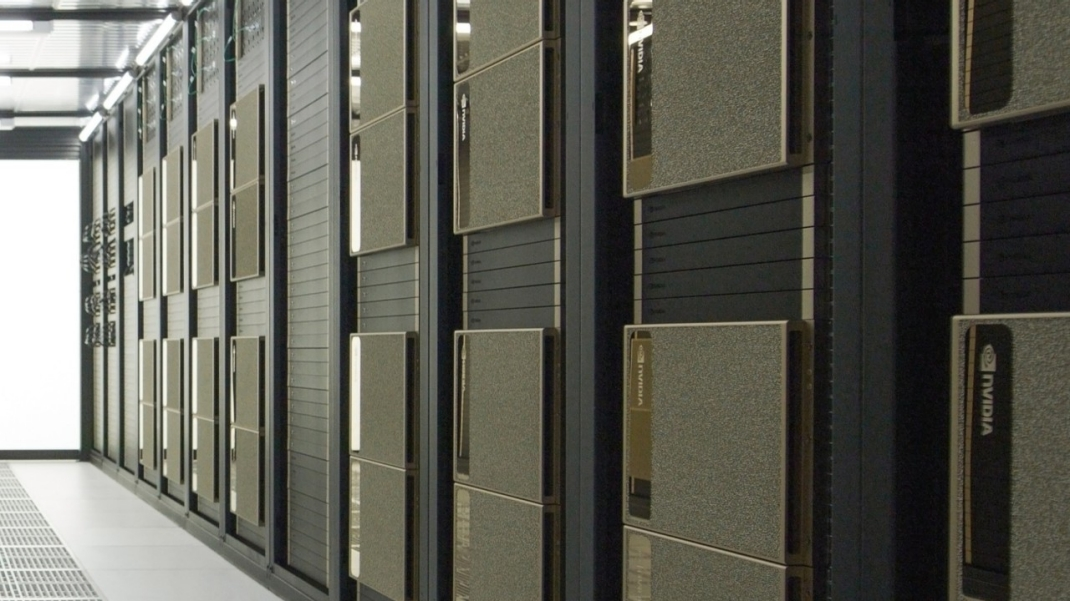
NVIDIA's flagship Blackwell Ultra B300 AI accelerators have reportedly been identified on infrastructure associated with China Telecom, raising new questions about the effectiveness of US semiconductor export restrictions. According to an investigation by Israeli cybersecurity firm Lava, researchers discovered 32 B300 GPUs through publicly accessible monitoring systems connected to IP addresses geolocated to China, despite the advanced processors being subject to strict US export licensing requirements.
The findings, initially reported by The Information, originated from NVIDIA's Data Center GPU Manager (DCGM) Exporter, a monitoring utility used to track GPU performance, temperatures, utilization and hardware health. Some installations were exposed to the public internet without authentication, allowing Lava to identify exact GPU models and unique hardware identifiers remotely.
The investigation covered more than 12,000 NVIDIA GPUs across approximately 2,000 publicly accessible IP addresses worldwide. Across multiple scans, researchers identified 4,724 unique NVIDIA GPUs through endpoints geolocated to China, including several powerful Blackwell models.
NVIDIA Blackwell GPUs Identified Through China Associated Networks
| GPU Model | Units Detected |
|---|---|
| NVIDIA B300 Blackwell Ultra | 32 |
| RTX PRO 6000 Blackwell Server Edition | 78 |
| RTX PRO 5000 72GB | 112 |
| GeForce RTX 5090 | 152 |
| Total | 374 |
These figures represent GPUs identified through exposed monitoring endpoints, not confirmed physical installations in China.
Approximately 86% of these 374 Blackwell GPUs appeared in configurations containing 8 accelerators, suggesting deployment in compute servers rather than conventional workstations. Researchers also identified 1,156 GeForce RTX 4090 GPUs and 160 RTX 4090D models through China associated endpoints.
The B300 is particularly significant because it represents one of NVIDIA's most advanced AI accelerators. According to NVIDIA's technical specifications, each B300 SXM GPU offers 288GB of HBM3E memory and up to 8TB/s of memory bandwidth, making it suitable for large language model training, reasoning and demanding inference workloads. An 8 GPU HGX B300 platform can provide approximately 2.3TB of combined GPU memory.
However, Lava emphasized that IP geolocation cannot establish the physical location of the accelerators. The monitoring traffic could potentially be routed through proxies or other network infrastructure, and the investigation did not determine how the GPUs reached the identified network or whether an export violation occurred.
NVIDIA responded by minimizing the significance of the discovery, arguing that unauthorized GPU diversion represents a negligible fraction of the millions of accelerators deployed globally. The company has also developed optional GPU location verification technology to help data center operators monitor their hardware inventories.
Beyond export compliance, the investigation exposes another concern: inadequate security around AI infrastructure monitoring. Publicly accessible telemetry can reveal hardware inventories, utilization patterns and system configurations, potentially giving unauthorized parties valuable information about expensive computing environments.
The discovery highlights 2 challenges facing the AI industry: controlling the distribution of advanced computing hardware and securing the infrastructure that operates it.
While 32 B300 accelerators represent a relatively small deployment, their identification through China associated networks raises legitimate questions about supply chain visibility. Nevertheless, network evidence alone cannot establish smuggling or unlawful ownership.
The more immediate concern may be infrastructure security. As AI data centers expand, poorly protected monitoring systems could expose sensitive operational information regardless of where the GPUs are physically installed. Hardware tracking, stronger access controls and improved supply chain verification will become increasingly important as AI computing capacity continues growing worldwide.
Do you think US export restrictions can effectively prevent advanced NVIDIA GPUs from reaching China, or will global demand and complex supply chains make enforcement increasingly difficult?
