
NVIDIA RTX 5070 Could Gain Larger GB203 Die Without a Performance Upgrade
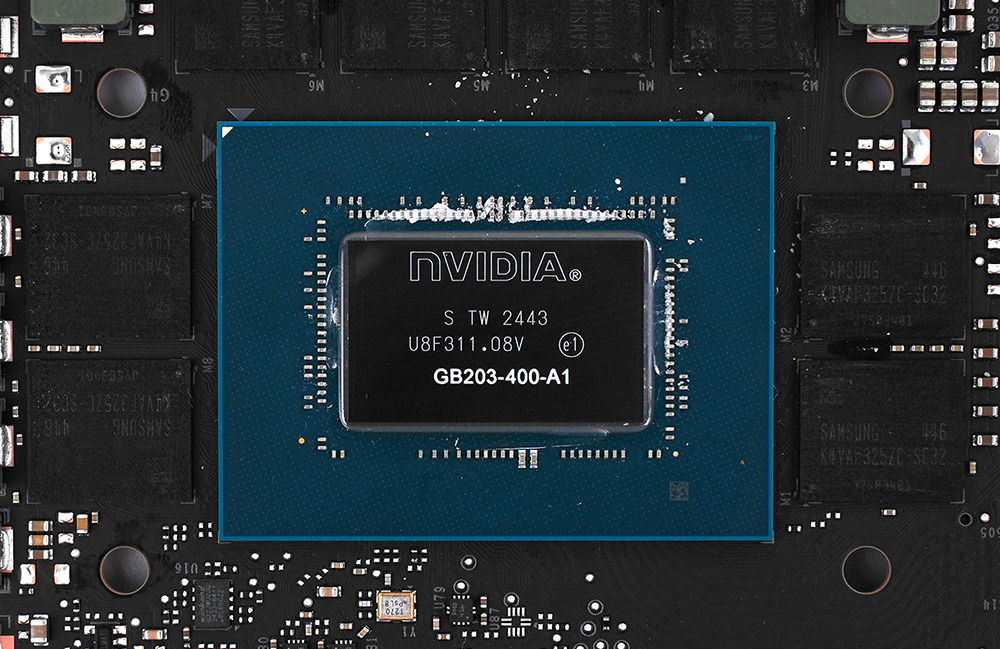
NVIDIA may be preparing a new GeForce RTX 5070 variant built around the larger GB203 Blackwell processor normally associated with the RTX 5070 Ti and RTX 5080. The change would replace the GB205 silicon currently used by the RTX 5070, but current information suggests NVIDIA intends to preserve the same 6,144 CUDA cores, 12 GB of GDDR7 memory, 192 bit memory interface, and 250 W power target rather than using the larger chip to increase gaming performance. The report originates from hardware leaker Hongxing2020 and has not been confirmed by NVIDIA.
The physical difference between the 2 processors is substantial. GB205 measures approximately 263 mm² and contains 31.1 billion transistors, while GB203 increases to approximately 378 mm² and 45.6 billion transistors. That makes GB203 roughly 44% larger. A complete GB203 implementation can provide 10,752 CUDA cores and a 256 bit memory interface, as demonstrated by the RTX 5080, while the RTX 5070 Ti uses a partially disabled version with 8,960 CUDA cores. NVIDIA officially lists the standard RTX 5070 with 6,144 CUDA cores, 12 GB GDDR7, a 192 bit interface, and a 2.51 GHz boost clock.
| GPU Configuration | GPU Die | CUDA Cores | Memory | Memory Bus | TGP |
|---|---|---|---|---|---|
| RTX 5080 | GB203 | 10,752 | 16 GB GDDR7 | 256 bit | 360 W |
| RTX 5070 Ti | GB203 | 8,960 | 16 GB GDDR7 | 256 bit | 300 W |
| Reported RTX 5070 Variant | GB203 | 6,144 | 12 GB GDDR7 | 192 bit | 250 W |
| Current RTX 5070 | GB205 | 6,144 | 12 GB GDDR7 | 192 bit | 250 W |
To convert GB203 into an RTX 5070 while maintaining its current configuration, NVIDIA would need to disable approximately 42.9% of the CUDA cores available on the complete processor and reduce the active memory interface from 256 bit to 192 bit. This would effectively turn a processor originally designed for considerably faster graphics cards into an RTX 5070 class part, with much of its physical silicon disabled.
The 5070 uses the GB203 core.
— hongxing2020 (@hongxing2020) September 8, 2026
new driver drops tomorrow.
There is already direct precedent for this strategy within the Blackwell generation. NVIDIA originally produced the RTX 5060 around GB206, but manufacturers later introduced cards using the larger GB205 processor normally associated with the RTX 5070. MSI quietly introduced 4 RTX 5060 V1 models using the larger GB205 silicon while Yeston and Maxsun subsequently launched additional GB205 based RTX 5060 designs. Those models retained normal RTX 5060 specifications despite using the larger processor
The likely advantage is manufacturing flexibility rather than additional performance. Semiconductor dies that cannot operate with enough functional processing blocks to qualify for an RTX 5080 or RTX 5070 Ti can potentially be repurposed for lower tier products instead of being discarded. This process, commonly associated with semiconductor binning, allows NVIDIA to recover usable silicon while balancing supply between different GPU models. NVIDIA has not confirmed that defective or lower yielding GB203 dies are the reason behind the reported RTX 5070 revision, so this remains the most plausible industry explanation rather than an established fact.
Hongxing2020 also indicated that a new NVIDIA driver would arrive on September 9, potentially providing software support for the alternative RTX 5070 configuration. However, no confirmed relationship between the driver and GB203 has been established, and no verified device ID identifying the new card has surfaced at the time of writing. NVIDIA's official RTX 5070 specifications also remain unchanged.
For buyers, the larger processor should therefore not automatically be considered an upgrade. Unless NVIDIA enables additional CUDA cores, memory channels, cache, or different clock behavior, a GB203 RTX 5070 should target approximately the same performance as the existing GB205 model. Independent testing will be necessary to determine whether the larger silicon produces secondary differences in power efficiency, temperature, sustained clocks, or overclocking behavior.
Using GB203 inside an RTX 5070 would look like an upgrade when inspecting the silicon, but for gamers it could ultimately change almost nothing. NVIDIA has already demonstrated with the RTX 5060 that a larger Blackwell processor can be heavily disabled until it behaves like the smaller GPU it replaces.
The more interesting story is NVIDIA's manufacturing flexibility. Being able to redirect GB203 dies that cannot qualify for an RTX 5080 or RTX 5070 Ti into RTX 5070 production could improve usable yields and potentially increase supply without creating another GPU design. That becomes particularly valuable while graphics card pricing and component availability remain under pressure.
The concern is transparency. 2 RTX 5070 cards carrying essentially the same retail name could eventually contain physically different processors. Even if gaming performance remains identical, enthusiasts may still want to know which silicon they are buying, particularly if temperatures, efficiency, or overclocking characteristics differ.
Would you prefer an RTX 5070 using the larger GB203 die, or would you choose the original GB205 version until independent benchmarks confirm whether there are any practical differences?
