
Yeston and Maxsun Bring 16 Pin Power to GB205 Based RTX 5060 Cards
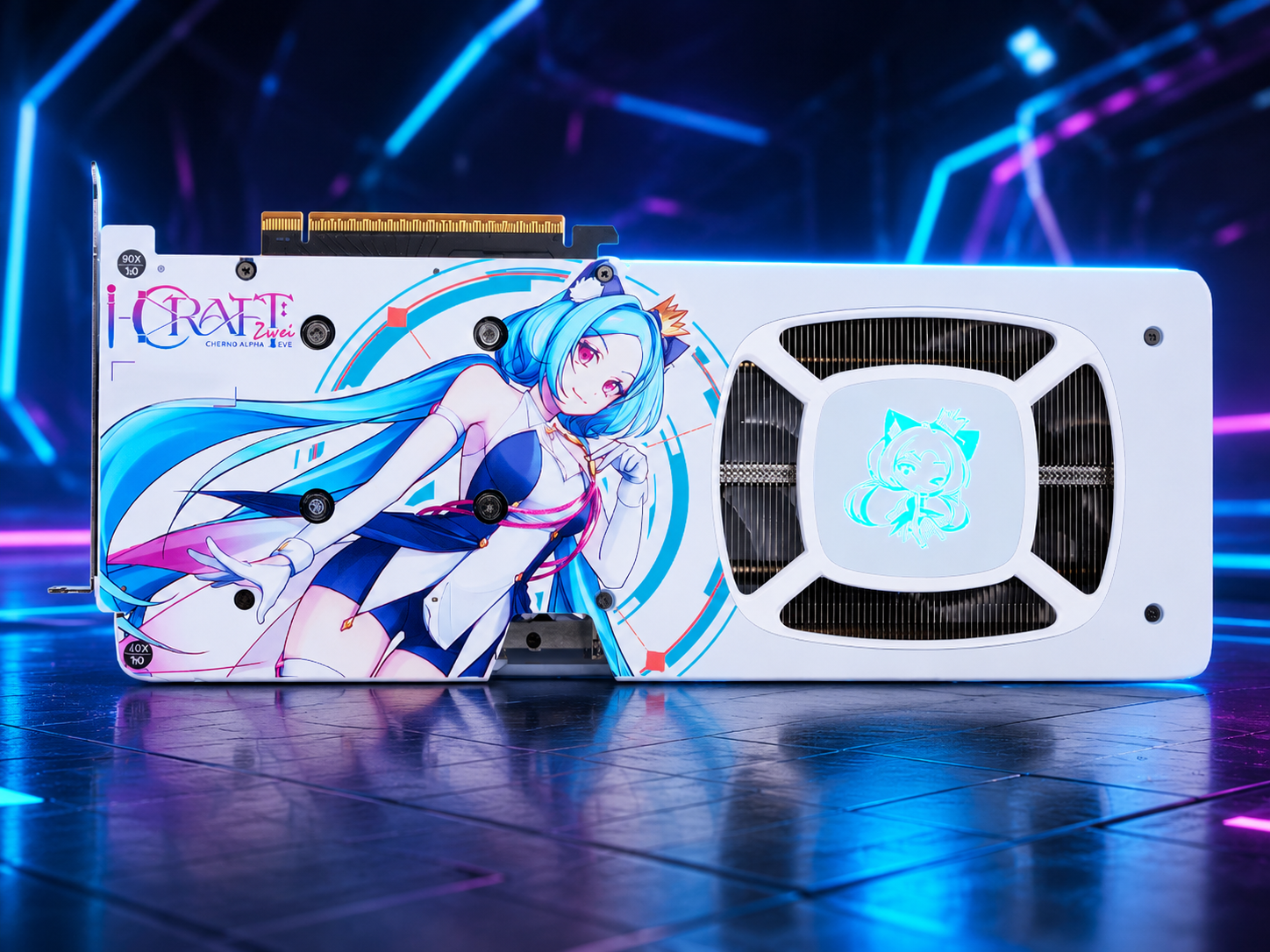
Yeston and Maxsun have released unusual GeForce RTX 5060 graphics cards that combine NVIDIA’s larger GB205 processor package with a 16 pin power connector normally associated with more demanding graphics cards. The models still operate within standard RTX 5060 specifications, meaning the connector change does not indicate additional performance or a higher power target.
The Yeston GeForce RTX 5060 Gaea and Maxsun GeForce RTX 5060 iCraft Cyber Magical Girl were examined through several Bilibili teardown videos, including additional PCB analysis and hardware inspection footage. The disassembled cards reveal a rectangular GPU package marked GB205 200 KA A1 rather than the smaller and more square GB206 package used by most RTX 5060 models.
GB205 is the processor design used by the GeForce RTX 5070, although these RTX 5060 variants are heavily disabled to maintain the expected configuration of 3,840 CUDA cores, 8 GB of GDDR7 memory, and a 128 bit memory interface. The cards populate only 4 of the 8 available memory positions on the larger PCB, with all active memory chips installed along one side of the processor. Reports suggest that part of the GB205 memory interface has been disabled, although NVIDIA has not officially confirmed the exact configuration of the KA revision.
Hardware analysis shared by Uniko’s Hardware indicates that Yeston and Maxsun retained a PCB originally designed for an RTX 5070 class graphics card. The boards include unused locations where an 8 pin power connector could potentially have been installed, but both manufacturers instead preserved the existing 16 pin layout. The cards also appear to use larger cooling assemblies derived from higher performance designs.
This differs from the recently introduced MSI RTX 5060 V1 lineup, but MSI redesigned those boards to retain the conventional 8 pin power connection. The MSI models also preserve normal RTX 5060 specifications, showing that using GB205 does not technically require the 16 pin connector.
NVIDIA officially rates the standard GeForce RTX 5060 at 145 W and lists support for either an 8 pin PCIe cable or a PCIe Gen 5 power cable, depending on the board partner design. This means the Yeston and Maxsun implementations remain within NVIDIA’s supported connector options, even though a 16 pin connection offers considerably more power capacity than the GPU requires.
The use of GB205 is most likely a manufacturing and supply optimization strategy. NVIDIA and its partners can potentially use larger processors that do not qualify for the complete RTX 5070 configuration rather than discarding them. However, NVIDIA, Yeston, and Maxsun have not officially explained why these specific cards use the larger die or reused PCB design.
The 16 pin connector is not automatically dangerous on a 145 W graphics card, since the RTX 5060 operates far below the power levels of flagship Blackwell models. The larger concern is practicality. An 8 pin connector is already more than sufficient, works with a wider range of existing power supplies, and avoids requiring an adapter in older systems.
These cards are ultimately interesting examples of supply chain flexibility rather than meaningful product upgrades. The larger GB205 package, additional memory positions, oversized cooling system, and 16 pin connector may make the board look closer to an RTX 5070, but the enabled specifications remain those of an RTX 5060. Buyers should therefore expect similar gaming performance unless independent testing identifies differences in temperatures, noise, or sustained clock speeds.
Would you purchase an RTX 5060 with a larger GB205 processor and 16 pin connector, or would you prefer the simpler GB206 and 8 pin design?
