
NVIDIA RTX 30 and RTX 40 GPUs Gain Up to 2X AI Compute Performance as Used Prices Surge
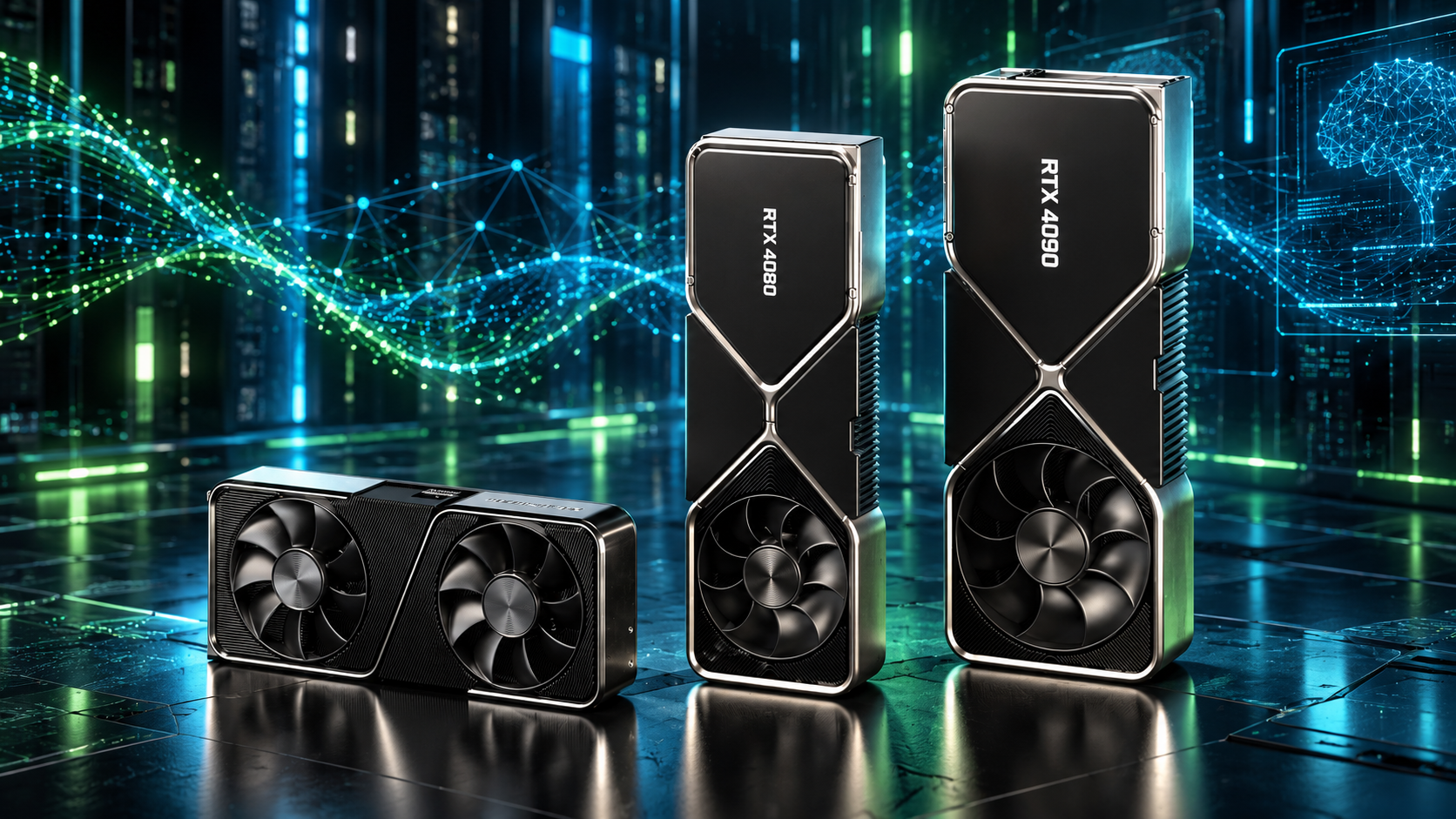
NVIDIA's GeForce RTX 30 and select RTX 40 Series graphics cards are receiving substantial AI performance improvements through an unofficial GPU unlocking project, potentially extending their usefulness for local large language models (LLMs), image generation and machine learning. The open source GPU Unlock utility can nearly double Tensor Core throughput in specific operations, while growing interest in older high VRAM graphics cards is reportedly pushing secondary market prices considerably higher.
Developed by Zagitta, GPU Unlock removes an instruction processing limitation affecting FP16 and BF16 Tensor Core operations on NVIDIA's Ampere architecture. The Linux kernel module modifies hardware speed selectors before the official NVIDIA driver initializes, restoring instruction throughput closer to professional GPU configurations without requiring hardware modifications, permanent VBIOS flashing or patched graphics drivers.
The project supports several RTX 30 Series GPUs based on GA102, GA103, GA104 and GA106 silicon, although individual compatibility and performance gains vary. Independent developers have also expanded the approach to select Ada Lovelace GPUs, with the experimental RTX 40 Series implementation demonstrating substantial improvements on the RTX 4090 and RTX 4070 Ti SUPER. Broader RTX 40 Series compatibility remains unverified.
NVIDIA RTX 3090 Ti Compute Performance
| Precision | Before Unlock | After Unlock | Improvement |
|---|---|---|---|
| FP16 | 87.46 TFLOPS | 118.39 TFLOPS | +35% |
| BF16 | 87.50 TFLOPS | 157.41 TFLOPS | +80% |
| TF32 | 42.58 TFLOPS | 82.61 TFLOPS | +94% |
Results are community benchmarks using dense matrix multiplication with FP32 accumulation at a 450W power limit. They do not represent equivalent improvements across all AI workloads.
Real world results are more dependent on workload characteristics. Community testing indicates that LLM prompt processing, also known as prefill, can improve by approximately 14% to 36%, while time to first token can decrease. AI image generation workloads using BF16 have demonstrated throughput improvements approaching 60%. However, sequential token generation often remains limited by memory bandwidth, meaning the unlock provides little improvement in decoding performance.
For the RTX 40 Series, experimental testing on an RTX 4090 recorded FP16 throughput increasing from 165.6 to 331.6 TFLOPS, although independent validation remains limited. The tool does not increase VRAM capacity, memory bandwidth or CUDA core counts, and there is currently no verified evidence of gaming FPS or DLSS performance improvements.
Meanwhile, demand for older NVIDIA GPUs is creating additional pressure on the used market. Reported eBay asking prices have placed the RTX 3090 24GB above $2,000, with some RTX 3090 Ti listings approaching $3,000 and RTX 3080 models advertised between $900 and $1,100. These figures represent reported listings rather than verified market averages or completed transactions, and the unlocking tool has not been established as the direct cause of the increases.
The situation resembles renewed interest in NVIDIA's CMP 170HX accelerator, where community modifications restored previously inaccessible capabilities and attracted buyers seeking affordable AI hardware. Combined with ongoing optimizations for local RTX AI workloads, these developments demonstrate the expanding role of consumer graphics cards beyond gaming.
GPU Unlock remains an experimental Linux utility that modifies low level GPU initialization. Users should consider potential stability and compatibility risks before deployment, particularly on systems handling important workloads.
GPU Unlock demonstrates that older consumer graphics cards still have considerable untapped potential for AI computing. The RTX 3090 is particularly attractive because its 24GB VRAM capacity can accommodate larger local models, while improved Tensor Core throughput can accelerate compute intensive operations without purchasing new hardware.
However, doubling theoretical compute throughput does not mean doubling LLM performance. Memory bandwidth, model quantization and inference engine optimization remain critical factors. The increasing demand for high VRAM GPUs also creates an interesting market shift, where aging gaming hardware can become more valuable to AI developers than gamers. For users already owning compatible RTX cards, this development could extend their hardware's useful lifespan considerably.
Would you use GPU Unlock to improve local AI performance on an older RTX graphics card, or would you rather invest in a newer GPU with more VRAM? And do you think the growing demand for local AI will continue driving used GPU prices higher?
