
NVIDIA CMP 170HX Prices Surge as Unlock Tool Reveals Up to 64 GB of Usable HBM2e
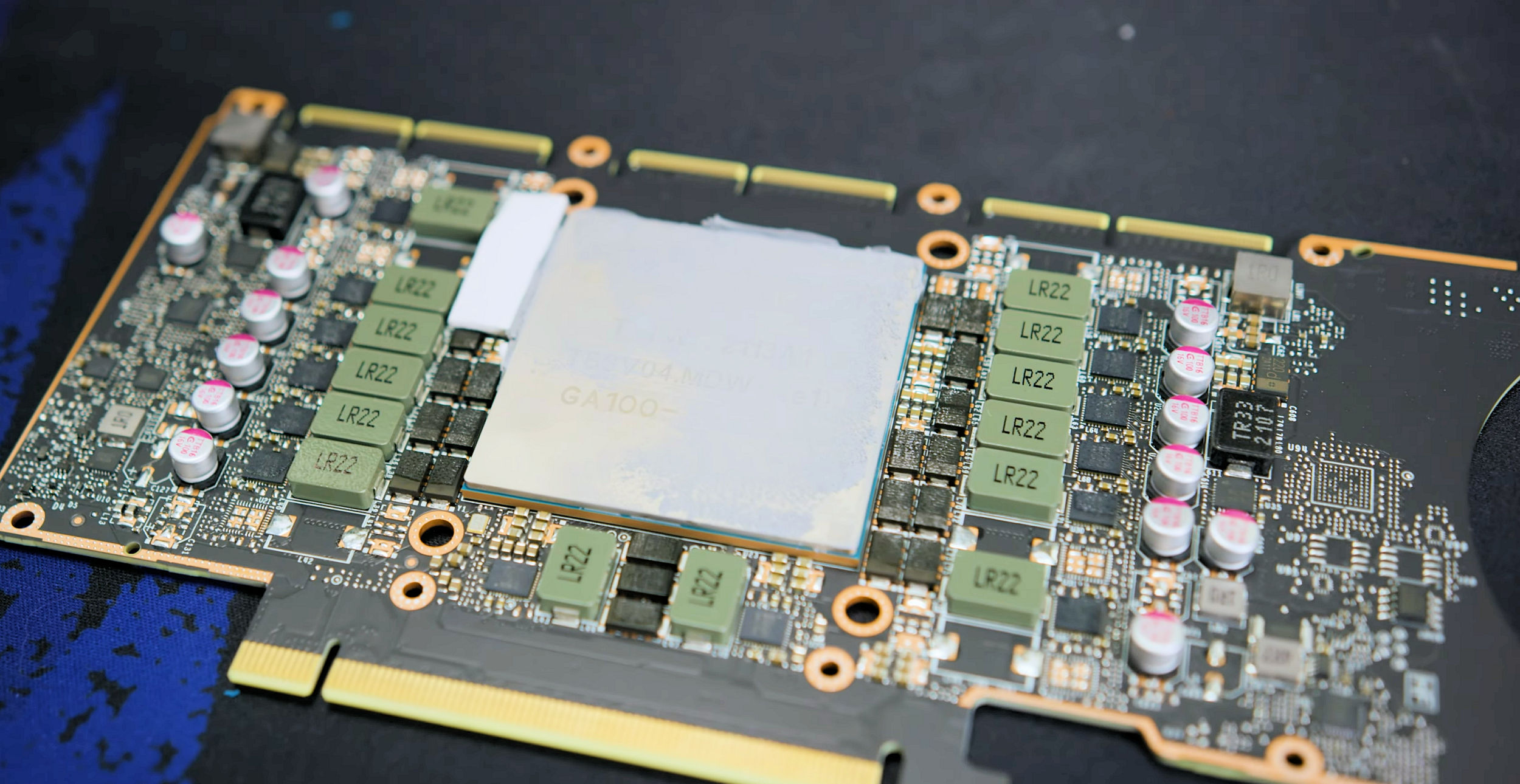
NVIDIA's largely forgotten CMP 170HX cryptocurrency mining accelerator has suddenly become one of the most unusual budget AI GPUs on the secondary market after an open source project successfully restored much of the compute performance and hidden HBM2e capacity disabled on the card. Prices that had fallen into the low hundreds of dollars are now climbing rapidly, with current listings exceeding $1,000 and some modified 64 GB cards appearing above $2,000 as buyers explore the accelerator for local AI, machine learning, and high memory workloads.
The reason is CMPUnlocker, an open source project targeting the NVIDIA CMP 170HX and its GA100 silicon. The tool modifies NVIDIA's open Linux kernel driver to restore full Streaming Multiprocessor compute throughput, change the accessible HBM2e memory geometry, enable PCIe Gen 2 speeds, and make the configuration persist following a reboot. The current version targets NVIDIA open driver 610.43.0x on Linux and requires root access, matching kernel headers, Python 3, and Secure Boot to be disabled.
The CMP 170HX originally arrived during the cryptocurrency mining boom as a specialized accelerator without conventional graphics capabilities. It uses the same GA100 architecture family that powered NVIDIA's A100 data center accelerators, but NVIDIA heavily restricted several areas of the card. Research into the 8 GB version identifies 4,480 CUDA cores, 70 Streaming Multiprocessors, 280 Tensor Cores, 250W power consumption, and approximately 1,493 GB/s of HBM2e bandwidth. Previous testing also found FP32 FMA performance artificially limited to around 0.39 TFLOPS despite substantially more compute resources physically existing on the silicon.
| Feature | Status |
|---|---|
| Full SM Compute Throughput (SS0/SS1) | Working ✓ |
| Memory Geometry (64 GB on 8 GB Cards, 40 GB on 10 GB Cards) | Working ✓ |
| PCIe Gen 2 Speeds | Working ✓ |
| JTAG (Host2Jtag Register Access) | Working ✓ |
| Persistence Across Reboot (Patched Modules) | Working ✓ |
CMPUnlocker changes that equation considerably. According to the project's current documentation, an 8 GB CMP 170HX can expose 64 GB of HBM2e, while the 10 GB version currently has a supported 40 GB memory configuration. The 8 GB modification has also been independently documented running CUDA with 65,536 MiB of detected memory after the driver patches are applied.
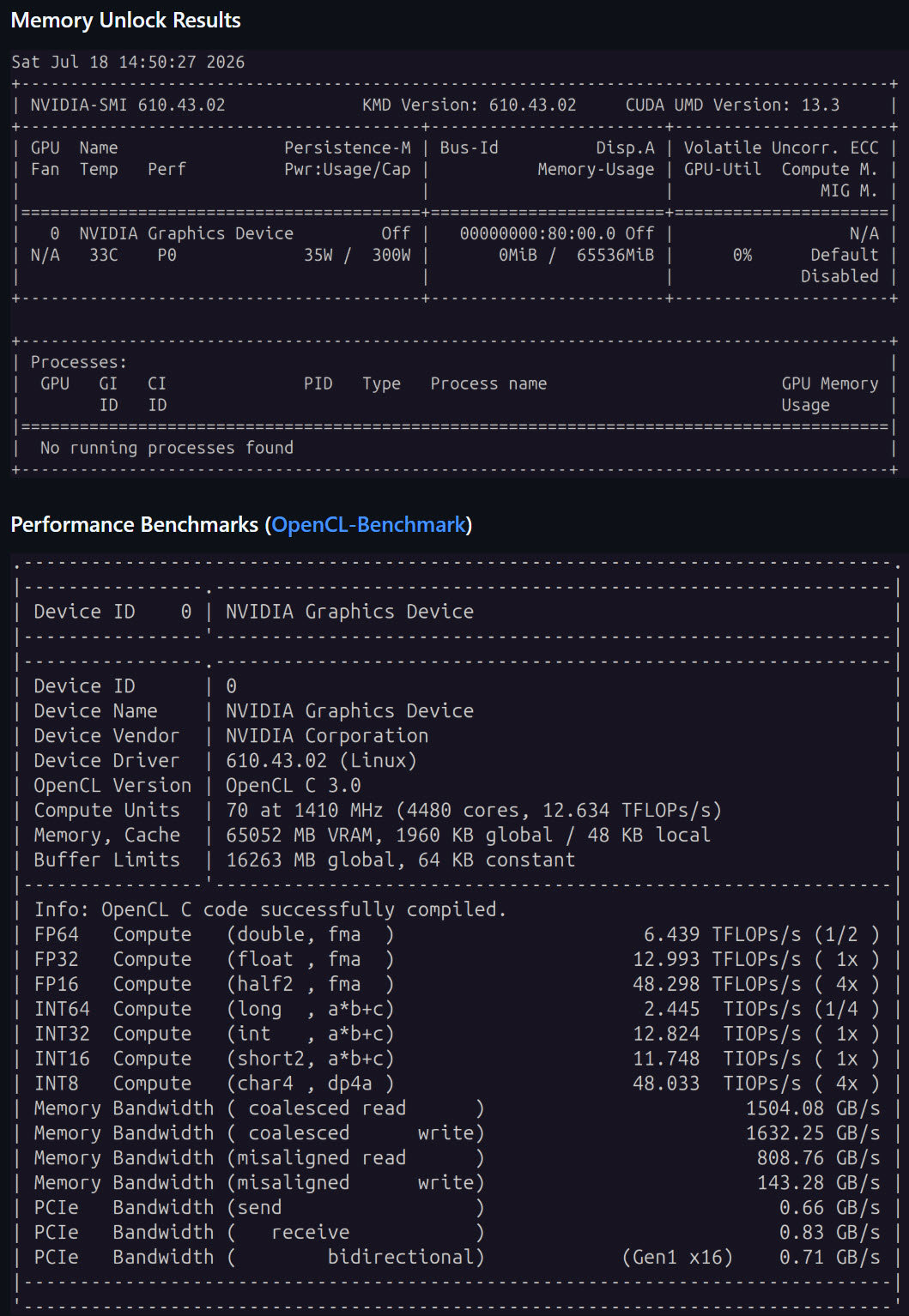
Claims surrounding 80 GB require considerably more caution. Some CMP 170HX 10 GB cards appear to physically contain enough HBM2e capacity for an 80 GB geometry, and experimental modifications have attempted to expose the complete amount. However, the main CMPUnlocker repository currently lists 40 GB rather than 80 GB as the working configuration for 10 GB cards. A separate test published on August 9 also found that an experimental 80 GB configuration could access the memory through GPU kernels but encountered GSP crashes when DMA transfers moved beyond roughly 40 GB. Current sellers are similarly describing 40 GB as the stable configuration while listing 80 GB as experimental.
That distinction matters because these cards were never manufactured as inexpensive A100 replacements. CMP 170HX units could incorporate GA100 silicon or memory configurations that did not qualify for higher end products, meaning available memory, stability, frequency behavior, and overall silicon quality can vary considerably between individual cards. Unlocking additional resources does not guarantee every disabled component will operate reliably.
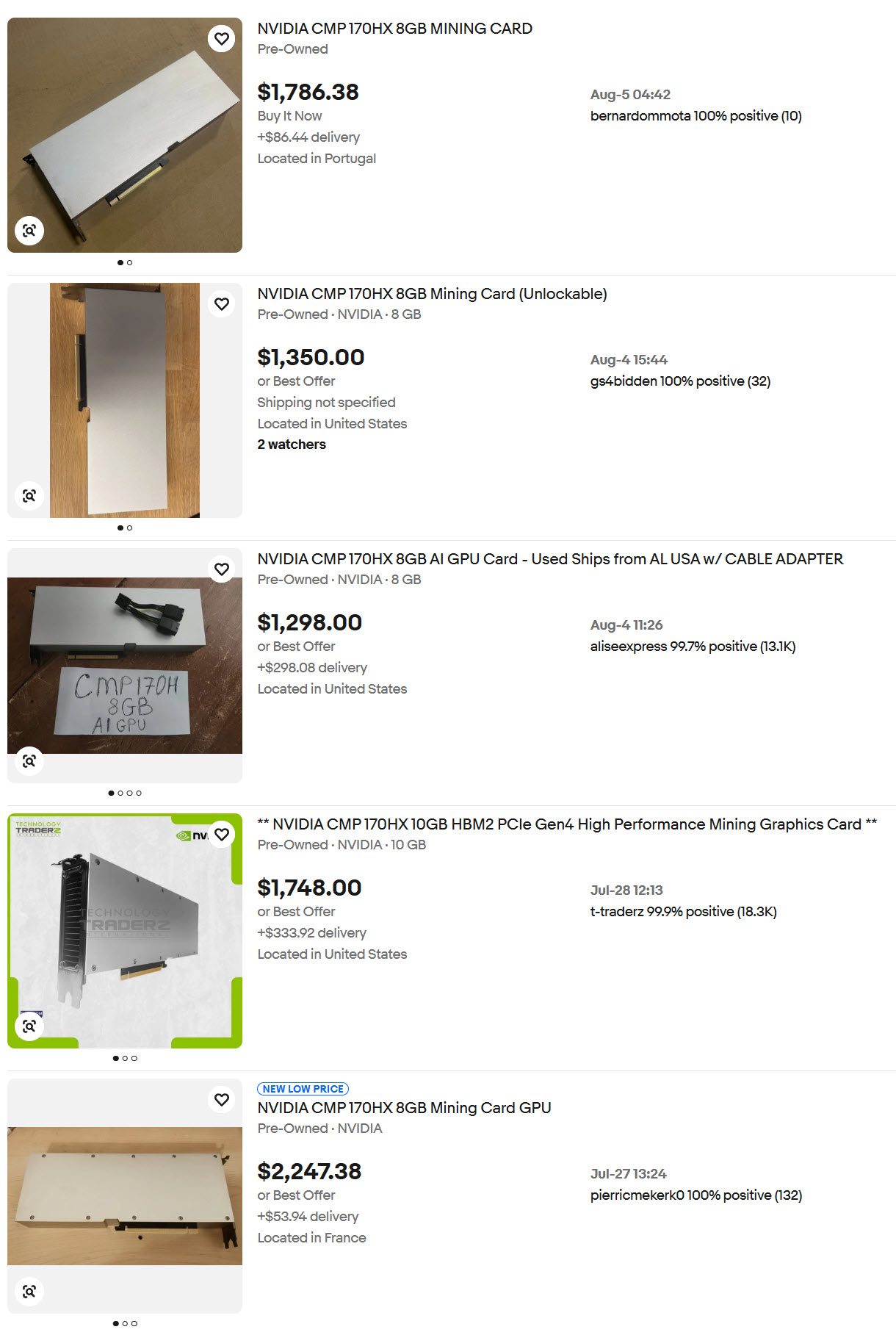
The market has reacted quickly regardless. Current eBay results include standard CMP 170HX cards around $588 to $650, a 10 GB model advertised as 40 GB unlockable for $1,150, and a preconfigured 8 GB card unlocked to 64 GB listed for approximately $2,331. This is a major reversal for hardware that previously traded for only a fraction of its original value following the collapse of GPU cryptocurrency mining.
For AI enthusiasts, the attraction is obvious. VRAM capacity has become one of the largest barriers to running larger language models locally, and 40 GB or 64 GB of HBM2e at these prices is highly unusual. NVIDIA's actual A100 80 GB provides 80 GB of HBM2e with more than 2 TB/s of memory bandwidth and a complete enterprise feature set, so the CMP 170HX should not be treated as equivalent hardware simply because it shares the GA100 architecture.
The renewed demand also arrives while AI continues placing extraordinary pressure on advanced memory. As covered in our report on NVIDIA preparing early for the global memory shortage, HBM capacity has become a strategic resource throughout the accelerator industry. Repurposing discarded mining hardware with tens of gigabytes of HBM2e therefore becomes considerably more attractive when new AI accelerators with comparable memory capacities remain expensive.
The CMP 170HX has gone from cryptocurrency relic to one of the most fascinating pieces of experimental AI hardware almost overnight. A 64 GB HBM2e accelerator for around $1,000 sounds extraordinary in a market where VRAM capacity often determines whether a model can run locally at all.
But buyers should separate the engineering achievement from the marketplace hype. The current open source project demonstrates a working 64 GB configuration on compatible 8 GB cards and 40 GB on the 10 GB version. 80 GB is far more experimental, with new testing already exposing stability problems above 40 GB. These cards also require modified drivers, Linux configuration, specialized cooling, and tolerance for hardware variation.
For enthusiasts willing to experiment, the CMP 170HX could still offer exceptional memory capacity for the money. For anyone expecting a cheap A100 80 GB with enterprise reliability, it remains a considerably bigger gamble.
Would you risk more than $1,000 on an unlocked CMP 170HX with 40 GB or 64 GB of HBM2e for local AI, or would you prefer newer hardware with less memory but official support?
