
NVIDIA CFO Says Rivals Were Caught Off Guard By Memory Shortage As AI Demand Pushes Prices Higher

NVIDIA CFO Collette Kress has taken a confident stance on the ongoing memory shortage, suggesting that other companies should have anticipated the surge in memory pricing much earlier. As demand from AI hardware continues to reshape the memory market, Kress said NVIDIA had already prepared by ordering supply in advance and working directly with memory suppliers before prices moved sharply higher.
The current shortage is affecting both high bandwidth memory and DDR memory. AI GPUs require massive amounts of HBM, but they also depend on DDR memory across surrounding systems. Since HBM and DDR production can compete for the same manufacturing resources, rising AI demand has pushed memory suppliers to prioritize advanced AI related products, reducing available capacity for other markets.
This supply pressure has created major ripple effects across the technology industry. Memory prices have climbed, AI chip companies are securing supply more aggressively, and companies that failed to prepare early are now dealing with tighter availability and higher costs. At the same time, major memory producers such as SK hynix have benefited from the AI driven demand surge, while Samsung has faced internal pressure from workers amid the changing market dynamics.
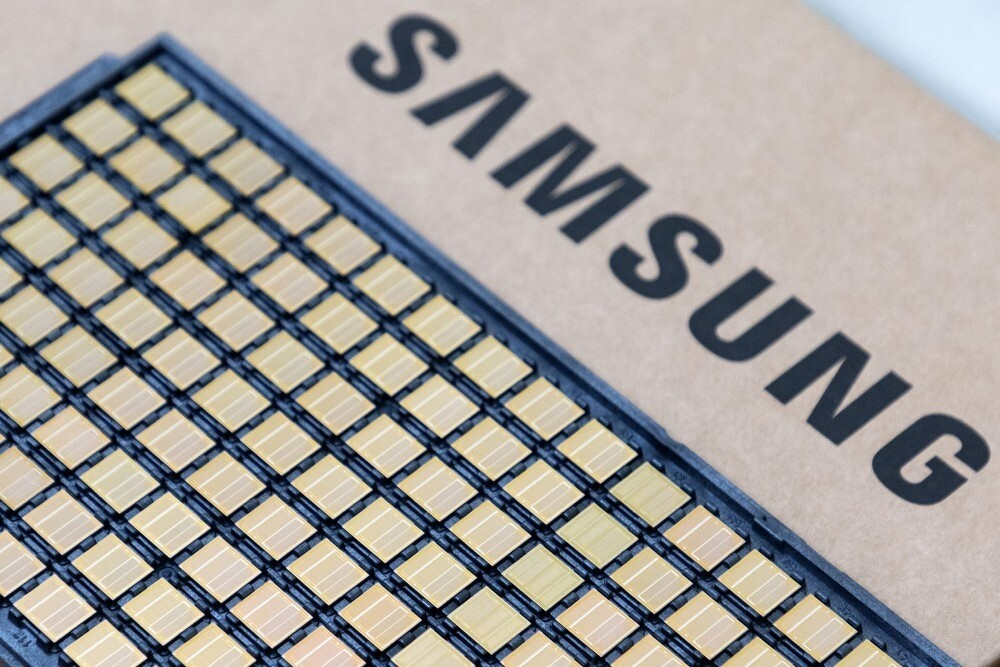
One estimate mentioned in the report suggests that NVIDIA’s Rubin AI platform alone could require more memory than Apple and Samsung combined. Rubin AI chips may need as much as 6 billion GB of LPDDR memory in 2027, compared with an estimated 2.9 billion GB for Apple and 2.7 billion GB for Samsung. If accurate, that would underline how aggressively AI infrastructure is consuming global memory capacity.
Kress addressed the issue in an interview with Tae Kim, explaining that NVIDIA had expected memory prices to rise and had acted before the shortage became more painful for the broader market. According to her, other companies are now reacting to a price surge that NVIDIA had already planned around.
“Are sitting here going, oh my gosh, the memory price went up.”
“Knew that was going to happen.”
“Something everybody should have, at least we did, ordered a long time ago.”
— Collette Kress
Her comments suggest that NVIDIA’s advantage is not only based on demand for its AI GPUs, but also on supply chain discipline. Rather than relying on available market inventory, NVIDIA has been working directly with memory suppliers to design and secure the components needed for its future platforms.
“They’re designing it with us. And then they go, now how much supply do we need? And we’re not just doing it with one. We’re doing it with all three memory suppliers. We say, here’s what we’re building. And then we’ve got to get them all in line and working with us. I don’t see another company doing that.”
— Collette Kress
That statement highlights one of NVIDIA’s most important structural advantages in the AI era. The company is not simply buying finished memory products after they are available. It is coordinating with the world’s major memory suppliers during the design and planning stage, aligning future AI platform needs with long term supply commitments.
This approach gives NVIDIA more control at a time when memory has become one of the most critical bottlenecks in AI infrastructure. As AI models grow larger and more complex, memory capacity, bandwidth, and availability are becoming just as important as raw compute performance. A company that can secure memory earlier can better protect product roadmaps, maintain shipment schedules, and reduce exposure to sudden pricing shocks.
The shortage also creates opportunities for new suppliers. As Samsung, SK hynix, and Micron prioritize HBM and other AI focused products, gaps are appearing in the broader DDR market. Chinese memory companies are increasingly being viewed as potential beneficiaries, especially as PC OEMs, module makers, and system builders look for alternative supply sources.
For NVIDIA, Kress’s comments reinforce the company’s position as a supply chain leader, not just an AI hardware leader. The company understood that the AI boom would push memory demand far beyond normal cycles, and it secured supply before competitors were forced into a more expensive market.
For the rest of the industry, the message is more difficult. Memory is no longer a background component that can be sourced late in the planning process. In the AI era, memory is a strategic resource, and companies that fail to secure it early may find themselves paying more, shipping later, or losing competitiveness.
Do you think NVIDIA’s early memory supply strategy gives it an unbeatable AI hardware advantage, or can rivals still catch up through stronger supplier partnerships?
