
NVIDIA Jetson Orin Nano 2 Doubles Edge AI Performance for Robotics
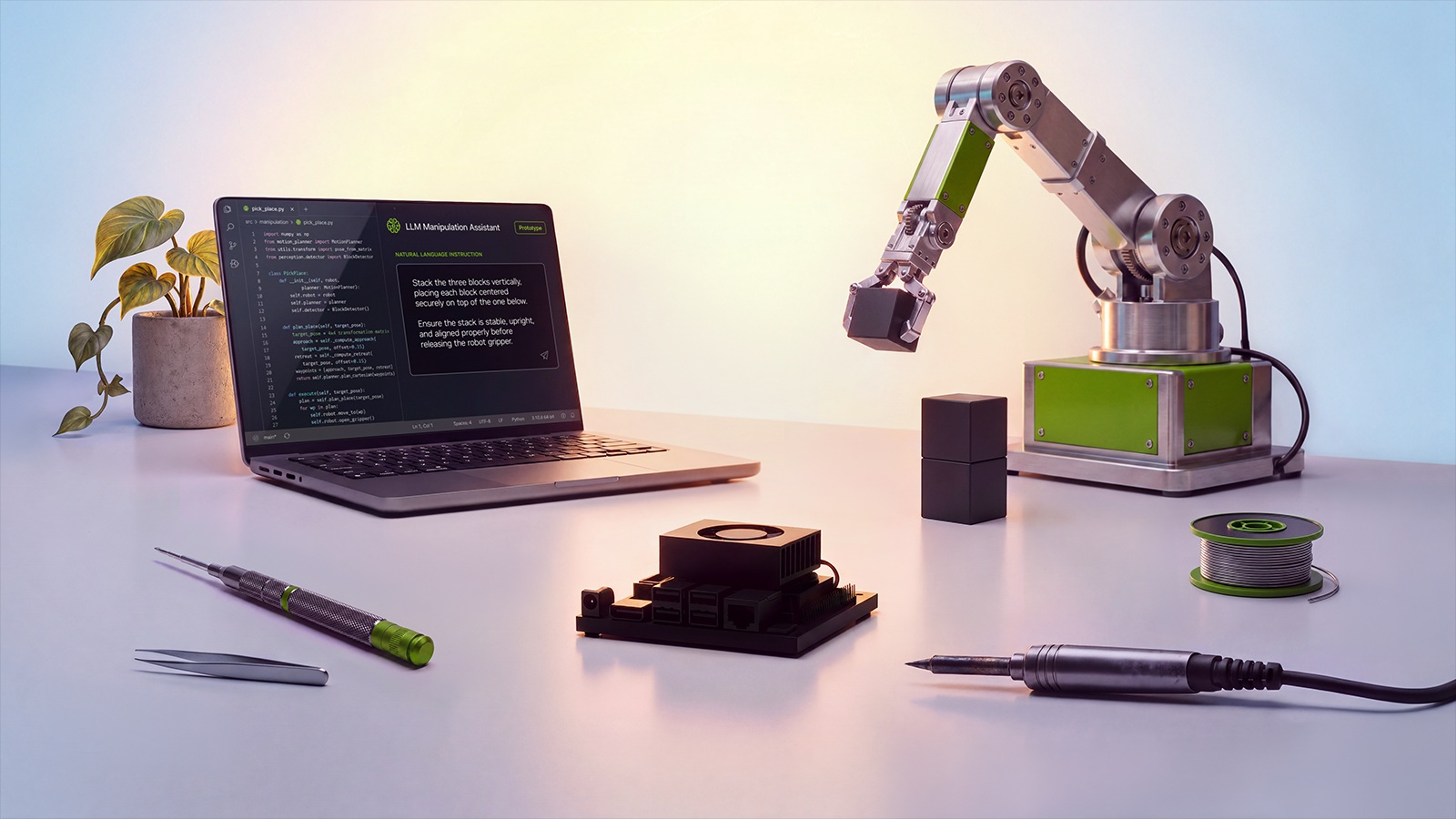
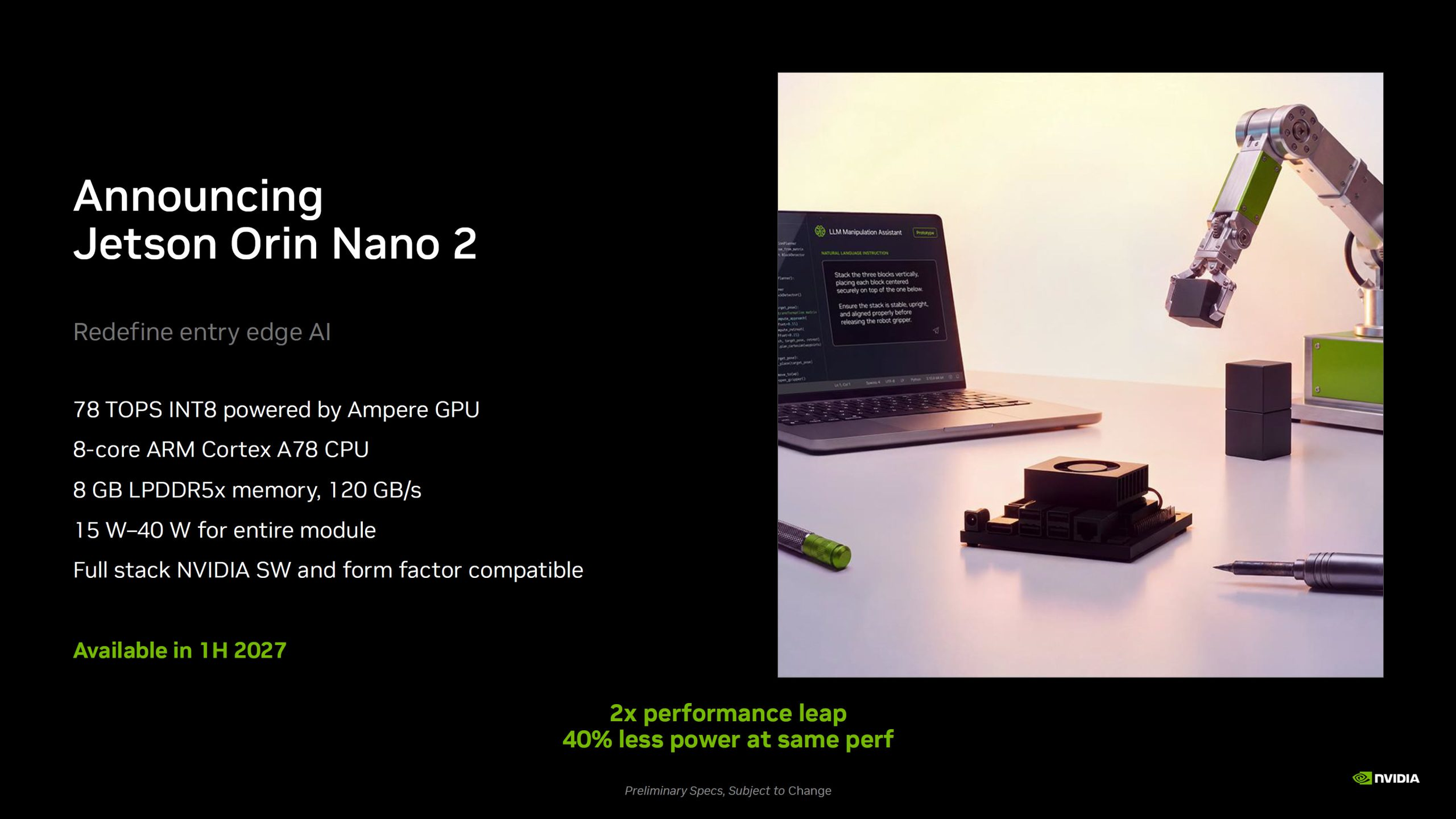
NVIDIA has introduced the Jetson Orin Nano 2, a new compact robotics computer designed to bring substantially faster generative AI inference to entry level robots, drones and vision systems. The new module delivers 78 TOPS of AI compute and approximately 2x the inference performance of the Jetson Orin Nano Super while retaining the same compact form factor, giving developers more performance without requiring a complete redesign of existing Jetson based systems.
Jetson Orin Nano 2 combines an Ampere based NVIDIA GPU with improved Tensor Cores, an 8 core Arm CPU and 8 GB of LPDDR5X memory. Memory bandwidth increases to approximately 120 GB/s, helping the module feed larger AI models and process vision workloads more efficiently. NVIDIA also raises the available power envelope to 40 W for maximum performance, but efficiency receives an equally important improvement. When operating at 15 W, Jetson Orin Nano 2 can deliver the same performance as its predecessor while consuming 40% less power.
That efficiency matters considerably for physical AI because many edge systems cannot rely on large batteries, aggressive cooling or continuous external power. Delivery drones, inspection robots, autonomous mobile machines and compact vision systems need enough local compute to understand their surroundings while staying inside strict thermal and energy limits. Doubling inference performance within essentially the same physical footprint gives developers more room to run increasingly capable perception, reasoning and language models directly on the device instead of continuously sending data back to cloud servers.
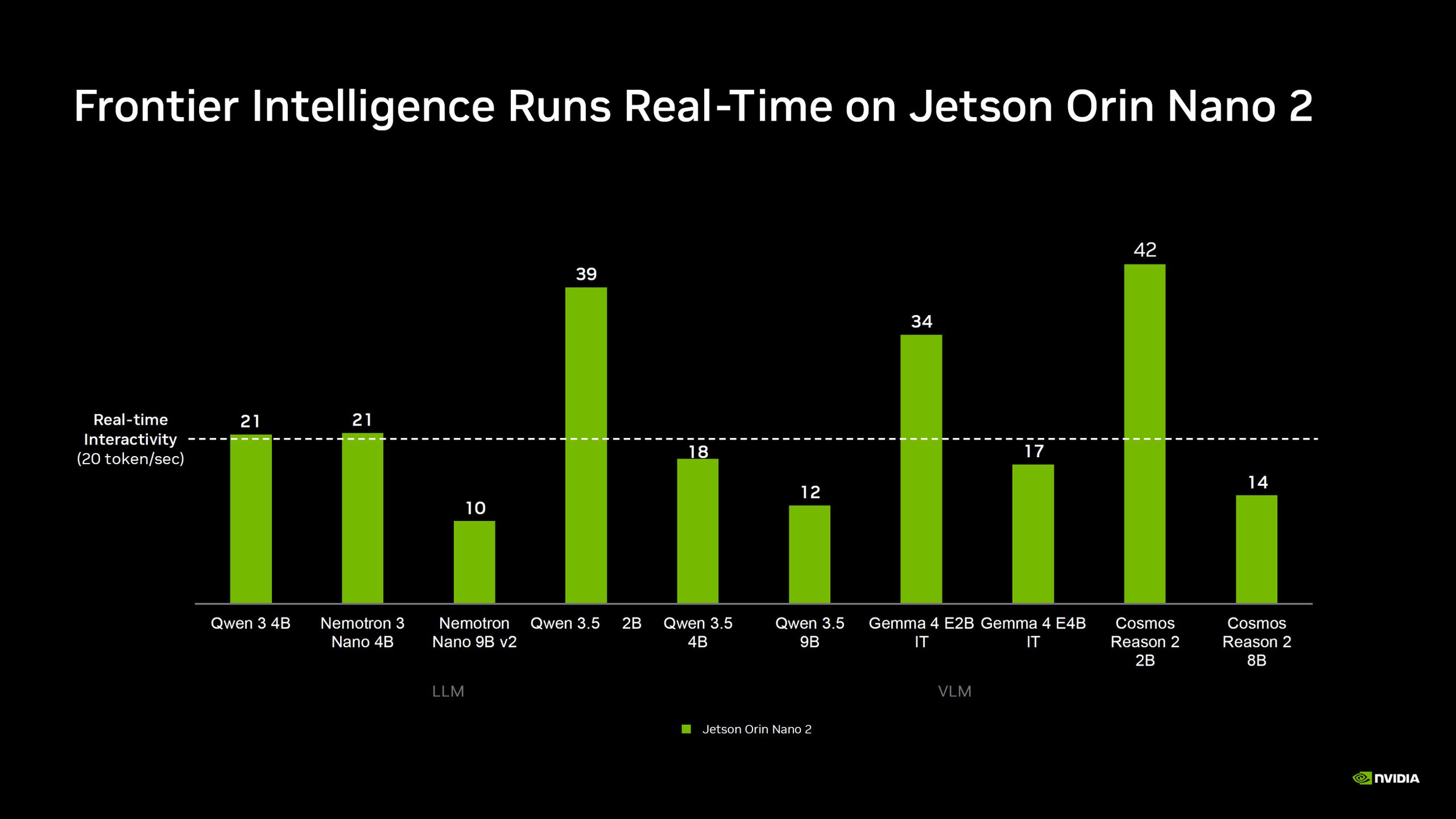
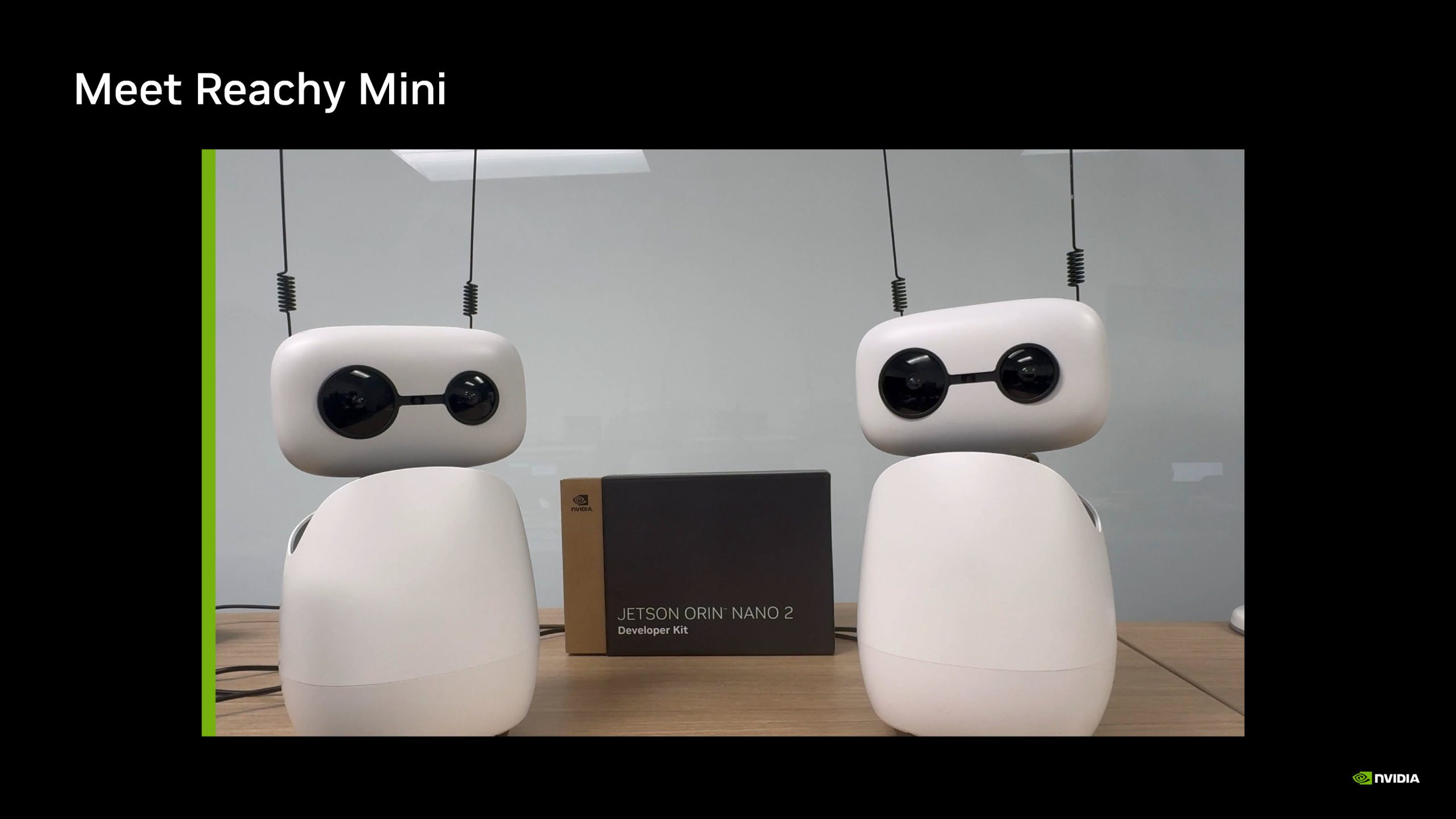
NVIDIA says Jetson Orin Nano 2 can run modern large language models and vision language models optimized for memory efficient inference, including NVIDIA Cosmos, Nemotron, Gemma 4 and Qwen 3. This extends Jetson beyond traditional computer vision toward systems capable of combining cameras, speech, language and reasoning locally. NVIDIA demonstrated the platform with a Reachy Mini robot simultaneously handling a language model, speech processing and real time vision AI, illustrating the type of multimodal workloads the company wants developers to deploy at the edge.
More than 3 million developers now build on NVIDIA's robotics software stack, and several companies are already evaluating or adopting the new module. Alphabet subsidiary Wing plans to evaluate Jetson Orin Nano 2 for its delivery drones, while Matic is adopting it for home robots that combine conversational AI, gesture recognition, mapping, semantic understanding and autonomous navigation. Cognex and Doosan Bobcat are also among the early companies exploring the platform.
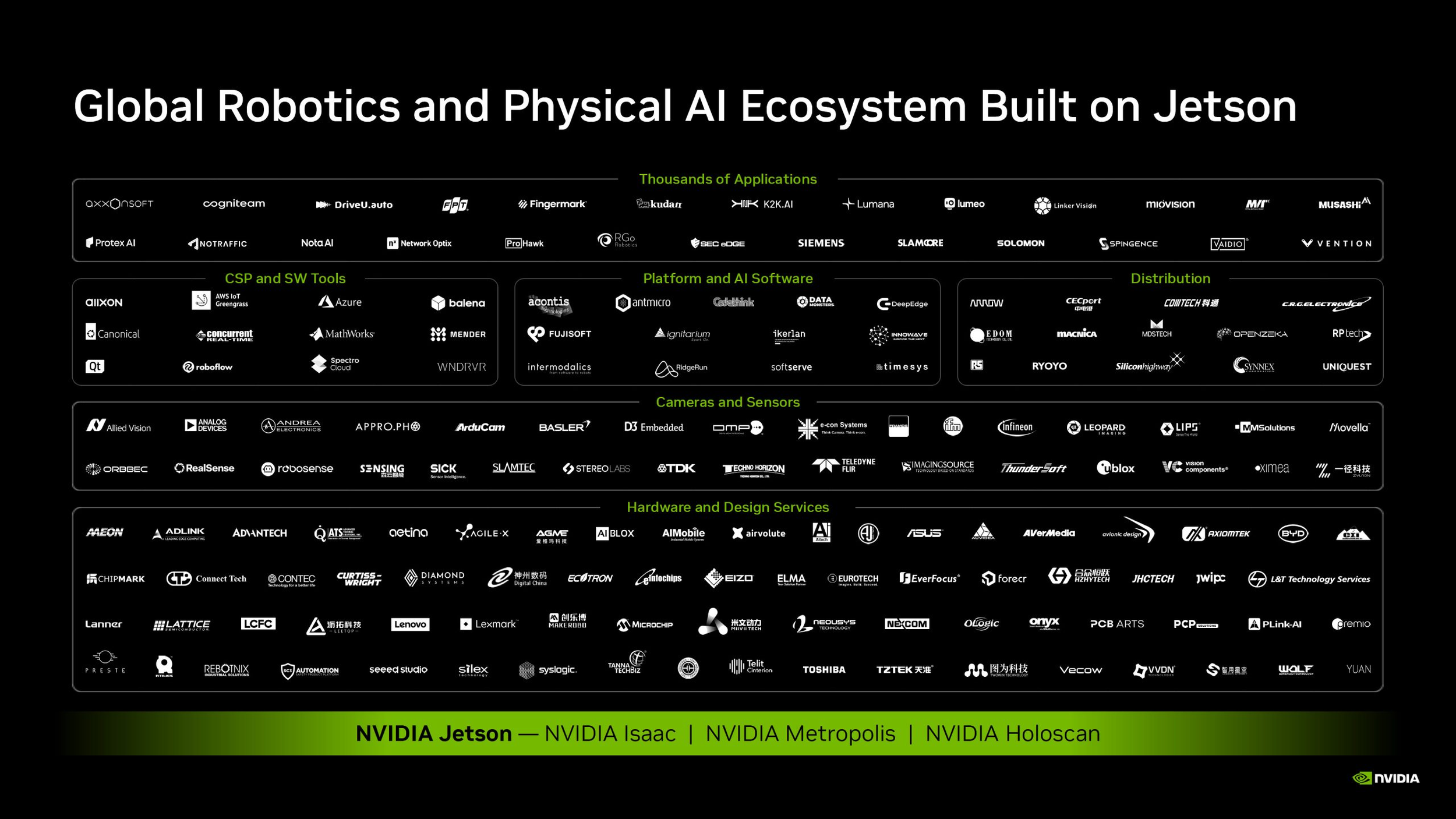
The new system fills the entry level side of an increasingly broad NVIDIA robotics portfolio. At the opposite end, the company recently expanded Jetson Thor with T3000 and T2000 modules, bringing Blackwell based computing into more demanding humanoid, industrial and visual AI systems. NVIDIA and LG are also developing a next generation humanoid platform built around Jetson Thor, demonstrating how NVIDIA is building a robotics stack that now extends from compact developer hardware to industrial humanoids and AI factories.
Jetson Orin Nano 2 modules and developer kits are scheduled to become available during H1 2027. NVIDIA has not yet announced final retail pricing for the new platform.
Jetson Orin Nano 2 is less about introducing a completely new architecture and more about extracting considerably more useful performance from an established edge platform. That may actually make it more important for robotics developers. Keeping the familiar form factor while doubling inference performance reduces migration friction, and delivering predecessor level performance at 40% lower power could be even more valuable for battery powered machines.
NVIDIA is also creating a clear performance ladder for physical AI. Jetson Orin Nano 2 targets accessible robots, cameras and drones, while Jetson Thor handles far more demanding autonomous and humanoid systems. As smaller AI models become capable enough to perform sophisticated reasoning locally, inexpensive edge hardware could become one of the most important parts of the robotics market.
Could faster and more efficient edge AI hardware like Jetson Orin Nano 2 accelerate affordable home robotics, or will software remain the bigger obstacle?
