
Apple Unveils M6 Mac mini and Quad Die M5 Ultra Mac Studio
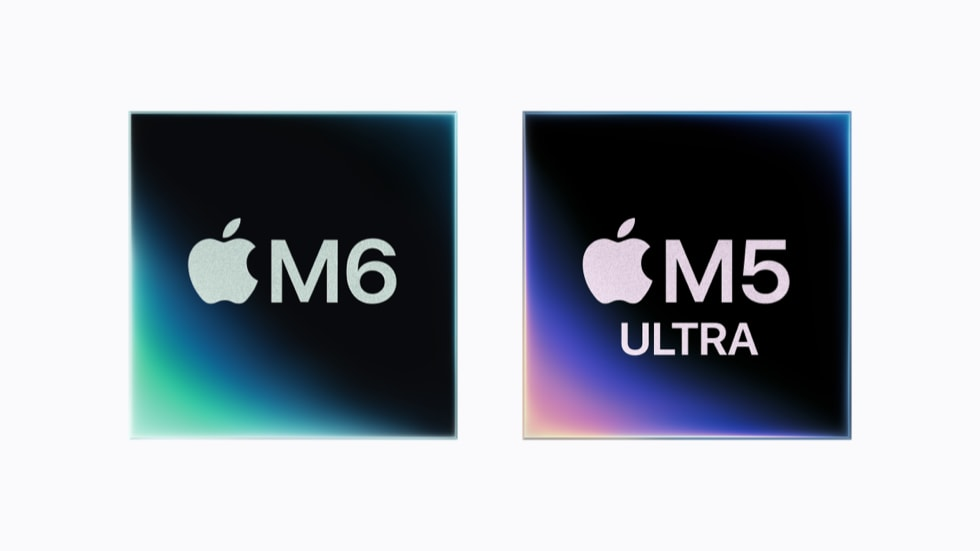
Apple has officially introduced 2 major additions to its desktop lineup, debuting the company's first 2 nm M6 processor inside a refreshed Mac mini while simultaneously launching the M5 Ultra in a new Mac Studio. The M6 and M5 Ultra announcement pushes Apple silicon in 2 very different directions, with M6 targeting compact everyday computing, gaming and local AI, while M5 Ultra becomes Apple's first quad die processor and its most powerful desktop chip yet.
The M6 introduces a redesigned 12 core CPU with 2 super cores, 4 performance cores and 6 efficiency cores, alongside a 12 core GPU with a Neural Accelerator integrated into every GPU core. Apple has also added a Dual 16 core Neural Engine that can operate both engines simultaneously for AI workloads. The chip supports up to 32 GB of unified memory and delivers up to 170 GB/s of memory bandwidth, approximately 10% higher than M5. Apple claims M6 provides up to 1.2x faster multithreaded CPU performance than M5, nearly 30% higher peak GPU AI compute and a 50% increase in geometry processing capability.
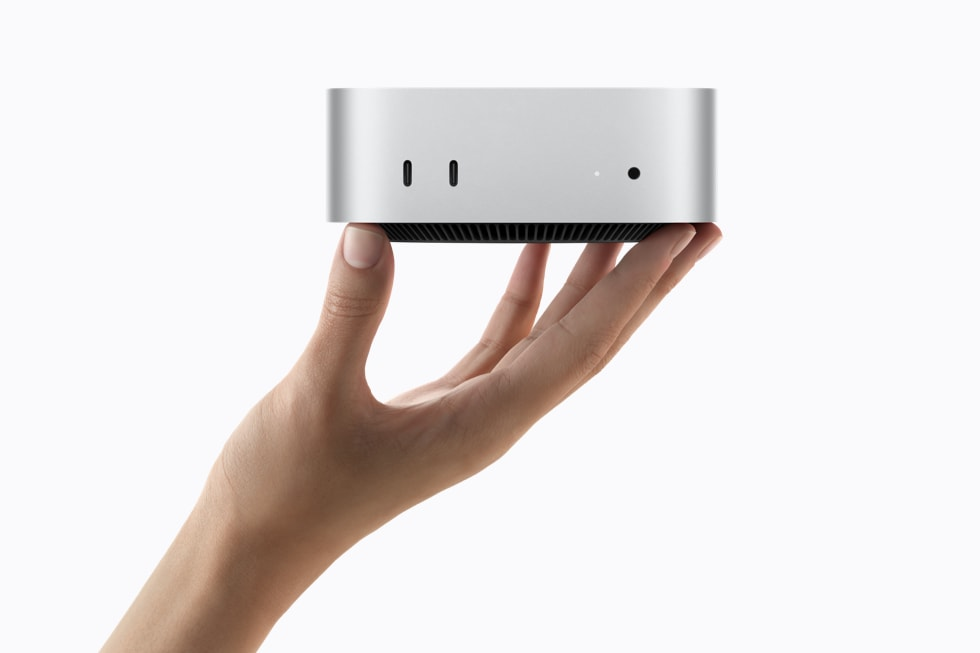
Gaming also receives a meaningful upgrade. Apple says the new M6 Mac mini can deliver up to 2x higher gaming performance with ray tracing in Cyberpunk 2077: Ultimate Edition compared with the M4 Mac mini. The GPU includes updated Dynamic Caching, hardware accelerated ray tracing and a revised shader architecture, giving Apple another opportunity to push Mac gaming beyond the traditional productivity market. The new M6 Mac mini starts with 16 GB of unified memory, configurable to 32 GB, while a higher performance M5 Pro configuration supports up to 64 GB and 307 GB/s of memory bandwidth.

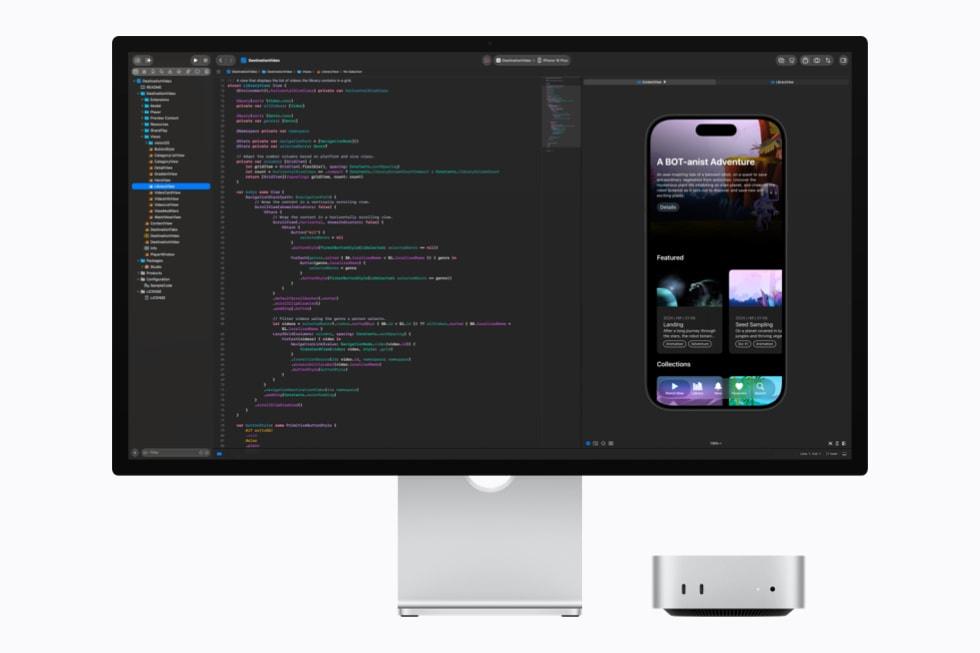
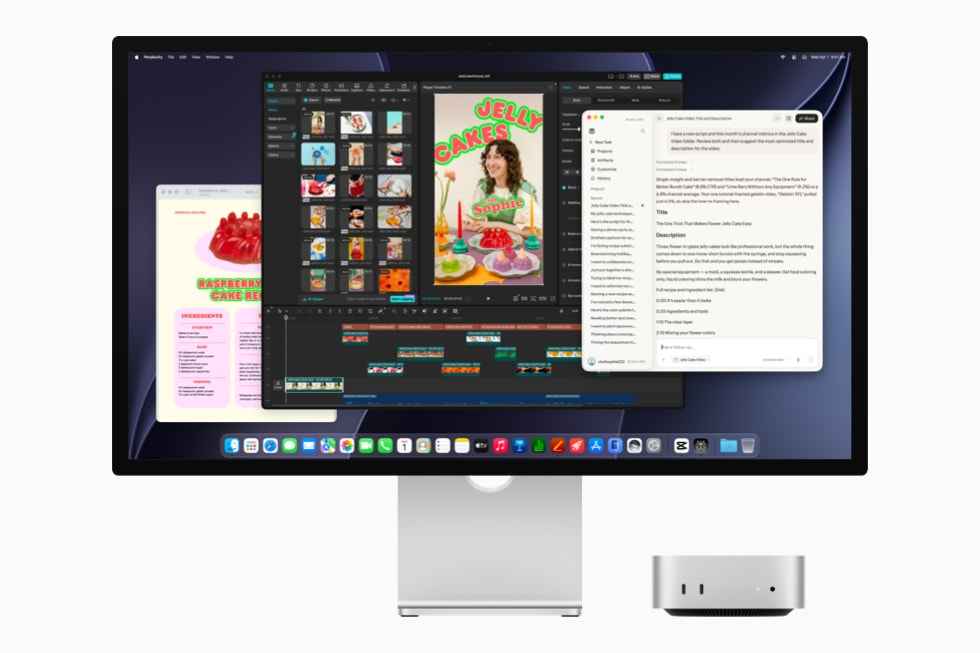
M5 Ultra takes a considerably more aggressive approach. Apple connects 2 dual die M5 Max processors using its next generation UltraFusion technology, creating the first quad die M series processor. The interconnect provides more than 4.4 TB/s of bandwidth with over 6x higher connection density, allowing the 4 dies to operate as a unified processor. At full configuration, M5 Ultra provides a 36 core CPU with 12 super cores and 24 performance cores, an 80 core GPU, a 32 core Neural Engine and up to 512 GB of unified memory with 1.2 TB/s of memory bandwidth.
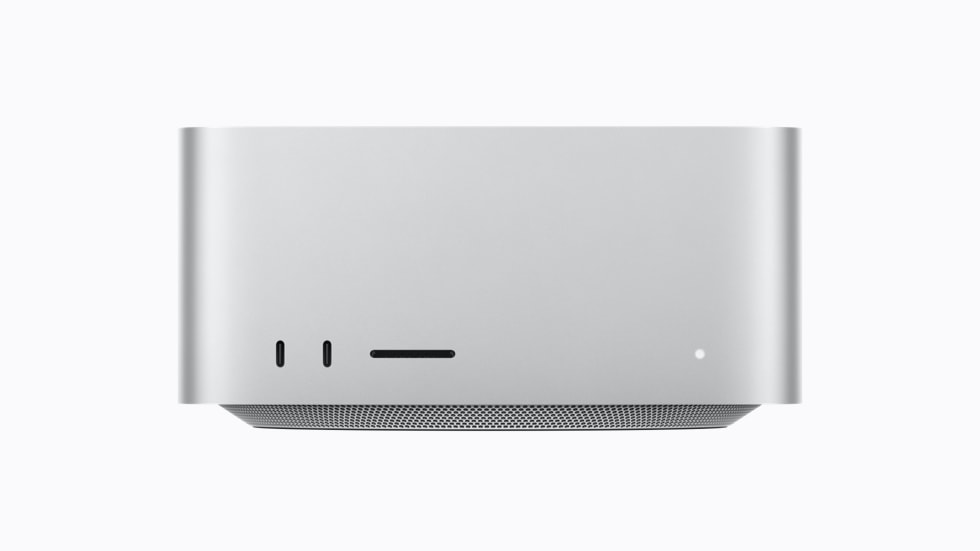
The new Mac Studio with M5 Ultra is being positioned heavily toward local AI, 3D rendering, scientific computing, game development and professional video production. Apple claims peak GPU AI compute can reach up to 4.3x the level of M3 Ultra, while graphics performance can improve by up to 1.8x depending on workload. Its Media Engine can simultaneously play as many as 33 streams of 8K ProRes 422 at 30 FPS, while Thunderbolt 5 and RDMA support allow multiple Mac Studio systems to be clustered for distributed AI inference. A cluster of 4 systems can deliver up to 3x the inference performance of a single machine according to Apple.
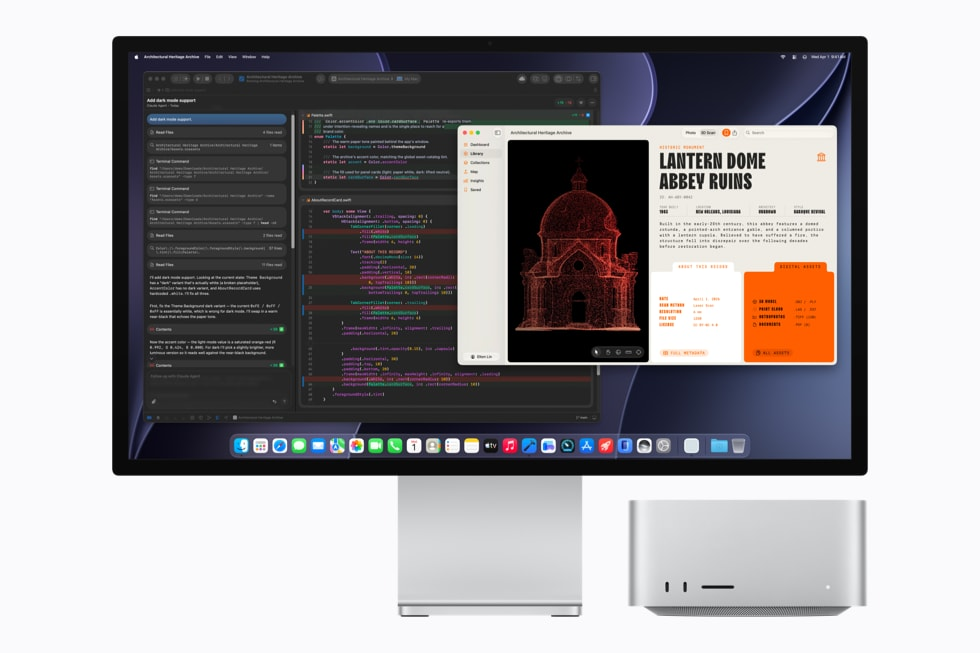
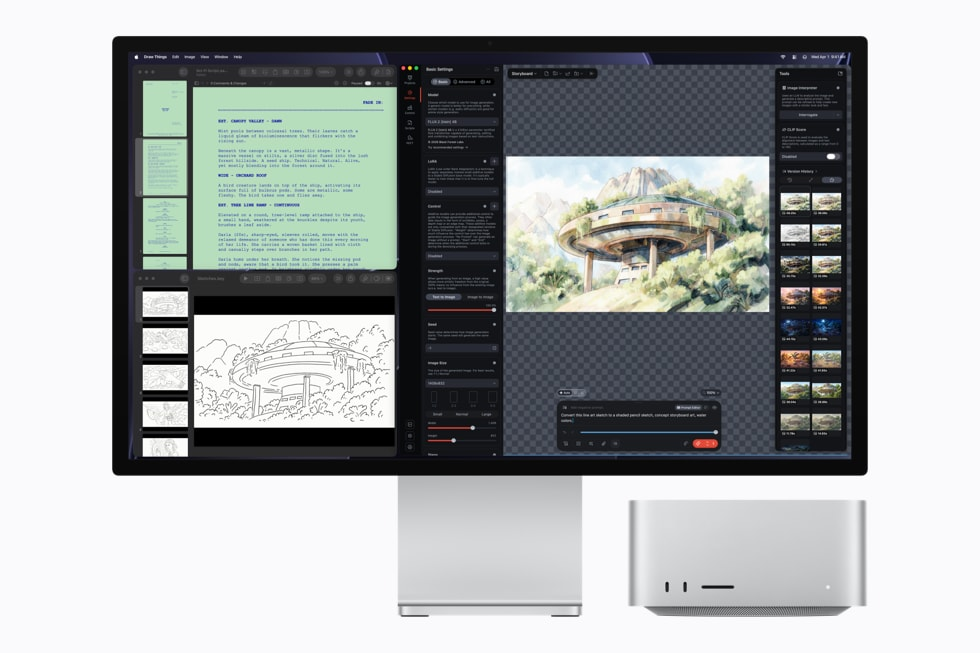
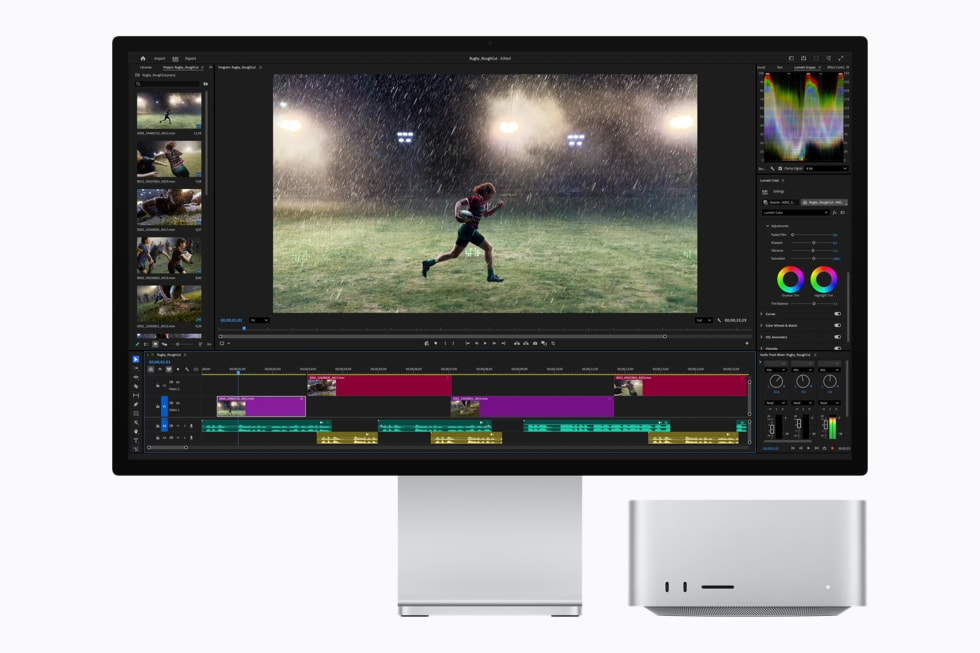
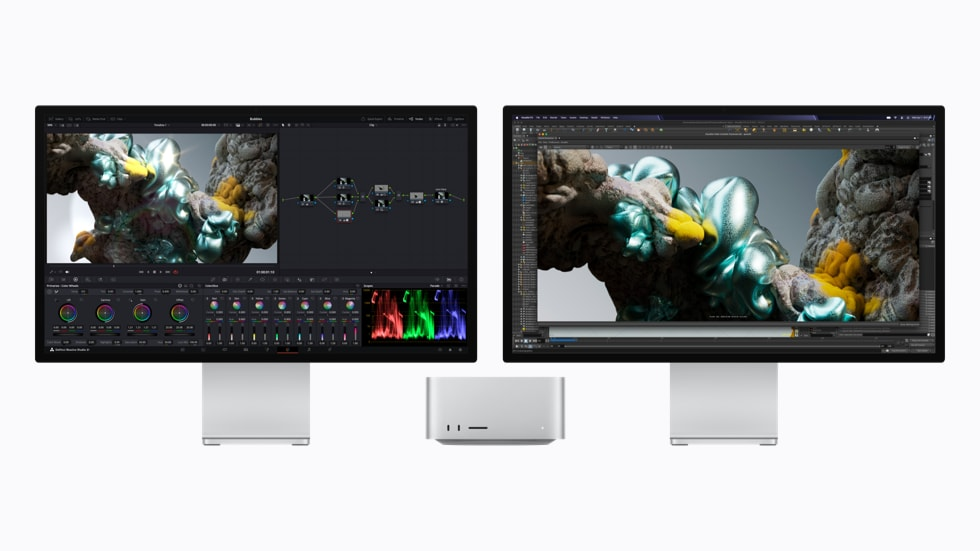
Pricing reflects how far apart the 2 products sit. The M6 Mac mini starts at 899$, while the M5 Pro version begins at 1,699$. Mac Studio starts at 2,499$ with M5 Max and rises to 5,499$ for M5 Ultra. Preorders opened on August 25, with general availability beginning September 22. Mac Studio configurations with 512 GB of unified memory will arrive later in October. The higher pricing also arrives as Apple faces a much more difficult component environment, following the earlier removal of the 256 GB Mac mini from several major storefronts as supply and memory costs increased.
M6 is also an important semiconductor milestone because Apple is now moving into the 2 nm generation while competitors across CPUs and AI accelerators fight for the same leading edge manufacturing capacity. The transition comes as TSMC 2 nm wafer pricing is reportedly moving toward 30,000$, making every increase in performance, efficiency and die utilization increasingly important for premium silicon.
Apple launching M6 and M5 Ultra together shows how broad Apple silicon has become. The M6 Mac mini is arguably the more interesting mainstream product because 2 nm manufacturing, stronger ray tracing and dedicated GPU Neural Accelerators are arriving in a compact 899$ desktop. M5 Ultra is playing an entirely different game. Its 512 GB unified memory pool and 1.2 TB/s bandwidth give developers access to local AI capacities that are difficult to reproduce with conventional consumer GPUs, while the quad die design demonstrates how Apple intends to scale performance beyond the limits of a single piece of silicon.
For gamers, M6 is also worth watching closely. Apple showing Cyberpunk 2077 with ray tracing performance claims is another signal that graphics and gaming are becoming a more deliberate part of the Mac roadmap. The hardware is increasingly capable. The remaining question is whether game publishers will follow.
Which is more interesting to you, Apple's first 2 nm M6 Mac mini or the 512 GB quad die M5 Ultra Mac Studio?
